Get Full Government Meeting Transcripts, Videos, & Alerts Forever!
Get email alerts on the Occupational Licensing topic
No spam. Unsubscribe anytime.
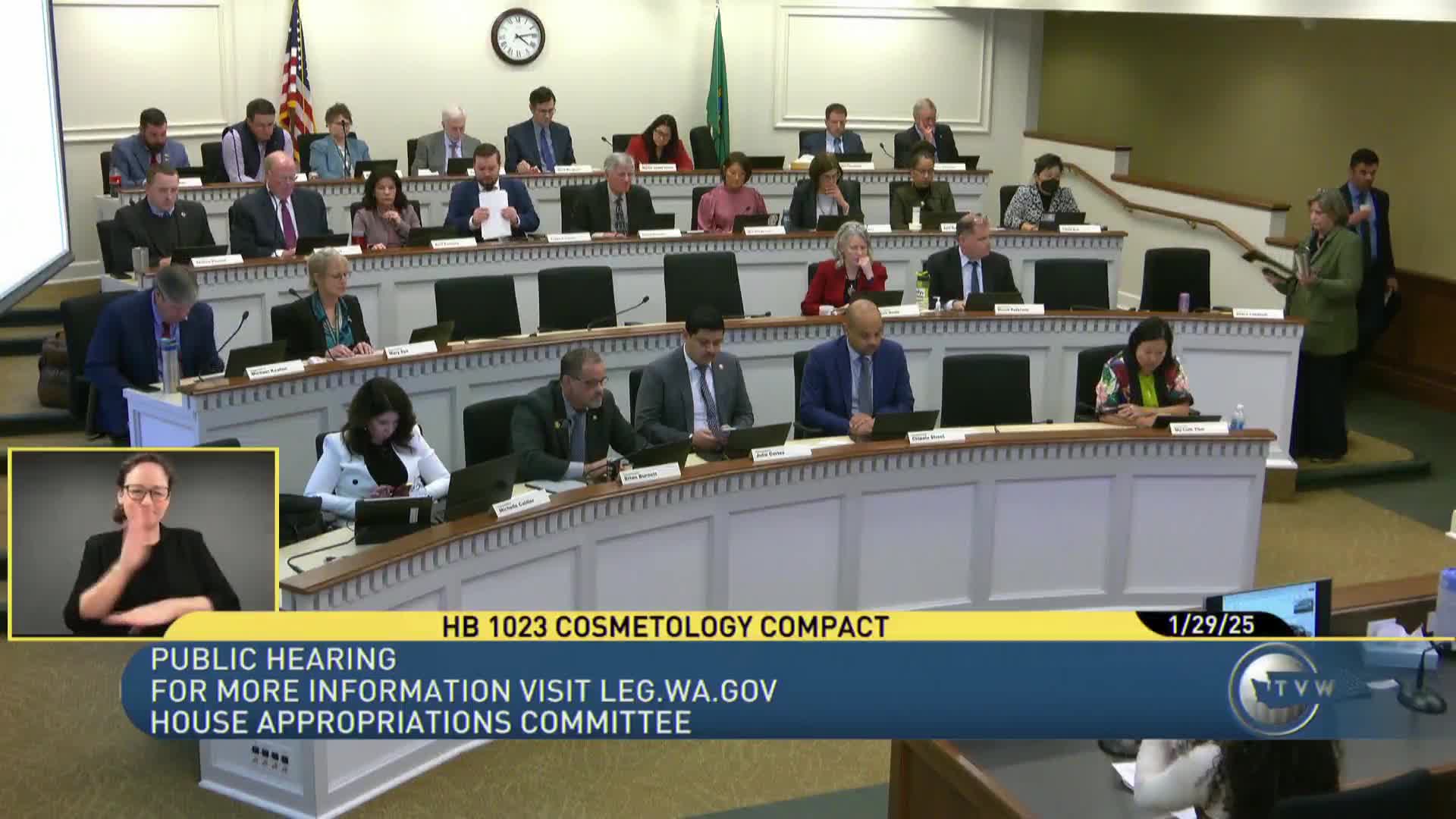
Cosmetology licensure compact draws mixed testimony as committee reviews fiscal note and scope
Summary
Staff briefed HB 1023 to create a cosmetology licensure compact allowing multistate practice; supporters said the compact aids military spouses and employers, while industry speakers and trade groups raised concerns about costs, governance and excluded licenses.
Staff to the committee summarized House Bill 1023, which would enact an interstate cosmetology licensure compact allowing cosmetologists who meet compact requirements to practice across member states under a compact privilege. The compact becomes effective when at least seven states adopt it and establishes a compact commission to administer the compact.
Saranda Ross, staff to the Postsecondary Education and Workforce Committee, told members the compact requires participating states to license cosmetologists, investigate complaints, and rely on a cosmetology competency exam; it also sets conditions for exercising compact privilege. Ross briefed an initial fiscal note estimating implementation costs charged to the Department of Licensing’s Business and Professions account.
Sponsor Representative Cindy Ryu told the committee the compact would help military spouses work immediately after relocation and allow states to communicate about license performance. “This bill, the genesis of this compact is so that, military spouses who get relocated with their service members… many of them or most of them are women,” she said.
Testimony included supporting statements from industry representatives. Leslie Rossi of the Future of the Beauty Industry Coalition said the compact is the “gold standard for licensed mobility,” allowing employers to draw from a larger pool and enabling cosmetologists to work immediately. A representative of the Council of State Governments (CSG) said the compact’s development included subject matter experts and that Washington’s fiscal note appears out of step with notes from other states.
Opponents and industry stakeholders raised concerns. Ray (surname in transcript) , a multi‑state salon owner/educator, said only about eight states have adopted the compact and warned the compact could introduce a third party controlling licensing decisions and fees and shift regulatory authority away from the state; he also said the compact excludes certain licenses such as barbering and aesthetics. Darcy Harrison, vice president of Cosmetologists of Washington United, said the current fiscal note shows significant IT and staffing impacts and expressed concern that those costs could fall back on Washington licensees through fee increases; she noted the state’s last licensing fee increase took place in 2021.
Staff noted the fiscal note in the committee packet: a Departmental estimate of roughly $3.1 million in the 2025‑27 biennium and ongoing costs near $2.1 million per biennium thereafter, assumptions that include additional FTE and IT contracting. The Department of Licensing had indicated potential revisions to the fiscal note but a revised note was not yet in the record.
The committee did not record a vote on HB 1023 during the hearing; the public testimony period concluded and the committee moved to the next item.