Get Full Government Meeting Transcripts, Videos, & Alerts Forever!
Lawmakers review ERS funding plan as health premiums rise and drug costs surge
Summary
At a Senate Finance Committee hearing, LBB and Employee Retirement System officials outlined a funding path that keeps ERS on track toward full funding while warning of rising health-care costs driven largely by new high-cost diabetes drugs; lawmakers pressed ERS on investment returns and sought more detail about pharmacy rebates and benchmarks.
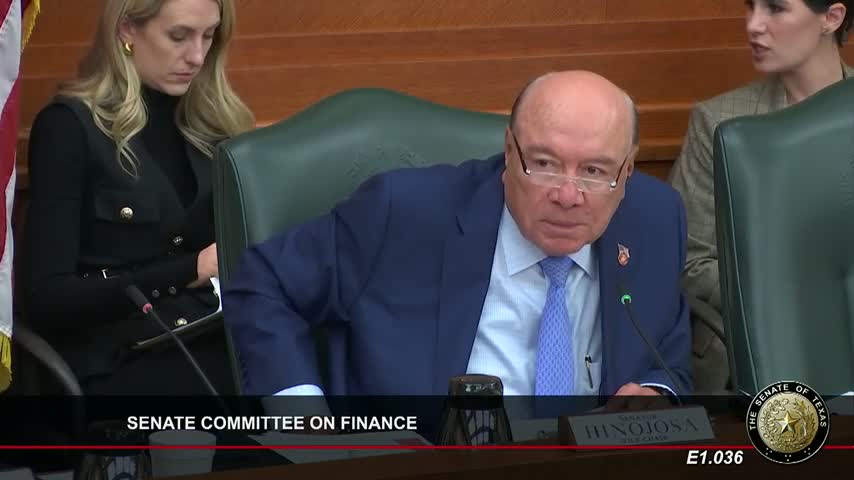
At a Senate Finance Committee hearing, Legislative Budget Board analysts and officials from the Employees Retirement System of Texas (ERS) outlined proposed budget recommendations for the 2026–27 biennium and fielded lawmakers’ questions about pension funding, investment performance and rapidly rising health-care costs.
The LBB presented an ERS bill pattern that would leave the system on a path toward full funding over the next two decades while accounting for payroll growth and recent one-time payments. The LBB recommended $1.8 billion in retirement system costs and $4.7 billion for the Group Benefits Plan for the biennium, and described a proposal that would add a supplemental legacy payment that could accelerate the date the system is fully funded.
The nut graf: Committee members pressed ERS executives about returns on invested assets and the agency’s strategy to control health-care costs for more than half a million covered lives. Senators focused on whether ERS is getting market-competitive investment performance and on a projected 8% annual premium increase for the group benefits plan, which ERS officials say is driven in part by steep pharmacy cost growth from two diabetes drugs frequently named during the hearing: Ozempic and Mounjaro.
Most important facts up front: John Posey of the LBB told the committee ERS appropriations are estimates but the LBB’s recommendations include a roughly $1.8 billion retirement system pattern and a $4.7 billion group benefits pattern for the 2026–27 biennium. ERS officials told the committee the agency will implement an 8% per-year premium increase in the current budget pattern to shore up reserves and avoid larger, later requests from the state. Porter Wilson, ERS executive director, said the agency will continue efforts to contain costs and to engage members on health improvement programs.
On investment…
Already have an account? Log in
Subscribe to keep reading
Unlock the rest of this article — and every article on Citizen Portal.
- Unlimited articles
- AI-powered breakdowns of topics, speakers, decisions, and budgets
- Instant alerts when your location has a new meeting
- Follow topics and more locations
- 1,000 AI Insights / month, plus AI Chat