Get Full Government Meeting Transcripts, Videos, & Alerts Forever!
Get email alerts on the Opioid Abatement topic
No spam. Unsubscribe anytime.
Comptroller outlines opioid abatement fund split, council awards and timing for local payments
Summary
Comptroller Glenn Hager described how opioid settlement funds are split among the abatement council, local governments and the legislature, and said local distributions have typically been made in March or April; LBB proposed reducing a prior $42 million appropriation to $5 million to cover administrative costs.
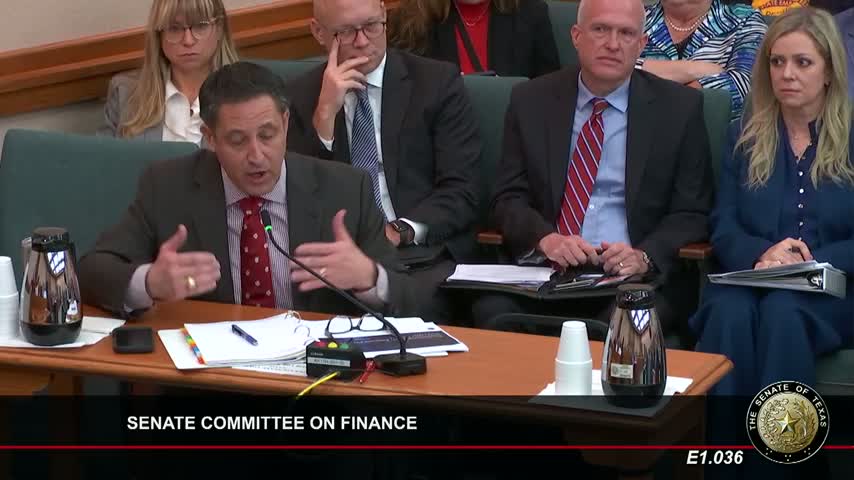
Comptroller Glenn Hager told senators the state splits opioid settlement dollars into three designated buckets and provided an update on council awards and timing for local disbursements.
Hager said settlement dollars that come to Texas are split roughly into three buckets: 70% to the opioid abatement council, 15% to local entities and 15% to the legislature for appropriation. The timing of funds varies by settlement; some payments are lump sums and others are spread over many years, Hager said.
Hager told senators the office has been distributing local payments roughly on a March–April schedule in recent years but that some small jurisdictions have trouble providing required wiring and banking information; the office has been working with county and city associations to collect accurate payee information so funds can be disbursed. He said the council recently approved vendor selection for an education program and that the council approved roughly $75 million for three different strategies to be deployed across the state.
Separately, the LBB recommendation package noted that $42 million had been appropriated to the comptroller from the opioid abatement account in a prior session but remained largely unexpended; LBB recommended reducing that appropriation to $5 million for the biennium to cover administrative costs incurred by the opioid abatement fund council.
Why it matters: the process and timing determine when local governments and regional programs receive settlement funds for prevention, treatment and other abatement strategies. Senators pressed the comptroller for timelines and asked how the public can track distributions; Hager pointed to a dedicated website and offered staff assistance in answering member questions about specific local providers and timing.
Hager said the opioid abatement council members (appointing authorities include the governor, lieutenant governor and attorney general) review ranked applications and approve awards; the comptroller’s office hires third parties to perform technical rankings and then the council reviews and approves awards.