Get Full Government Meeting Transcripts, Videos, & Alerts Forever!
Get email alerts on the Elections Ranked Choice topic
No spam. Unsubscribe anytime.
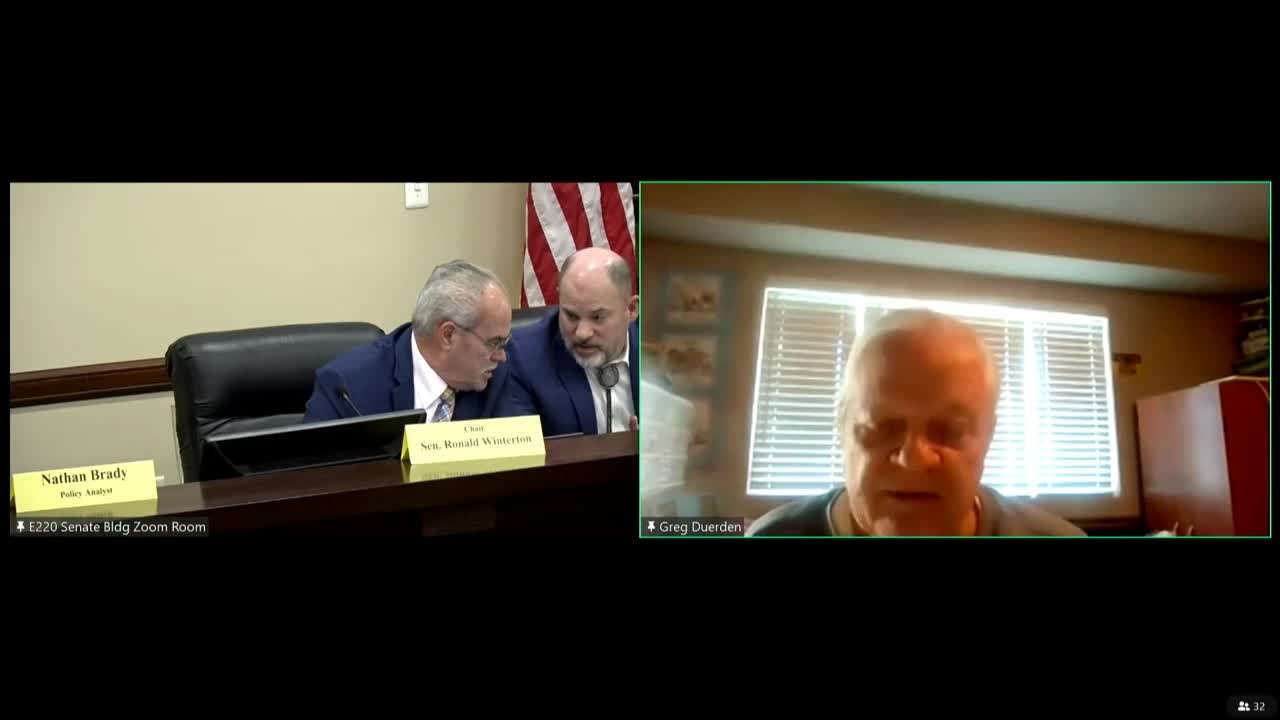
Committee hears hours of testimony on bill to extend ranked‑choice voting pilot; no committee recommendation
Summary
Senate Committee on Government Operations and Political Subdivisions heard extended testimony and divided public comment on Senate Bill 127, which would extend the pilot allowing municipalities to use ranked‑choice (preferential) voting. After lengthy debate and public comment, the committee adjourned without issuing a recommendation on the bill.
The Senate Committee on Government Operations and Political Subdivisions held an extensive hearing on Senate Bill 127, a bill to extend a pilot program that allows Utah cities to use ranked‑choice (preferential) voting in municipal primaries and elections. Sponsor Senator Mike Wyler introduced the measure and said the pilot lets municipalities choose an alternative to plurality voting and has yielded cost savings for some smaller cities.
Why it matters: The bill would preserve a voluntary option for cities that have adopted ranked‑choice voting and would affect how municipal winners are determined, how ballots are counted and audited, and whether some municipalities continue to budget for primaries.
Sponsor and proponents argued the pilot gives local governments tools to reduce runoff elections and shorten campaign seasons. Kellene Potter, executive director of Utah Ranked Choice Voting, told the committee a UVU study and other materials show voters in participating municipalities “liked it” and that smaller cities have seen “substantial savings” by avoiding runoffs. Millcreek Mayor Jeff Silvestrini said post‑implementation polling in his city showed “70% of our residents favored ranked choice voting” and that residents reported understanding the process.
Opponents and skeptical committee members raised multiple concerns about ballot exhaustion, auditability and participation. Senator Curt Thatcher said the single biggest problem he sees in some pilot cities is ballots discarded in the first round: “On the first round of voting, there were more votes cast out from either failing to mark a first place candidate or marking a first place candidate twice. There were more than double the numbers of ballots cast out and not counted than the difference between the eventual winner and loser.” He repeatedly pressed the question, “How many votes can be discarded in the 1st round and not counted and still be an acceptable election system?”
Utah County Clerk Aaron Davidson provided county participation figures from several municipalities that used ranked‑choice voting and said turnout fell in each case; he told the committee Lehi’s turnout dropped from roughly 30% before ranked‑choice voting to about 20% in the most recent municipal year. Utah Election Integrity board member Christie Henshaw and other public commenters urged the committee to let the program sunset, saying they had collected data and were unconvinced the system improved elections.
Other public testimony split sharply. The League of Women Voters of Utah and the Utah League of Cities and Towns recommended extension to allow more data collection and local choice. Utah County Commissioner Amelia Powers Gardner (former county clerk) told the committee ranked‑choice voting “was not confusing for our voters” and that smaller cities appreciated the budget certainty when primaries are avoided.
Committee outcome: After extended member questions and more than an hour of public comment, Senator Blum moved that the committee favorably recommend SB 127 to the full Senate. Senator McKell offered a substitute motion to adjourn. The substitute motion to adjourn was adopted by voice vote, and no committee recommendation on SB 127 was recorded during the hearing. The bill thus remained with the committee for further action at a later time.
Discussion vs. decision: The hearing produced substantial discussion and public record on benefits and risks of ranked‑choice voting, but the committee took no formal legislative action on SB 127 during this session. Members repeatedly framed the question as a balance between local control and statewide election integrity concerns.
What’s next: The bill remains in committee; if sponsors or committee leadership schedule further action, the committee could revisit the measure or propose amendments before any floor consideration.
Ending: The record on SB 127 includes extensive public comment and county data cited by clerks and officials; committee members noted sharply divided public views and left the matter unresolved pending further committee action.