Get Full Government Meeting Transcripts, Videos, & Alerts Forever!
Get email alerts on the Public Sector Labor Unions topic
No spam. Unsubscribe anytime.
Senate committee approves bill to end public-sector collective bargaining after contentious hearing
Summary
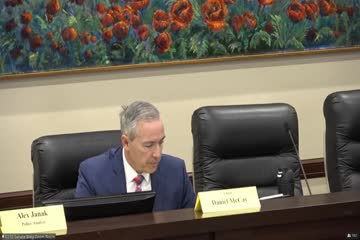
Senator Dan McKay, chair of the Revenue and Taxation Standing Committee, called the committee to order and moved House Bill 267, the "Public Sector Labor Union Amendments," up the agenda for discussion.
Senator Dan McKay, chair of the Revenue and Taxation Standing Committee, called the committee to order and moved House Bill 267, the "Public Sector Labor Union Amendments," up the agenda for discussion. Representative Sam Tuscher, sponsor of the bill, told the committee the measure would "eliminate public sector collective bargaining," offer optional professional liability insurance for educators, bar non‑public union staff from new Utah Retirement System participation and allow unions access to public property on the same terms as other groups.
Representative Sam Tuscher said the bill "really does 4 things," arguing that collective bargaining can leave non‑members without a voice and create conflicts when unions engage in political activity. He told the committee the Division of Risk had identified market policies costing roughly $110–$150 per year, compared with average union dues he said were around $80 per month ($960 per year).
The committee heard roughly 30 minutes of public comment and dozens of speakers. Labor and education representatives warned the bill would remove an effective channel for workplace problem solving and safety. Attorney Lauren Skolnick, who represents several public employee unions, said the bill "goes well beyond collective bargaining" and would bar public employers from recognizing a union as a bargaining agent or using meet‑and‑confer processes. Nurses, firefighters, teachers and other public employees testified they rely on negotiated contracts for safety standards, staffing and grievance representation; firefighters and police leaders described staffing and equipment gains tied to contracts.
Business and taxpayer groups testified in favor of the bill, arguing it would increase transparency and protect taxpayers. Jason Chipman of Libertas Institute and Billy Hesterman of the Utah Taxpayers Association urged the committee to advance the measure.
Committee members asked detailed questions about membership levels, the likely effect on union membership, and what specific activities the bill would permit unions to continue. Representative Tuscher replied the measure would not criminalize membership or advocacy, but would bar employers from entering new collective bargaining agreements or renewing existing agreements after the effective date; he said associations could still "advocate on behalf of their members" and represent employees in grievances.
Senator Brammer moved to recommend favorably the first substitute of HB 267. The committee recorded a roll‑call vote in which the motion passed by a 4–3 margin (yes: Senator Brammer; Senator Colomore; Senator Wilson; Chair McKay — no: Senator Escamilla; Senator Fillmore; Senator Harper). Chair McKay asked the sponsor to continue meeting with stakeholders even as the bill moves forward.
Why it matters: If enacted in its current form, HB 267 would bar public employers from entering new collective‑bargaining agreements, reshape how public employee representation operates in Utah, and change how some benefits and access to public property are handled. Supporters said the change would broaden participation and protect taxpayers; opponents said it would remove an efficient, protective mechanism for employees and weaken workplace safety and grievance remedies.
Votes at a glance: Motion: Recommend favorably first substitute HB 267 Mover: Senator Brammer Vote: Approved, 4 yes — 3 no Outcome: Favorable recommendation to the full Senate