Get Full Government Meeting Transcripts, Videos, & Alerts Forever!
Get email alerts on the Fraud Repossession topic
No spam. Unsubscribe anytime.
Committee advances HB 96 to toughen penalties for hiding vehicles from repossession
Summary
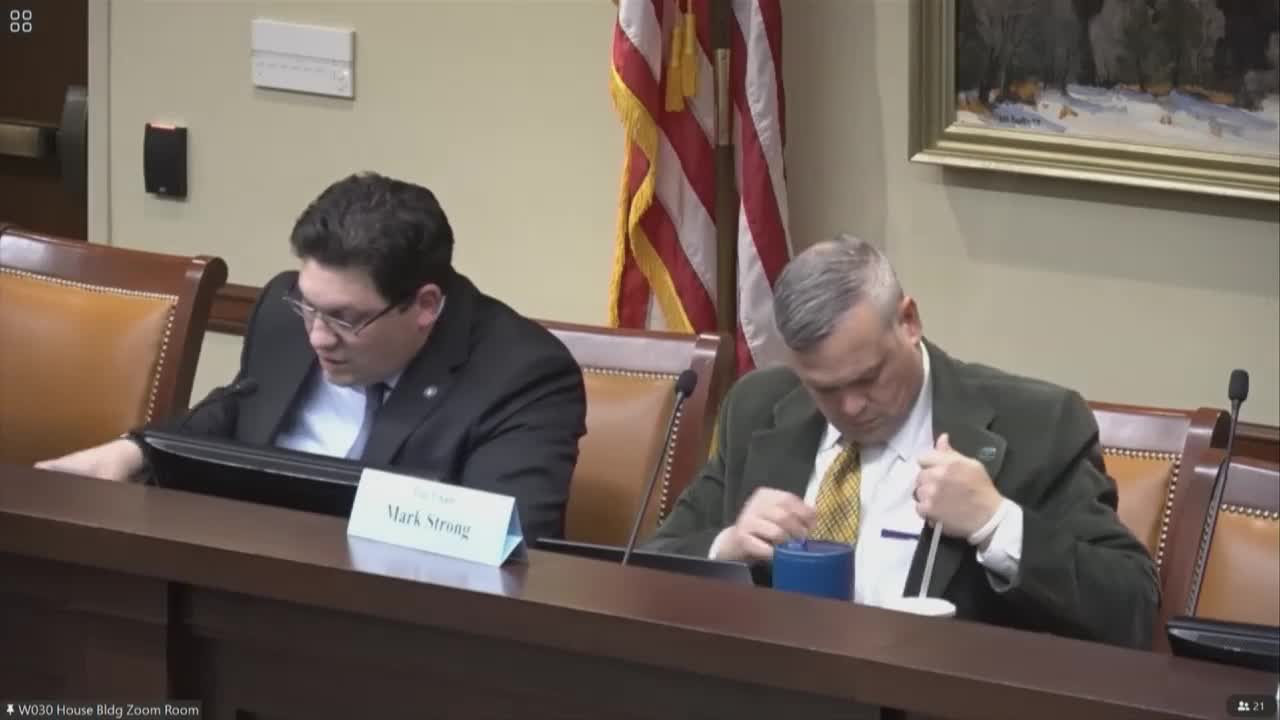
The House Law Enforcement and Criminal Justice Committee voted to pass HB 96, a bill that revises the fraud statute to target people who purposefully conceal collateral to avoid repossession, creating a tiered penalty system to allow prosecutors to pursue more serious cases as felonies.
The House Law Enforcement and Criminal Justice Committee on voice vote on [date not specified] passed House Bill 96, a bill amending the state fraud statute to target people who purposefully conceal or obstruct lawful repossession of vehicles and other assets.
Representative Paul Cutler, the bill sponsor, told the committee the measure is aimed at “those who are purposefully hindering lawful repossession of an asset.” He said the change narrows the statute to avoid criminalizing individuals who missed payments on consumer items and instead focuses on organized or intentional schemes to conceal collateral.
The bill creates a tiered penalty structure similar to neighboring states, Cutler said, so that small-dollar incidents remain lower-level offenses while larger, organized schemes could be charged as felonies. “We’ve clarified to focus purposefully the language on those who are purposefully hindering lawful repossession of an asset,” Cutler said.
Rusty Cannon of the Utah Credit Union Association testified in support, saying the association’s members are seeing losses tied to collateral that cannot be located. “The amount actually is well over 20,000,000 just in Utah credit unions in the state,” Cannon said of outstanding loans affected; he added the dollar figure rises if banks are included and noted lenders typically assign loans for repossession after 90 days past due.
Representative Ballard moved the favorable recommendation; the committee approved the motion by voice vote. The committee did not record a roll-call tally in the transcript.
The bill text and handout provided to the committee compare Utah’s proposal to statutes in neighboring states and adopt a tiered penalty approach. No specific dollar thresholds or the exact felony threshold language were stated on the record during the committee discussion and are not specified here.
Action on the bill is now recorded as a committee favorable recommendation; further floor action or amendments may follow in subsequent legislative steps.
"This would hopefully allow greater enforcement and alleviate the losses that are being incurred," Cannon said in support.
Copies of the bill and the committee handout were referenced during the hearing; the committee directed staff to include the bill on the committee’s outgoing report.