Get Full Government Meeting Transcripts, Videos, & Alerts Forever!
Get email alerts on the Legislative Requests topic
No spam. Unsubscribe anytime.
County asks delegation for liquor‑license housekeeping, procurement changes, short‑term rental tax collection and biomass study funding
Summary
During a pre‑session legislative meeting on Nov. 19, Garrett County officials and the Liquor Control Board asked the county's Annapolis delegation for several local law changes and a $150,000 legislative bond request to fund a pre‑engineering report for a biomass demonstration project.
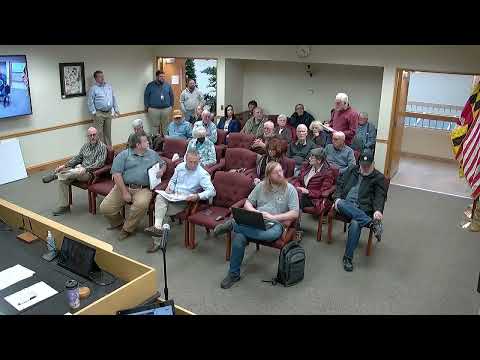
Garrett County officials, the county Liquor Control Board and members of the public met with Senator McKay and Delegate Heimel on Nov. 19 to present a slate of legislative requests ahead of the Maryland General Assembly session.
Debbie Oss, representing the Garrett County Board of License Commissioners (the county’s Liquor Control Board), asked the delegation for housekeeping changes to state law to clarify and expand local Class B license categories. Her requests include creating county-level subcategories for mixed‑use commercial resort properties (for example, sites that include hotels, restaurants, banquet halls and recreational facilities) and harmonizing language across special event (Class C) license provisions so that advertising, notice and application standards are consistent. She also described wanting to add a tasting option to the county’s Class A winery language so a potential new winery can offer limited on‑premise tastings depending on its chosen state manufacturing license.
County staff presented two procurement‑related requests: (1) authority to purchase certain products and services without repeated advertising when usage is variable and hard to predict; and (2) authority to purchase one or more vehicles without public advertising when the single purchase amounts do not exceed $100,000. Staff said the vehicle request mirrors a change recently enacted in Washington County and is intended to let the county buy available vehicles from dealers when that method yields better pricing or timelier delivery than waiting for a specific contract order.
On tax collection, the county asked for statutory language to define short‑term rental platforms and transactive rental units in the hotel/accommodations tax code so platforms such as Airbnb can be required to remit local accommodation taxes on behalf of property operators. County representatives said Airbnb offered draft language and expressed willingness to collect and remit the tax, while other platforms such as Booking.com have not committed; the change aims to level the playing field and reduce unexpected back taxes for homeowners.
Finally, the county requested a legislative bond of $150,000 to fund part of a pre‑engineering report (PER) for a proposed biomass demonstration project. County staff estimated the full PER would cost $300,000–$350,000; the PER is required to pursue larger grants and to test financial feasibility. Staff described potential benefits including keeping energy dollars in the local economy, supporting forest management, reducing greenhouse‑gas emissions from landfilled biomass, and reducing peak electric demand.
Why it matters: the package would change how local businesses are licensed, how short‑term rental taxes are collected, and could unlock federal or state grants for a local biomass project; procurement changes would alter how county purchases are handled. None of the legislative requests were final laws — the county was asking its state delegation for sponsorship and assistance in drafting bills.
What the delegation said: county delegates and senators said they will take the requests forward, noted there are costs and priorities at the state level and that some items are typically combined into omnibus local bills to save drafting costs, and agreed to follow up. No bills were filed at the meeting; staff said draft narratives and further coordination would follow.