Get Full Government Meeting Transcripts, Videos, & Alerts Forever!
Get email alerts on the Mining Rezoning topic
No spam. Unsubscribe anytime.
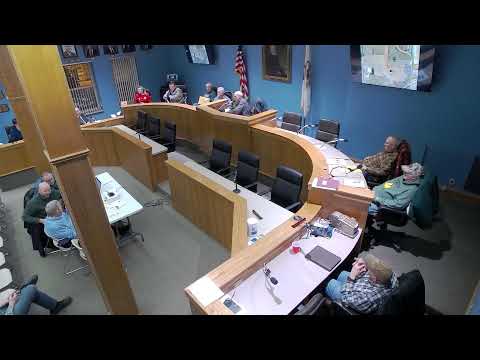
LaSalle planning commission recommends rezoning for Illinois Cement expansion after public health and dust concerns
Summary
The LaSalle Planning Commission voted 7-0 to recommend that city council rezone four Badenko parcels to allow Illinois Cement to expand Dimock Quarry, while asking the company to meet with nearby residents and report mitigation measures for dust, blasting and well impacts before council consideration.
The LaSalle Planning Commission voted unanimously to recommend that the City Council approve a rezoning and special use permit allowing Illinois Cement Company LLC to use four parcels owned by Frank Badenko for mining-related operations at the Dimock Quarry.
The recommendation, approved 7-0, came after a company presentation on reserve needs and reclamation rules and more than two hours of public comment from nearby residents who pressed company representatives and city staff for details about dust, well impacts, blasting notifications and road maintenance.
Why it matters: The parcels total about 70 acres and sit adjacent to a longstanding quarry operation. Illinois Cement said the additional land is needed to secure reserves and the long-term viability of the plant; residents said dust and vibration from blasting already affect their homes, wells and businesses and asked for enforceable commitments if the council approves the rezoning.
Company presentation and technical details Eric Lovren, optimization manager for Illinois Cement, said the Dimock Quarry supplies limestone — "one of the four main ingredients in cement making" — and described the ownership and operational context. He said Illinois Cement is a subsidiary of Eagle Materials and currently employs about 170 people at the site, with payroll of roughly $17,000,000 and annual real-estate taxes near $780,000; he also cited average annual tipping fees of about $98,000.
Lovren and plant manager Sean Majors explained permitting and reclamation rules administered by the Illinois Department of Natural Resources (IDNR). They said mine permits are issued and inspected by IDNR, typically written in 10-year increments, with bonding and phased releases tied to reclamation milestones. Reclamation standards they cited include slopes not greater than 30 percent, terracing where fall exceeds 40 feet, and returning topsoil to pasture grasses subject to IDNR inspection and staged bond release.
On geology and timing, company witnesses said drill sampling in the expansion area showed rock 70–80 feet below surface and that the additional acreage provides a western gateway to continue mining west and north. Lovren estimated the existing bypass-area reserves would provide about an eight- to ten-year window for the bypass portion and suggested the broader shaded area could represent a roughly 15–20 year working horizon; he said an expected purchase/closing from the Badenko trust could occur within about 120 days but that exact mining timetables remain "undetermined."
Residents' concerns and company responses Multiple residents and business owners described ongoing dust, mud on vehicles and buildings, and well and structural impacts they attribute to quarry operations. Kathy Bastick, a longtime resident on East Third Road, said, "I do not believe it's safe to breathe" the limestone dust and described chronic cleaning and health concerns. Laurie Unce, owner of Eddie's Pet Shop, said she has spent thousands on water-filtration systems and repairs, and that a blast cracked a large storefront window.
Company and plant staff responded with current mitigations and options: they log water truck usage, run sweepers and have an intermittent wheel-wash at the quarry exit, and said seismograph monitoring and blast-notification calls are in use. Sean Majors said the wheel wash and brooms are balanced to avoid mud on the public roadway; he also told residents the broom sweepers' water tanks are not used in freezing conditions and that water on brooms is used when weather allows. On monitoring, Majors said the company would discuss placing an area monitor at or near residents' properties and that the blaster-notification system can call residents 10–30 minutes before a blast; he also agreed the company would provide a sign-up for advance blast notices.
Several residents asked about a 2018 well-agreement process; company representatives said they would offer a similar well-agreement process for affected owners and that a hydrogeologist or other specialist would be available to investigate well complaints as provided under such agreements.
Formal actions and conditions - Waiver and procedure: The commission approved procedural measures — including waiving the reading of full legal descriptions and accepting petition exhibits — by motion and roll-call earlier in the meeting. These procedural votes cleared the way for one combined hearing on all four parcels.
- Parcels heard together: The commission voted to consider parcels 1–4 together rather than individually for presentation and discussion.
- Recommendation on rezoning and special use permit: After discussion, Commissioner [mover not specified in transcript] moved and the commission voted to recommend that the City Council grant rezoning from M-1 to M-2 and a special use permit for mining-related operations on the four parcels. The motion included conditions: that the premises not be used for R-4 multifamily dwellings as defined in the LaSalle zoning ordinance without further planning commission or council approval, that Illinois Cement obtain title to the parcels, and that other conditions as deemed appropriate by council may apply. The vote was recorded as unanimous, 7–0.
The commission also agreed — at planning-commission direction and with company concurrence — that Illinois Cement representatives would meet with several nearby residents (specifically named during the meeting: John and Kathy Bastick, Jim [Marcini], and Laurie Unce of Eddie's Pet Shop) before the item is considered by council and would report back on specific mitigation steps (more frequent/use of water on sweepers when weather allows, additional monitoring, blast-notification practices, potential wheel-wash relocation or technical changes, and the well-agreement process used in 2018).
Discussion versus decision: commissioners and the company distinguished between discussion items (concerns about dust, well impacts, blast vibration, road maintenance) and the formal recommendation (a nonbinding recommendation to city council). Commissioners asked for concrete, written follow-up from the company to share with council; the commission did not make the recommendation contingent on any single mitigation item but recorded the planned follow-up meetings and commitments for the record.
What happens next The Planning Commission's recommendation will go to the LaSalle City Council for final approval; the company and commissioners said they expect to meet with the named residents and report mitigation proposals before council consideration. The company also handed contact cards to residents and said it would accept sign-ups for blast-notification calls and can explore additional monitoring at residents' properties.
The meeting record and video were cited as available on the City of LaSalle's public streaming channel; commissioners and company staff said they would accept ongoing feedback by phone and at follow-up meetings prior to council action.
Ending The commission's recommendation does not itself change zoning; final authority rests with the City Council. Commissioners said they would rely on the written commitments and the company's follow-up when council considers the petition.