Get Full Government Meeting Transcripts, Videos, & Alerts Forever!
Get email alerts on the Trails And Multimodal Infrastructure topic
No spam. Unsubscribe anytime.
Town considers multiuse trail, horse crossings on Okeechobee Boulevard ahead of Feb. 14 TPA grant deadline
Summary
Consultants presented a revised concept for a multiuse trail—intended for walkers, bicyclists and equestrians—along Okeechobee Boulevard and urged the committee to provide input before a Transportation Planning Agency grant application due Feb. 14; costs, right-of-way limits, and crossing design were the primary issues discussed.
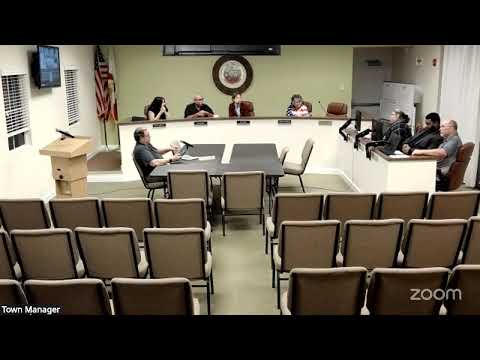
Mary McNicholas, of Jeffrey B. Sluggett Associates and a Town of Loxahatchee Groves resident, told the Roadway, Equestrian, Trails and Greenway Advisory Committee on Jan. 28 that the town needs to submit a Transportation Planning Agency (TPA) Transportation Alternatives grant application by Feb. 14 to fund a multiuse trail and crossings on Okeechobee Boulevard.
The consultants’ concept updates a 2019 application and would add multiuse trail segments and protected crossings across major letter roads. “We need to actually put in the application by February 14th,” McNicholas said, and she and Trish Barr of Simmons and White asked committee members for input at a Feb. 11 community outreach session they plan to hold.
The nut of the discussion was cost, right-of-way and safety. Trish Barr, a traffic engineer, said an earlier version of the project used roughly $886,000 in federal funds plus about $480,000 committed by the town for a total of roughly $1.39 million; she estimated current prices would push a similar package to about $1.2 million. Barr cautioned that costs have risen “about 20%” to “25%” since the prior design and that components can be phased rather than built in a single year.
Committee members and residents pressed on details. Barr offered a ballpark figure for a single crossing in the low hundreds of thousands: “a crossing is between $25,000–$300,000,” and she later clarified a common mid-range estimate at “200 and 250,000.” The conceptual design includes a fence along the multiuse corridor; Barr said the original fence estimate for the length of Okeechobee was about $94,000.
Design constraints discussed included drainage, the position of existing asphalt sidewalks and the need to show control of right-of-way. Richard Gallant, public works director and the committee’s staff liaison, said the town already has “all of the known right of way” for Okeechobee and is mapping parcel and canal cross-section widths townwide; he added that the town’s resiliency data will let staff report widths roughly every 500 feet. Committee members noted the town’s typical right-of-way is 60 feet on most roads and 136 feet on one Dee Road segment.
Safety and signal visibility were a recurring concern. Committee members said rectangular rapid-flashing beacons currently appear white and are hard to see when sunny; Barr responded that the flashing beacons are national-standard devices when federal funds are used and that color changes are typically limited by national codes, though additional advance signage or placement adjustments are possible. Barr also noted some communities use fencing, raised crosswalks or speed-message signs to increase driver awareness.
Speakers emphasized that the project can be phased. Barr said communities sometimes fund crossings first and add longer trail segments later, and recommended the town present an overarching vision and identify a first phase to maximize grant competitiveness. McNicholas and Barr will prepare the application and requested committee feedback; they said they would return for a Feb. 11 public-input session and remain available to committee members between meetings.
The presentation also flagged dependencies: some corridor ideas would require coordination with Palm Beach County (canal banks and drainage) and with FDOT and TPA on what costs federal funds will cover, and the consultants said certain specialized pavement or colored stamped asphalt might not be covered by the grant. Gallant confirmed the town had roughly $20,000 remaining from a prior North Trail grant and that no current town budget line exists specifically for trails.
The committee discussed short-term, low-cost measures that are not grant-dependent, including replacing or adding horse-crossing signage at entry points to the town and near the North Road bridge and considering sponsored signage if town funds are constrained. The presenters said they will check whether stamped asphalt or other specialized surfacing is an eligible cost and will provide more precise cost estimates after further site measurement and design work.
The presentation closed with an agreed next step: the consultants will host a public outreach meeting on or about Feb. 11 and will finalize and submit the TPA application by Feb. 14.