Get Full Government Meeting Transcripts, Videos, & Alerts Forever!
Get email alerts on the Open Government topic
No spam. Unsubscribe anytime.
City attorney outlines ethics, Robert’s Rules, open-meetings and records rules for Laredo volunteers
Summary
First Assistant City Attorney Joaquin Rodriguez told advisory members to avoid conflicts of interest, follow Texas Open Meetings Act requirements and noted public records and public comment rules, including penalties for violating TOMA.
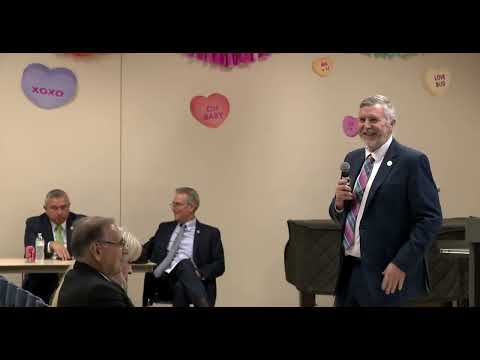
First Assistant City Attorney Joaquin Rodriguez led a legal session for Laredo advisory members covering ethics rules, meeting procedures under Robert’s Rules of Order, the Texas Open Meetings Act (TOMA) and the Texas Public Information Act.
Rodriguez told members to avoid both actual conflicts of interest and the appearance of conflicts, and to file disclosures or recuse when appropriate. “Recuse, recuse, recuse,” he said when advising members whose decisions could affect their economic interests.
On meeting conduct, Rodriguez described Robert’s Rules as a way to organize meetings so “the majority has the ability to make decisions, but also respecting the voice of the minority.” He emphasized that a quorum is required to take action, that only one motion is discussed at a time and that minutes are a record of what was done, not a transcript of everything said.
Rodriguez summarized TOMA requirements: agendas must state the date, place and subject and be posted at least 72 hours before a scheduled meeting. He said public comment must be allowed at every meeting and explained practical limits: a standard three-minute limit per speaker and, when comments are directly on an agenda item, the possibility of extending time by vote of committee members. He warned that violations of TOMA can render actions void and may carry criminal penalties; he cited fines of $100–$500 or confinement in county jail for one to six months for TOMA violations.
On public records, Rodriguez said the Texas Public Information Act generally makes governmental records disclosable. He noted that material held on personal devices can be discoverable if it pertains to official business and that the city maintains an open-records portal for requests.
Why it matters: Advisory members hear confidential and public information while advising city officials. Rodriguez’s presentation summarized legal duties that affect when a committee may act, how meetings must be posted and what records must be retained or released.
Supporting details: Rodriguez pointed to Texas Local Government Code section 556.004 when discussing limits on political activity by public officials and said the city’s ethics code contains gift, recusal and reporting provisions. He explained exceptions to open-meeting rules — executive session, emergencies and social gatherings — and warned against “walking quorums,” where serial contacts outside a posted meeting could amount to an unposted deliberation.
Ending: Rodriguez provided the city attorney’s main telephone number and encouraged members to call with ethics or open-government questions before meetings or when in doubt.