Mayor's home-rule petition would set tax rates, expand senior relief and allow one-time rebates if state does not act
Loading...
Summary
Mayor Michelle Wu filed a home-rule petition that would set fiscal-year 2025 tax rates at levels tied to an earlier compromise, expand the senior exemption, raise the personal property exemption for small businesses, and allow a one-time rebate pool if the Legislature does not approve rate changes in time.
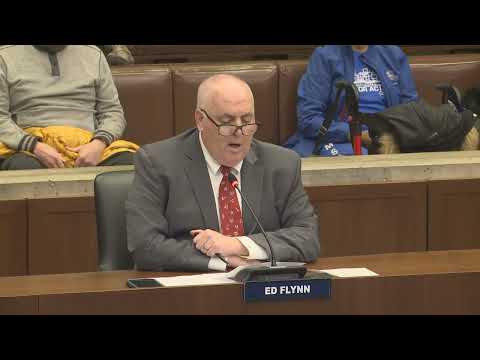
The mayor's home-rule petition on residential tax relief, reviewed at a Jan. 27 joint council hearing, combines several measures the city says are designed to blunt large, recent property-tax increases for homeowners and renters.
The administration described the package as mostly the same language the council previously approved in an October compromise that later stalled at the State House, with two notable additions. First, the petition would set fiscal-year 2025 tax rates at the levels the city would have adopted if the October compromise had been enacted. Second, it adds authority for the city to appropriate a one-time residential tax "rebate" for people who received the residential exemption in FY25 if the state does not authorize the rate changes by March 1, 2025.
The package includes: - Rate-setting language to fix FY25 residential and commercial rates at the levels that would have applied under the prior October compromise; - Classification limits (a maximum residential/commercial shift) for FY26 and FY27 similar to the earlier compromise; - A $15 million per-year authorized fund for small-business relief tied to excessive classification shifts (as discussed with business and labor representatives); - Expansion of the senior exemption by increasing income and asset thresholds (language mirroring an exemption the council passed and the mayor recently signed); and - Tripling the city's personal property tax exemption for small businesses (from $10,000 to $30,000), which would make Boston's small-business threshold one of the highest in the state.
If the state does not approve rate changes in time to alter the city's fourth-quarter tax bills, the home-rule petition would allow the mayor and the council to instead use city funds to provide a direct payment to eligible residents. The administration said the rebate would be split evenly among those who held the residential exemption for FY25; the petition as drafted does not specify a dollar amount for the pot and makes clear any payment would require a separate appropriation vote by the City Council.
City finance officials said they prefer the earlier classification approach (the "tax shift") as the primary tool to stabilize taxes, because changing the residential exemption alone can increase the residential tax rate and therefore shift greater burdens to non-owner-occupied property types (for example, rental buildings). Officials said the rebate language is included as an extraordinary, one-time fallback if the Legislature cannot act quickly enough to change rates before the third-quarter true-up.
Councilors and witnesses pressed the administration for additional detail: how large a rebate the city could afford without impairing reserves, whether the rebate would be distributed as checks or applied to tax bills, and how many additional people might qualify for the expanded senior exemption after the proposed income/asset threshold changes. The administration said the legal authority to make the rebate would come from the home-rule petition, but the exact amount and distribution method would be decided later and would require a council appropriation vote.