Get Full Government Meeting Transcripts, Videos, & Alerts Forever!
Get email alerts on the School Facilities topic
No spam. Unsubscribe anytime.
Pasco School Board gives staff a 'soft nod' to advance updated long‑term facilities plan
Summary
The Pasco School District board provided tentative direction to staff to proceed on an updated long‑term facilities management plan that will prioritize HVAC/air quality, ADA compliance, reducing portables and targeted modernization and expansion, while staff seeks updated enrollment projections and bond-finance guidance.
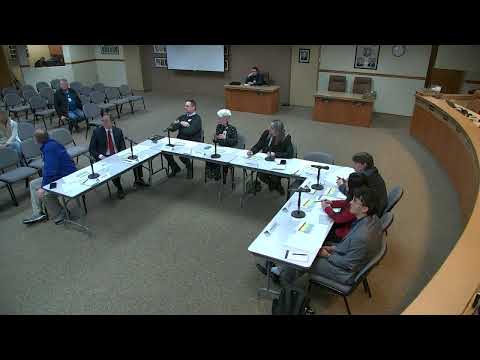
The Pasco School District Board of Directors on Tuesday gave staff a tentative endorsement to continue developing an updated long‑term facilities management plan, with board members pressing staff to emphasize building air quality and HVAC upgrades, ADA compliance, elimination of portable classrooms and targeted modernization of overcrowded middle and elementary schools.
Superintendent Whitney told the board the plan will reassess a previous 2018–2019 facilities roadmap, update enrollment projections and align project timelines with bond capacity. “We’re reassessing a plan that was from, around 2018, 2019,” she said, explaining the district has hired independent demographers to produce fresh growth and enrollment data and will use city and county growth projections to inform site selection and timing.
Why it matters: the decisions will shape where the district places capital projects and bonds over the next decade. Board members repeatedly flagged HVAC and air quality—especially at aging campuses such as McLaughlin and McGee—and urged staff to surface cost estimates and timing before finalizing bond proposals. Board members also pushed to make removing portable classrooms an explicit goal so modernization and expansion address both capacity and building condition.
Most important facts
- Board direction: The board offered a “soft nod” to proceed; staff will return with a draft for community engagement and a formal presentation for adoption later in the year. The board did not take a formal vote at the study session. (Direction only.)
- Priorities requested by the board: amplify HVAC/indoor air‑quality upgrades, ensure ADA compliance, prioritize modernization and expansion of overcrowded campuses, and include an explicit objective to eliminate portable classrooms where feasible.
- Data and timing: The district is commissioning new, Pasco‑specific enrollment projections from Eastern Washington University researchers and is expecting updated enrollment data by late April (as presented), with a target to present an approvable plan in September–October. Staff said that up‑to‑date building‑condition assessments (completed in 2023) and the new enrollment study will drive project sequencing.
- Capacity and hotspots: Board discussion highlighted Livingston (119 students over capacity), McGee (about 60 students over capacity) and several middle schools as the most overcrowded. The board heard that middle schools currently host many portable classrooms.
- Bonds and finance: Staff gave a district bond overview: outstanding general‑obligation bond debt around $346,000,000 and a theoretical capacity near $447,000,000, with one bond scheduled to mature next year (approximately $37,000,000). Board members asked bond counsel to return with analysis on frequency and tax‑rate impacts rather than select an arbitrary bond amount or cadence.
Supporting details and board discussion
District staff said the 2023 independent building‑condition report scored schools on roughly 25–30 criteria (roof, HVAC, foundations, site work); scores in the “red” indicate urgent needs and yellow/moderate scores occupy the 160–179 range on the district sheet. Staff noted some campuses scored poorly for building condition even if their site scores were higher.
Superintendent Whitney and the staff team emphasized uncertainty in enrollment trends: state and prior projections showed a possible decline of about 1,011 students across 2025–2029 in one scenario, and past projections (2018–2024) varied from being hundreds above to below actual enrollment. To avoid building unused capacity, the board instructed staff to rely on the new local projections and city growth plans when sequencing bond projects.
Board members asked staff to: provide clearer breakdowns of the building‑condition scoring methodology, show how modernization funded by the current bond (for example work in the CTE wing and HVAC replacements at Pasco High) will affect future scores, and model scenarios that maintain a steady tax impact by “layering” new bonds as others mature.
Clarifying financial examples and capital estimates raised in discussion included a cited 2020 estimate that McLaughlin’s full HVAC replacement would be about $10,000,000 (figure presented by staff as an earlier district estimate) and staff reference to prior federal ESSER grant use for interim HVAC work (filter replacement and system adjustments) but not full system replacements at some schools.
Next steps
District staff will: collect the new enrollment projection from the contracted researchers; ask bond counsel to model affordable bond frequency and amounts that would avoid increasing tax burdens as existing bonds mature; refine the facility‑condition scoring detail for the board; and take the draft long‑term facilities management plan into community engagement and then back to the board for formal adoption later in the year.
The study session ended with the board asking staff to continue and return with the plan for formal consideration at a future meeting.