City officials explain assessing process as residents report large, uneven valuation changes
Loading...
Summary
At a Jan. 27 Boston City Council joint hearing, the city's assessing commissioner outlined how the city sets market values and why neighbors can receive very different assessment changes; residents and labor groups urged more relief as third-quarter tax bills arrived.
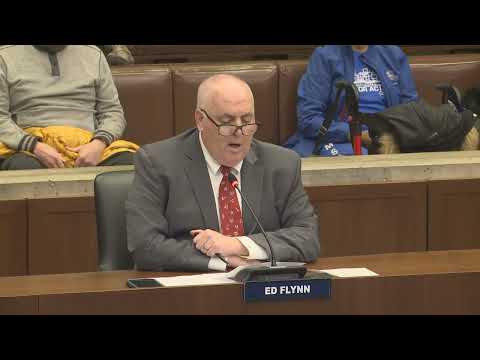
Boston assessing officials gave a step-by-step description of how the city values property at a joint hearing of the City Council's Ways and Means and Government Operations committees on Jan. 27, 2025, as dozens of residents and labor leaders testified about large tax-bill increases.
Commissioner of Assessing Nick Aronello told the council the city must value every parcel at 100 percent market value as of the statutory valuation date (Jan. 1, 2024 for fiscal 2025) and uses a computer-assisted mass appraisal (CAMA) system that models prices across the city by matching sales to property characteristics. "We use market sales, property record cards and modeling to estimate values for every parcel," Aronello said. He added the city calculates assessment-to-sale ratios and other statistical checks required by the Massachusetts Department of Revenue (DOR). Commissioner Aronello and the department's director of valuation, Raymond Boley, repeatedly told the panel that accurate property data (permits, inspections, sales) is essential to correct values and that residents should file abatements or bring data to the assessing office when cards are wrong.
Residents said the results were arbitrary and uneven. Dozens of witnesses, including Mass Senior Action, unions and neighborhood residents, testified that some neighbors' assessments rose double digits while nearby addresses rose less or declined. At the hearing several speakers described third-quarter increases of 30% or more, and union leaders said that tax changes were affecting employees who must live in-city as a condition of employment. Commissioner Aronello said the department received a higher-than-normal number of inquiries and that the abatement period (applications for review) is the normal route for residents who believe data on their property record card is incorrect. He reminded residents the January abatement filing deadline for fiscal 2025 was Feb. 3, and that residential exemption and other exemption applications have an April 1 deadline.
Aronello and Boley explained why similar houses on the same street can show different assessed values: models account for location, recent sales, condition, permit activity and local market differences. They said assessing staff cannot enter private homes without permission, so inspections rely on permit records, sales or owner-provided access. The department said it has about 22 valuation staff who run annual reassessments for roughly 180,000 parcels and that the city's residential assessment-to-sale ratio for primary classes is about 92 percent (a standard DOR statistical metric for certification).
Councilors asked for more data items the administration could supply about year-over-year changes by RADs (residential assessing districts) and by ward. Commissioner Aronello said staff can produce ward- and RAD-level analysis but did not have it on hand at the hearing. Councilors pressed for more outreach about exemptions, and the assessing department pointed to mailed notices, website tools showing sales and parcel data, neighborhood outreach and the city's recent November disclosure period during the revaluation cycle.
The hearing left unresolved policy questions raised by councilors and community groups: how to target relief to seniors and long-term owners, whether the residential exemption should be increased, and how to protect small landlords who rent below market rates. Committee chairs said they would continue the conversation and that the city would provide follow-up data requested by the council.