Get Full Government Meeting Transcripts, Videos, & Alerts Forever!
Get email alerts on the Zoning Far Tdr topic
No spam. Unsubscribe anytime.
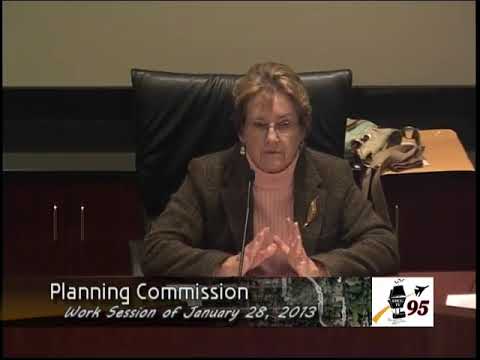
Planning Commission adopts temporary zoning change exempting some civic uses from FAR/TDR requirements
Summary
The St. Mary—'s County Planning Commission on Jan. 28 voted to adopt staff-recommended text amendments to the county zoning ordinance that rename the public and semi-public use classification to "civic and institutional," reclassify several uses into a commercial category, and exempt certain civic and institutional uses from the schedule of methods for achieving an increased floor area ratio (FAR), subject to a three-year sunset.
The St. Mary—'s County Planning Commission on Jan. 28 voted to adopt staff-recommended text amendments to the county zoning ordinance that rename the public and semi-public use classification to "civic and institutional," reclassify several uses into a commercial category, and exempt certain civic and institutional uses from the schedule of methods for achieving an increased floor area ratio (FAR). The commission attached a three-year sunset to the amendment.
The measure matters because it changes how some nonprofits and civic facilities can qualify for greater building area without buying transfer-of-development-rights (TDRs), potentially reducing the TDR burden for qualifying projects while prompting concerns that it could weaken the county—'s rural-preservation tools.
Staff member Yvonne Chele told the commission the proposal reflected ideas from a Jan. 14 work session and that the draft would: (1) rename the public and semi-public classification to "civic and institutional"; (2) move six uses that staff considered more commercial (including various day-care and medical care uses) into the commercial use classification; (3) add a new footnote (footnote 6) exempting qualifying civic and institutional uses from complying with schedule 32.2's methods to reach the maximum FAR; and (4) include a sunset clause, proposed at three years, after which the Board of County Commissioners could decide to continue or let the exemption lapse.
Commissioners debated the change for more than an hour, focusing on the amendment—'s potential impact on the county—'s TDR program and on the Rural Preservation District (RPD). Commissioner Shelby Guzzo and others said they feared a broad exemption would undermine the RPD and the comprehensive plan if high-intensity uses gained FAR without TDRs. Guzzo urged narrowing the relief to low-intensity, nonprofit uses in the RPD or using a more limited footnote for RPD properties. Several speakers noted that only a small number of applicants (staff estimated roughly one to three applicants in recent years) had sought the relief that prompted the change.
A letter submitted to the commission and discussed during the meeting, authored by Ford Dean (a member of a past TDR advisory group), recommended reconsidering the TDR program as a whole if exemptions were to be permitted; commissioners said the letter raised broader questions about Plan Maryland and forthcoming state water-quality rules that could affect development costs and the county—'s TDR program.
Members also discussed procedural matters: some commissioners said the reclassification and renaming of categories warranted a public hearing because it was broader than the original, narrow requests; others said staff and the three-year sunset made immediate adoption reasonable. Staff clarified that moving six uses to the commercial classification would subject those uses to commercial footprint limits (footprint rules apply differently to public uses than to commercial uses) and that the footnote exemption specifically concerned methods to reach maximum FAR under schedule 32.2.
After debate, the commission voted to adopt the packet as presented by staff, with a three-year sunset. The commission noted that any ordinance amendments will be forwarded to the Board of County Commissioners for final action. Several commissioners asked staff to schedule further work on the TDR program and to consider portions of the Ford Dean letter in future discussions.
The commission emphasized that the action was not final zoning: the change is a recommendation/ordinance amendment adopted by the commission and will still require Board of County Commissioners review and adoption before it becomes law.
Votes at a glance: the commission adopted the staff packet as presented, including footnote 6 exemption and a three-year sunset; the motion passed and will advance to the Board of County Commissioners for its consideration.
Commissioners and staff said they expect further workshops and possible refinement as state-level policies (Plan Maryland and water improvement policy) and technical constraints (sewer/BAT costs) become clearer.
Ending: The commission directed staff to consider a focused review of the TDR program and to schedule follow-up discussion/workshop(s) to clarify eligibility criteria and any interactions with forthcoming state policies.