Get Full Government Meeting Transcripts, Videos, & Alerts Forever!
Get email alerts on the Insurance Coverage Coordination Tbi topic
No spam. Unsubscribe anytime.
Insurers outline coverage limits and coordination gaps for traumatic brain‑injury care; court ruling complicates workers'‑comp recoveries
Summary
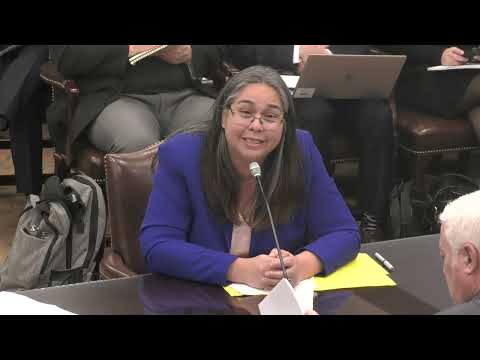
Insurer witnesses at a joint House Human Services and Insurance Committee hearing in Harrisburg said outpatient visit limits, exhausted auto medical benefits and a state court ruling complicate long‑term care for people with traumatic brain injuries.
Insurer witnesses at a joint House Human Services and Insurance Committee hearing in Harrisburg described how benefit limits, coordination of benefits and a Pennsylvania Supreme Court ruling can complicate long‑term care for people with traumatic brain injuries.
Dr. Tim Law, chief medical officer for Highmark, said commercial plans often set visit limits—commonly 20 to 30 outpatient therapy visits per therapy type—that can be exhausted within weeks for a patient needing multidisciplinary neurorehabilitation. “You can use up to 20 or 30 that's in the benefit brochure, very quickly with this,” Law said, and described a flexible‑benefit approach some insurers use to let unused visits from one therapy be flexed to another.
Why it matters: witnesses said exhausting commercial or auto benefits early can leave patients without coverage for evidence‑based post‑acute neurorehabilitation, potentially raising long‑term public costs if people lose function and require long‑term services and supports.
Coverage interaction and auto policies: witnesses noted Pennsylvania’s minimum first‑party auto medical benefit remains $5,000, a limit many said is quickly exhausted in severe injuries. Jonathan Greer, president and CEO of the Insurance Federation of Pennsylvania, explained that after insurers pay initial benefits they commonly pursue coordination of benefits and subrogation against third parties. Greer discussed a 2018 Pennsylvania Supreme Court ruling, Whitmore v. Workers' Comp Appeals Board, that the insurance industry says prevents subrogation for future medical benefits in some workers'‑comp third‑party settlements; he said that limitation is unusual nationally and that industry groups plan to seek a legislative correction.
Workers' compensation and subrogation: Greer summarized the legal framework and said workers'‑comp generally provides first‑dollar coverage but insurers and employers routinely seek recoupment from responsible third parties; he said the Whitmore decision narrowed recoupment for future medical benefits in Pennsylvania and that other states allow such recovery. Greer asked lawmakers to consider legislation correcting the Whitmore ruling so workers'‑comp insurers can seek equitable recoupment for future medical costs when third parties are liable.
Rehabilitation types and payer rules: witnesses clarified distinctions between rehabilitative care (restoring lost function) and habilitative care (maintaining function) and noted that some services—such as cognitive rehabilitation—are not easily limited by visit counts. Dr. Law said his company does not place a numeric cap on cognitive rehabilitation in plan language because it is not practical to “delineate by a number.” He also noted Highmark operates an integrated system of care that includes inpatient rehab capacity and outpatient services across the state.
Access and policy implications: witnesses said gaps in private coverage can shift costs to state programs and to managed Medicaid. They urged better coordination across auto, health and workers'‑comp payers, clearer case management for individual patients and a legislative fix of the Whitmore decision. No formal regulatory or legislative action was taken at the hearing; insurers said they will continue to engage with lawmakers on potential statutory changes.