Get Full Government Meeting Transcripts, Videos, & Alerts Forever!
Get email alerts on the Fire Training Facility topic
No spam. Unsubscribe anytime.
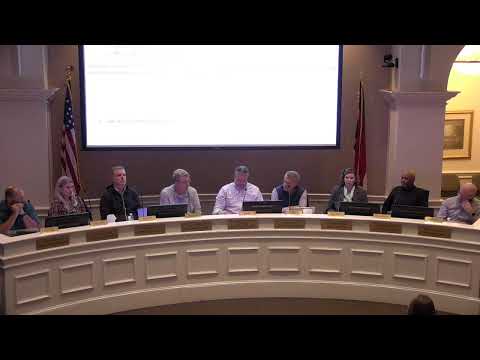
Huntersville planning board denies special-use permit but backs rezoning for CPCC fire-training site
Summary
The Huntersville Planning Board voted 7–2 that the proposed Marancas Fire Training Facility’s special-use permit lacked sufficient evidence on smoke and health impacts, but unanimously recommended rezoning the site to a special-purpose conditional district with buffer and reporting requirements.
The Huntersville Planning Board voted 7–2 on Nov. 20 to find that the special-use permit (SUP 24-02) for the proposed Marancas Fire Training Facility did not meet requirements, citing insufficient expert evidence on smoke and health impacts; at the same meeting the board unanimously recommended approval of rezoning petition R24-10 to a Special Purpose Conditional District, subject to updates to buffers and a requirement that the SUP address impacts on adjacent properties.
The vote matters because the SUP is required for the facility to operate in the town’s Special Purpose (SP) zoning and the planning board’s SUP finding is a formal recommendation to the Town Board. The board’s rezoning recommendation would change the parcel’s zoning from Campus Institutional/Neighborhood Residential to SP Conditional District for the training facility if the Town Board approves it.
Planning staff opened the hearing by summarizing the application and the ordinance standards. Staff told the board that the application sought a rezoning and a Special Use Permit under Town of Huntersville Zoning Ordinance Article 9.24 for a live-fire training facility on a vacant parcel at the corner of Statesville Road and Old Verhoff Drive, adjacent to a KinderCare daycare and Central Piedmont Community College (CPCC) driving school. Staff recommended approval of the rezoning but recommended the SUP not be approved in its current form because "Staff finds a lack of evidence provided by expert witnesses that provide that the proposed special use will not materially endanger public health or safety," specifically noting gaps in evidence about smoke particulate dispersion and related health effects.
Applicant representatives described the project as a permanent, concrete, two-story burn building and a separate cold-training tower to be used by CPCC and area fire departments for workforce training. Amy Dominoff, senior architect with Clark Nexsen, said the facility would burn only Class A materials — wood pallets and straw — and follow state and national standards, including NFPA 1403 and Office of the State Fire Marshal requirements. Louis McSwain, director of CPCC’s fire program, described operational controls and said Mecklenburg County permits and air-quality rules would be followed.
Applicants provided a peer-reviewed study summary (NIOSH-linked journal material) showing respirable particulate measurements taken about 23 feet from a burn tower that, in that study, were below NIOSH short-term occupational exposure limits and would correspond to a “good” EPA Air Quality Index at that distance. Dominoff said the team had overlaid local wind-rose data and modeled a 500-foot radius around the building for informational purposes. The applicants also proposed notification protocols for scheduled burns and evergreen planting and other screening to address visual and buffer concerns.
Board members and staff pressed the applicants on multiple technical points. Concerns included: the lack of an expert-certified dispersion study specific to the site and neighboring uses; the proximity of a private daycare within the proposed 500-foot radius; whether measurements beyond 23 feet were available or required; noise and other off-site impacts; and stormwater controls for contaminated run-off from training activities. Jeff Smith, a civil engineer with Thomas & Hutton, said floor drains would pass through an oil-water separator and then through an underground detention and sand filter before discharge; Charlotte Water review of fire flow and pressure would occur during permitting.
Several board members expressed clear support for the project’s public-necessity arguments — including reduced travel time and cost for local departments and ISO (Insurance Services Office) rating benefits — but said that the regulatory standard for an SUP requires conclusive evidence that the use will not “materially endanger public health or safety.” One board member summarized that the application was “close” but lacked the final technical evidence needed to remove doubt. The motion before the board therefore found that the SUP did not meet required conditions; that motion passed 7–2.
On rezoning (R24-10), staff recommended approval and the board recommended approval unanimously, provided the applicants implement minor staff revisions (including updated buffers along Verhoff Drive) and that the SUP process demonstrate proof that adjacent properties would not be negatively impacted by smoke. The board’s rezoning recommendation included direction to incorporate the buffer modifications in the conditional-district plan.
Votes at a glance
- Special Use Permit SUP 24-02 (Marancas Fire Training Facility): Motion that the request does not meet required conditions and specifications (finding that the SUP application failed to show it will not materially endanger public health or safety). Motion carried 7–2. (Planning Board action: recommend denial of SUP in current form.)
- Rezoning R24-10 (Marancas Fire Training Facility Conditional District): Motion to recommend approval of rezoning to Special Purpose Conditional District with staff-recommended revisions and a condition that the SUP provide evidence that adjacent properties are not negatively impacted by smoke. Motion carried unanimously.
The board gave applicants specific directions for next steps: provide targeted, site-specific expert evidence on smoke dispersion and health exposure (beyond the existing literature summary), document any property-value analyses if claiming no adverse effects, finalize stormwater handling for wash/contaminated water, and incorporate the buffer revisions into the conditional-district plan. Several board members suggested the applicants consider alternatives or design changes — such as natural-gas simulation burns, additional screening, or an initial demonstration burn with air-quality monitoring — to produce local, site-specific data prior to Town Board consideration.
The rezoning recommendation moves next to the Town Board for a public hearing and final decision. The SUP must also come before the Town Board; the planning board’s SUP finding and the additional evidence applicants may provide will be part of that Town Board hearing record.
Clarifying details compiled from the hearing: the proposed burn materials are limited to Class A (wood pallets and straw); the applicants estimated 70–75 burn days per year including municipal and college use; a peer-reviewed study presented measured respirable particulates approximately 23 feet from a burn structure and reported levels below NIOSH STEL occupational short-term limits in that context; the project footprint included a 500-foot informational radius assessed by the applicants for adjoining facilities; the design currently models roughly five burn compartments per floor (design still under development); neighboring access to required potable/fire flow will be confirmed through Charlotte Water during permitting; and buffer variation requested from the ordinance’s 80-foot requirement down to 33–77 feet in areas where screening and utilities constrained the buffer.
The Planning Board hearing record shows the primary unresolved technical issue is a site-specific, expert-reviewed analysis of smoke dispersion and potential off-site health impacts to nearby sensitive receptors (for example, the adjacent daycare). Applicants and staff were directed to supply that evidence and to refine stormwater and drainage designs before Town Board consideration.
Sources: hearing record and staff presentation, applicant materials submitted at or before the Nov. 20 planning board meeting, and published references cited by the applicant team (NIOSH-associated live-fire training particulate studies, NFPA 1403).