Granville officials outline school consolidation, budget moves and safety funding
Loading...
Summary
At a Jan. 27 joint meeting, Granville County officials and the school board described a near-term plan to consolidate schools, detailed current budgets and fund balances, and pledged continued county support for safety, capital and workforce programs.
Granville County and the Granville County Board of Education on Jan. 27 laid out plans to consolidate schools, highlighted ongoing county funding for schools and safety, and reviewed budget numbers and capital needs as officials said they work to align facilities with falling enrollment and limited revenue.
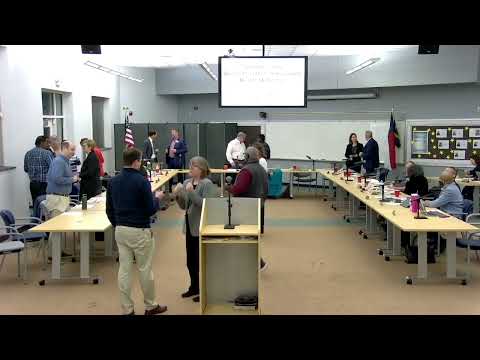
The meeting at the Mary Potter Center brought county manager Drew Cummings and school system leaders together with county commissioners and school board members to explain decisions already made and next steps for implementation, including closures and campus reassignments that the school system said will take effect before August 2025.
The discussion mattered because the changes are intended to reduce operating costs and concentrate course offerings while the county balances competing demands in a tight revenue environment. School and county officials described one-time and recurring savings, capital obligations the county must meet for community college facilities, and uncertainty about some state funding formulas.
Superintendent Dr. Windborne said the district will move next school year from three traditional high schools to two, keeping South Granville High School and J.F. Webb High School as the district’s two traditional high schools while Granville Early College continues. "Granville Central High School will be closed and that campus will be converted to a new middle school," Windborne said, adding that middle-school footprints will be reduced to two and that Butner STEM Elementary will be relocated to the former Butner STEM Middle School campus. "All of that is gonna take place before August of 2025."
Windborne and Chief Finance Officer Vicki Hines told the joint meeting the consolidation is expected to produce approximately $3,000,000 in recurring annual savings for the district through reduced building and staffing costs, and that some one-time moving and retrofit costs are already budgeted. Hines said the district has set aside about $700,000 to cover moving, repainting and rebranding costs tied to the consolidations and that the district began the fiscal year with $5,800,000 in fund balance. "We have budgeted $4,100,000 in fund balance this year," Hines said, adding that if the full amount were used the district would end the year with about $1,700,000, roughly 2.2% of operating budget.
County manager Drew Cummings reviewed the county’s revenue picture and its current and proposed contributions to schools, stressing that property taxes (ad valorem) are the largest single revenue source. "Ad valorem refers to property taxes and as you can see, that dark red chunk represents by far the largest single portion of county revenue," he said while reviewing county revenue charts. Cummings said county funding for schools has increased in both current expense and capital categories and identified debt service and a recent jump in category 1–3 capital from roughly $1.5 million to $2.75 million this year; he said he plans to recommend raising that to $3.25 million next year.
Officials flagged other funding items and program issues. Cummings said Granville County by statute contributes to facilities and maintenance at Vance-Granville Community College; he noted the county is saving for its 25% share of maintenance at the main campus. The county has put aside roughly $1,000,000 for the region’s planned advanced manufacturing center and expects planning to be completed in early 2025 with a facility completion target of December 2026. Windborne credited Sheriff Fountain, municipal partners and recent state grants for expanding school resource officer (SRO) coverage; "We are at 12 positions right now," Windborne said, and added the district received an increase in state grant funding, about $350,000 per year over two years, to support safety efforts. Windborne also said the district applied for more than $600,000 in equipment and training funds.
Finance staff provided district budget detail: Hines said the district’s budget is just under $105,000,000 and that more than half the funding comes from the state and roughly a quarter from the county. She described budget categories (about 69% to salaries and benefits, roughly 20% operating) and said recent zero‑based budgeting and consolidation work had already produced savings that will be used to cover consolidation transition costs.
Board and commission members who toured school campuses last week described visible maintenance needs. Commissioner Griffin, a South Granville alumnus, said he was "almost emotional" at the condition of his alma mater and urged sustained maintenance once repairs are made. Commissioner Tim Karen noted the county’s contribution to schools has grown substantially over the past two decades and said consolidation should allow larger class offerings and economies of scale. Several board of education members emphasized collaboration with the commissioners going forward; board chair Katrina Waters said, "Once these decisions are made, if we can stand behind what we say ... whatever resources both boards have, I feel if we put them together, that we can accomplish and succeed."
Officials also discussed a state reclassification that moved the county to a tier 3 designation for some state funding formulas. Hines said the district receives about $3,500,000 annually in so‑called low‑wealth funds and that the tier change could affect eligibility or amounts; the only official change known at the meeting was a $50,000 reduction in early college funding. Hines said district staff and the finance committee are evaluating the potential impact.
County and school leaders also discussed noncapital savings possibilities. Windborne described an energy performance contract that could capture 15–25% utility savings on more than $3,000,000 a year in energy costs and reinvest those savings into roofing, HVAC and lighting improvements. Cummings said the county and schools have discussed joint approaches to building maintenance and utilities, and both sides described a stronger working relationship than in prior years.
No formal motions, votes or ordinances were recorded in the transcript of the joint session. Instead, participants used the meeting to explain decisions already taken by their respective boards, present fiscal detail, solicit questions and confirm timelines for consolidation and capital planning.
The boards scheduled further internal work on budgets and implementation details; officials said they expect consolidation moves and many of the associated savings to materialize in the 2025–26 school year. Planning for the advanced manufacturing center and continued coordination on safety and maintenance were listed as near‑term priorities.