Get Full Government Meeting Transcripts, Videos, & Alerts Forever!
Get email alerts on the Postsecondary Enrollment Options (PSEO) topic
No spam. Unsubscribe anytime.
Hibbing officials urge review of PSEO funding, say current formula shifts costs to rural districts
Summary
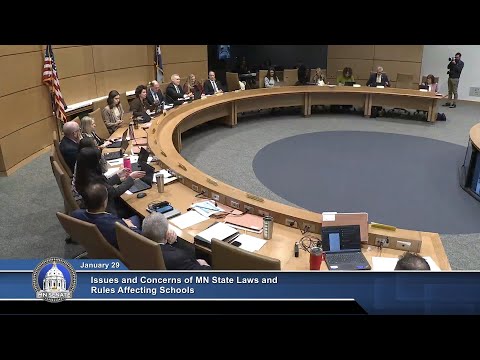
Hibbing School Board members and district leaders told the Senate Education Finance Committee on Jan. 29 that the current funding formula for the Postsecondary Enrollment Options (PSEO) program places a disproportionate financial burden on small, rural districts and asked the Legislature to review Minn. statute cited in testimony.
Hibbing School Board members and the district superintendent told the Senate Education Finance Committee on Jan. 29 that the state’s current PSEO funding formula is imposing heavy financial costs on their rural district and others like it.
"PSEO is a wonderful educational opportunity for students and their families," said Kim McLaughlin, a Hibbing School Board member, "but from our school district's perspective the financial implications are staggering." McLaughlin told senators that Hibbing High School’s junior and senior classes total roughly 340 students and that near‑quarter of those juniors and seniors were electing PSEO in recent years; the district estimates the combined out‑of‑pocket cost plus lost state aid at well over $500,000 and approaching $750,000 annually.
McLaughlin requested a comprehensive review of the Post Secondary Enrollment Options program and its funding formula (testimony referenced "Minnesota statute 12409, Post Secondary Enrollment Options Act") to quantify variation across districts and to consider changes that would preserve PSEO access without undermining K‑12 programming in small districts. She and other Hibbing witnesses said PSEO participation lowers locally controlled per‑pupil revenue and can reduce course offerings, support services and activities for remaining students.
Hibbing Superintendent Rick Aldrich and board director John Burkle described steep declines in district fund balances since fiscal year 2020 and said that PSEO costs are one of multiple pressures — including declining enrollment and rising health‑insurance and facility costs — that together threaten program stability. McLaughlin proposed that the Legislature consider adjustments that would incentivize collaboration between K‑12 districts and postsecondary institutions and reduce competitive fiscal effects.
Board members and the superintendent asked the committee to include a PSEO review in the education finance work this year and to examine options to adjust the formula to account for district size and local tax base differences so rural districts are not forced to choose between maintaining core programs and supporting students who use PSEO to access college opportunities.
The committee did not take action at the hearing; members asked for additional documentation and said staff would review the testimony as the education finance article is drafted.