Get Full Government Meeting Transcripts, Videos, & Alerts Forever!
Get email alerts on the Artificial Intelligence topic
No spam. Unsubscribe anytime.
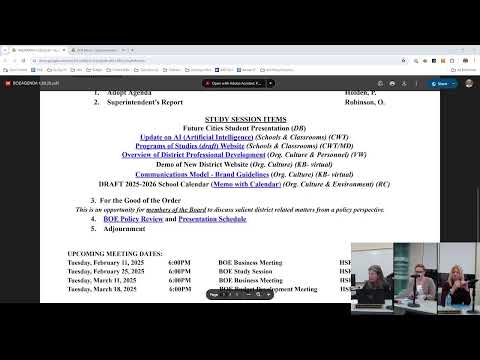
Shenendehowa outlines districtwide AI plan, adopts Magic School platform and seeks state grant
Summary
District presenters described a staged rollout of artificial intelligence tools for teachers and students, adoption of the Magic School platform, a three‑year state grant proposal to fund building‑level AI coordinators, and a draft AI policy tied to academic integrity.
Shenendehowa Central School District officials on Tuesday presented a districtwide plan to integrate artificial intelligence into instruction and operations, describing a pilot year using the Magic School platform, teacher training tiers, and a three‑year state grant intended to fund building‑level AI coordinators.
The presentation, led by district instructional leaders and members of an AI ad‑hoc committee, said the district has used Magic School since last January, that teachers control student access to tools, and that administrators have tracked platform use. The presenters said the district has recorded about 93,000 student “generations” in the platform since May and that teachers use roughly 80 teacher tools and more than 60 student tools available in Magic School.
The plan matters because the district intends to scale AI use while maintaining classroom oversight and academic integrity. Vanessa Kramer, identified in the presentation as a secondary instructional coach, said teachers “have complete control over how the students use it” and that the platform preserves chat history and lets teachers select which tools students may access. Pamela (last name not provided), an instructional coach on the panel, described a three‑tier professional development map aimed at introducing AI (101), training teachers on Magic School (200) and preparing teachers to use AI with students (300).
District staff told the board they applied for and were awarded a competitive New York State Learning Technology grant that would fund a three‑phase rollout beginning with 22 building‑level AI coordinators undergoing rigorous training. Presenters said the grant is structured as a three‑year effort starting Jan. 1, 2025, but added the funding had not yet been received at the time of the meeting.
The presenters said Magic School was chosen because it aggregates models from several providers, scaffolds prompts for novice users and provides oversight features. The district plans to host a public AI page on its instructional technology website with committee resources, a frequently asked questions section and links to presentations to the Board of Education.
District staff also reported that the ad‑hoc committee is drafting an AI policy and reviewing the district’s academic integrity policy to address misuse and expectations for student work. Staff emphasized that the committee is taking an “author versus editor” approach: teachers and students will be taught to design prompts and then critically evaluate and edit AI output.
Next steps described to the board included finalizing the AI policy, expanding professional learning menus, training the proposed cohort of building AI coordinators if the grant funding is received, and publishing the district’s AI web resources.
Speakers quoted in this article spoke during the AI presentation segment of the meeting; direct quotes are attributed to the presenters listed below.