Get Full Government Meeting Transcripts, Videos, & Alerts Forever!
Get email alerts on the Education Funding topic
No spam. Unsubscribe anytime.
State lawmakers outline higher-education and special-education priorities during Farmington board meeting
Summary
State Senator Derek Schlapp and State Representative Mike D'Amico briefed the Farmington Board of Education on legislative priorities including Senate Bill 5 (Roberta Willis Scholarship), special-education funding, Medicaid rate increases and school-based behavioral health before the 2025 legislative session.
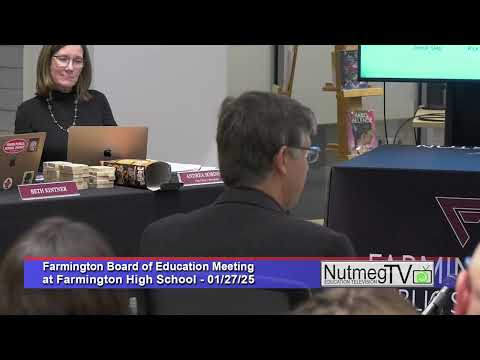
State Senator Derek Schlapp and State Representative Mike D'Amico met with the Farmington Board of Education on Jan. 27 to outline early priorities for the 2025 Connecticut legislative session and to hear local concerns about special education, school-based behavioral health and other education-related issues.
Senator Derek Schlapp, who said he chairs the higher education committee and the new select committee on special education, highlighted Senate Bill 5 — the Roberta Willis Scholarship Program — as a major priority. Schlapp said the bill would expand state scholarship supports for eligible middle- and low-income students going to Connecticut four‑year colleges; a public hearing on the measure is scheduled for Feb. 20. "We're gonna be hearing that bill, the public hearing on, February 20th," Schlapp said.
The visit mattered, board members said, because special-education costs are a leading driver of district budgets and because Farmington expects rising demand. Schlapp described the new select committee’s focus as cost control, the funding formula and workforce, and said past infusions of state money have been outpaced by growing needs. "We appropriated $40,000,000 additional dollars for special education in the last biennium," he said, adding that reimbursement tiers and rising out‑of‑district placements continue to strain local budgets.
Representative Mike D'Amico, a member of the public health and human services committees, told the board that Medicaid reimbursement and behavioral‑health access were major priorities. He said Medicaid rates in Connecticut have not kept pace with costs and that increases are likely to be a legislative focus this year. "Medicaid rates have been too low for way too long, and we need to do something about that," D'Amico said, noting the effect on access to pediatric care and other services.
Both legislators discussed school‑based behavioral health. Board members and staff described local efforts to place co‑located behavioral health services in schools — including a pilot at Farmington High School — and urged state support for sustained funding for urgent crisis centers and school access programs. D'Amico said the state has funded urgent crisis centers (UCCs) initially with ARPA funds and that the administration has requested roughly $9 million to continue them while moving to a blended funding model that includes insurance reimbursement.
Board members raised several other topics: the district’s request that the state fully fund “excess cost” special‑education reimbursements, concerns about unfunded mandates and mandated professional development, and the need to include air conditioning and improved air quality in school construction funding. Schlapp and D'Amico said these issues are on the legislative agenda in various committees and invited district leaders to testify at hearings.
The pair also took questions about part‑time paid sick leave recently enacted at the state level; D'Amico explained the program is funded by a small payroll contribution rather than a direct state mandate on employers, and said the administration will provide fiscal impact estimates to districts that request them.
The board gave the lawmakers a copy of a special‑education task‑force report and asked staff to circulate it to members. Members said their top request to the legislature is clearer, more equitable reimbursement for special education so local property taxes are not disproportionately affected.
The legislators attended the meeting at the board's invitation and left after a roughly two‑hour discussion. Farmington board members said they appreciated the lawmakers’ time and asked for continued contact as bills move through committee.