Get Full Government Meeting Transcripts, Videos, & Alerts Forever!
Get email alerts on the Nursing Home Budget topic
No spam. Unsubscribe anytime.
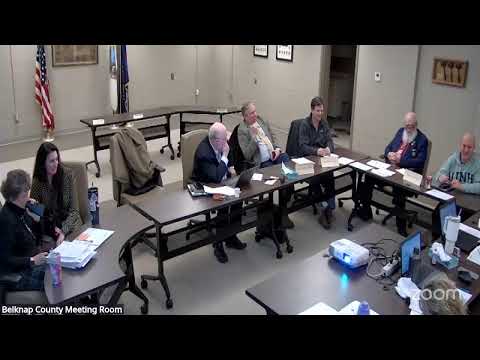
Committee reviews Belknap County nursing‑home budget as staffing, software and repairs drive costs
Summary
Belknap County officials reviewed the nursing‑home budget line by line, citing staffing shortages, a vendor dietary increase and pressing maintenance needs that together push the county subsidy higher.
Belknap County officials spent the bulk of the meeting reviewing the county nursing‑home budget, focusing on staffing shortages, an increase in contracted services, software and technology subscriptions, and several deferred and urgent maintenance items.
Amanda Gallagher, introduced to the committee as the nursing director, explained staffing and payroll lines: “So full time wages is for 8 staff members and part time wages is for 3,” and later summarized the facility‑wide staffing picture, noting the nursing staff complement and vacancies. Committee discussion and staff forecasts showed multiple vacancies across certified nursing assistant (LNA) and licensed nurse positions; staff noted 49 full‑time nursing positions on the roster and multiple vacancies budgeted at varying weeks rather than a full 52‑week fill.
Contracted services and supplies drew repeated attention. Gallagher and nursing staff described the facility’s electronic medical records and related software suite: “PointClickCare is our biggest system. It's the electronic medical records,” and staff reviewed other software used for payroll, scheduling and claims‑processing (named during the meeting as Munis, Kronos, OnShift and PointRight, among others). Committee members probed whether existing modules or a consolidated vendor could reduce subscription costs; staff said the county is evaluating a move from Kronos to Munis for timekeeping but that implementation and support costs are material.
Dietary services: the committee reviewed a revised vendor bill that came in after the commissioners prepared a recommended budget. Staff said the contractor’s revised cost for food service is $1,516,055; when asked whether in‑house service would be cheaper, staff replied, “It would not be cheaper to do it in house… We just can't get the help. We can't find staff.”
Maintenance and equipment: committee members discussed multiple building systems needing repair or replacement. Staff described ongoing sprinkler leaks discovered during pressure testing, mini‑split and fan‑coil failures in the laundry and center hallways, failing chiller and boiler pumps, and a recently broken dietary steamer that staff estimated would cost “10 to $12,000 to replace.” On the steamer, after discussion the committee agreed on an $11,000 figure to budget for replacement.
Revenue and fiscal impacts: staff walked the committee through revenue assumptions for the nursing home (Medicaid/Medicare, private pay, resident resources and other offsets) and the resulting county tax support. At one point the staff presentation showed the amount to be raised by taxes for the nursing facility at approximately $2,200,977 (an 8.4% increase from the prior baseline), and staff and commissioners discussed several post‑November adjustments that they said could reduce the final tax‑increase figure to a lower percentage once the full board meets and finalizes changes.
Why it matters: nursing‑home operations account for a large share of county labor and benefit costs; staffing levels, contractor charges and capital and maintenance needs significantly influence the county subsidy and the overall county budget. Committee members repeatedly stressed recruitment challenges and the ongoing cost tradeoffs of using contract nurses versus filling vacancies with county employees.
Next steps and scheduling: staff signaled continued budget refinement and scheduled a follow‑up budget meeting for Feb. 19 to finalize outstanding items and incorporate any changes the full commissioners’ meeting provides.