Get Full Government Meeting Transcripts, Videos, & Alerts Forever!
Get email alerts on the Zoning Parking topic
No spam. Unsubscribe anytime.
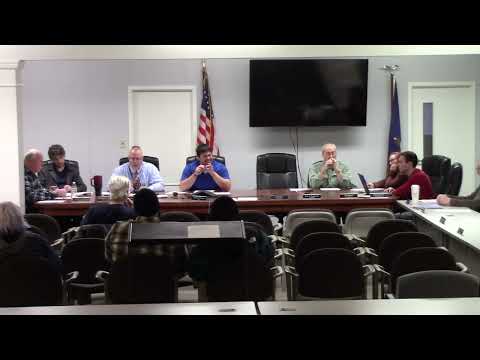
Sunbury City Council weighs reducing downtown parking requirements to spur apartments
Summary
Council members discussed a zoning change for the central business district to allow multifamily dwellings and eliminate off‑street parking requirements for permitted uses, prompting debate over how residents and customers would find parking downtown.
Sunbury City Council members discussed a zoning change that would allow multifamily dwellings in the central business district and remove the district's off‑street parking requirements for any use permitted there.
Supporters said the change — which staff described as lowering a size standard from “400” to “300” in order to conform with the International Building Code — is intended to make downtown redevelopment more cost‑efficient for developers building mixed‑use projects along Marcus Street and other downtown blocks. Staff also described the current parking standard as 1.5 spaces per apartment unit located within 300 feet of the unit, and said that requirement can hinder building multiple new units downtown where off‑street parking is scarce.
Council members and other participants pressed several practical questions. A speaker identified in the record as Josh asked whether removing the 1.5‑space rule in the business district would set a precedent for other zones; staff and other members replied that different zones have different requirements, so the proposed change would apply only to the central business district as written. Council members asked how new downtown residents would find parking, whether business customers might lose convenient spaces on Market Street, and whether enforcement and permit rules would need to change to avoid conflicts between residents and customers.
Participants noted existing options and past practice: city lots near downtown, the ability to buy parking permits, and previous occasions when Marcus Street developments did not carry parking stalls. One participant pointed out that some downtown buildings already have apartments above commercial space with little or no dedicated parking — the Edison Hotel was cited as an example with about 50 apartments and no off‑street parking. Others said more residents living downtown could increase foot traffic and help local businesses despite parking tradeoffs.
Members also discussed administrative details: the geographic limits of the central business district were described roughly as fronting Market Street to 10th, extending back toward Chestnut and Arch; historic‑district review (HARB) would still apply to building permit approvals in the historic parts of downtown but not to parking rules. Staff said variances are sometimes pursued now to overcome the parking rule, and the proposed change is intended in part to reduce developers' need to seek costly variances.
No formal vote on the zoning text was recorded in the meeting transcript. Staff said the item had a prior first reading and that language had been revised; additional public advertising and a subsequent hearing or second reading were still required before any ordinance would take effect.