Get Full Government Meeting Transcripts, Videos, & Alerts Forever!
Get email alerts on the Ethics Board Counsel topic
No spam. Unsubscribe anytime.
Wausau council authorizes outside counsel for ethics board in complaint against Mayor Doug Denny
Summary
The Wausau Common Council voted 8-2 on Jan. 28 to approve hiring outside legal counsel to advise the citizen ethics board on a complaint filed against Mayor Doug Denny. The move followed public comment sharply critical of using taxpayer funds while a state Department of Justice review is also underway.
The Wausau Common Council on Tuesday authorized hiring outside legal counsel to advise the ethics board in a citizen complaint against Mayor Doug Denny, approving the measure on an 8-2 vote.
The vote concerned a council resolution (file 250-112) “approving the hiring of special counsel and authorizing the city attorney to hire and manage outside legal counsel engaged to advise the ethics board in the matter of the complaint of [Caldwell], Gerard Phelan, Kurt Hazy, and Scott Bridal against Mayor Doug Denny,” as summarized in the council packet. Alder Watson moved the resolution and Alder Rasmussen seconded; the motion passed 8-2.
The council majority said the ethics board — a citizen panel that reviews municipal code complaints — is entitled to independent legal guidance because the city attorney has a conflict. City Attorney Anne told the council she must remove herself from representing the ethics board because she could be a witness and because the mayor is a member of an organizational client she represents. “I am required to remove myself from representation of the ethics board,” Anne said during council discussion.
Alder Rasmussen framed the vote as ministerial and procedural, not an independent investigation by the council. “The city council did not request the ethics complaint,” Rasmussen said, adding that the ethics board is an independent citizen body and that the council’s role is to ensure the board can get legal advice when the city attorney cannot provide it.
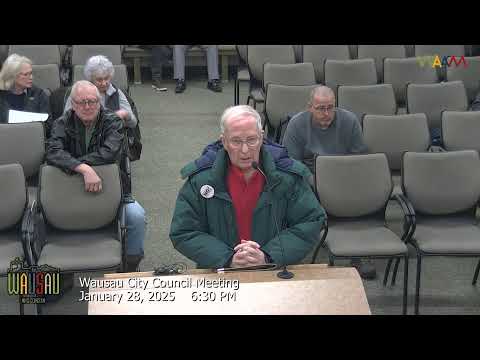
Opponents argued the action needlessly commits taxpayer funds while a state Department of Justice criminal inquiry remains open. Public commenters pressed the council to postpone or reject the request, calling the matter redundant and a potential waste of city money. Joanne Leonard, a Wausau resident, told the council, “The city decided to pay for an attorney for the ethics committee. I'm not sure I understand the reason the city attorney couldn't be counsel for the ethics committee.” Several speakers asked the council to wait for the DOJ outcome before authorizing expenses.
Council members debated two procedural approaches: (1) authorize outside counsel now so the ethics board will have legal guidance immediately if it proceeds, or (2) decline now and allow the ethics board to request counsel if and when it wants it. Alders who supported the resolution argued that waiting would delay the board’s work and could leave the panel without timely legal advice; Alders who opposed it said the board should request counsel itself to avoid automatically committing city funds.
Clerk and staff confirmed that the ethics complaint had been publicly reported in local media and that the complaint document was publicly available, though the complaint text was not included in the council packet.
Public commenters repeatedly raised questions about cost. Multiple speakers cited an outside counsel rate mentioned in discussion — $250 per hour — and asked whether a closer or less-expensive attorney could be used. The city attorney said retained counsel selection followed standard practice and the city had previously appointed outside counsel for an ethics matter involving a former alder.
The council discussion repeatedly noted municipal code provisions governing the ethics board. Citizen speakers referenced Municipal Code MC 2.03.040 and MC 2.03.060 in urging delay or dismissal, and council members cited the code as the source of the ethics-board process and the city attorney’s responsibilities.
The ethics board membership and terms were provided from city staff during public comment: Brian Mason, Kate Palmer, Robin Devos, Doug Hossler and Calvin Dexter are currently listed as members, with Jesse Kearns serving as an alternate. Some members’ terms expire in 2025 and later years.
The council voted at the end of a lengthy deliberation. Mayor Doug Denny and his attorneys previously issued a legal response to the complaint that council members said the ethics board is entitled to review along with any counsel the board chooses.
The ethics board may meet with or without outside counsel; if it asks the council later for counsel, the council can consider that request. The action authorizes city staff to engage and manage outside counsel should the board or process require it.
The council then recessed into a closed session later in the meeting for unrelated pending litigation matters and adjourned from closed session.
Why it matters: The vote removes a procedural obstacle for the citizen ethics board to get independent legal advice when the city attorney is conflicted. It also prompted questions from residents about when and how taxpayer funds should be used in municipal ethics reviews, and it highlighted overlapping criminal and administrative tracks when complaints involve elected officials.