Get Full Government Meeting Transcripts, Videos, & Alerts Forever!
Get email alerts on the Land Use Development topic
No spam. Unsubscribe anytime.
Selma planning commission recommends approval of Amberwood development agreement and EIR addendum
Summary
The Selma City Planning Commission voted to recommend that the City Council approve a development agreement and a CEQA EIR addendum for the Amberwood Specific Plan, a phased housing project that includes roadway, park and utility provisions and mitigation measures for traffic and biological resources.
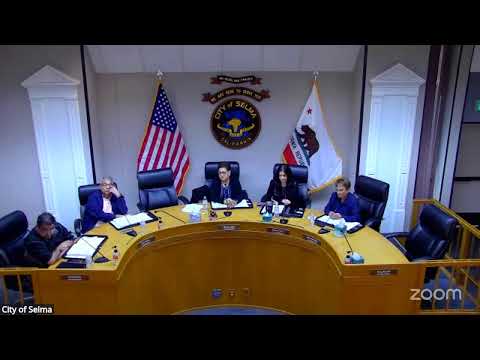
The Selma City Planning Commission on Jan. 27, 2025 voted to recommend the City Council approve a development agreement and an environmental impact report (EIR) addendum for the Amberwood Specific Plan, a multi‑phase residential project that staff said would include roughly 297 homes in the first phase.
The decision sends to the City Council an agreement that staff and the developer say clarifies timing, financing and responsibilities for infrastructure and public amenities — including a dual‑use basin/park, street improvements and potential public‑street dedication — and an EIR addendum that staff said finds no new significant environmental impacts beyond those analyzed in the original EIR certification.
City staff told the commission the development agreement is intended to provide certainty about phasing, fee credits and reimbursements and the timing of public improvements. A staff member said the agreement “provides specific detail that both the city as well as the developer can rely upon to ensure that the development’s done in a . . . comprehensive manner.” The staff presentation noted the agreement does not change project density or the specific plan’s policies but clarifies how and when improvements must be built and funded.
The EIR addendum was presented as a supplement to the project’s 2015 certified EIR and a 2021 addendum. According to staff, the addendum addresses changes such as whether local streets are dedicated as public streets and concludes that the development agreement and the change from private to public streets “do not create any new impacts that were not previously analyzed.” Staff cited CEQA review and timing requirements for additional pre‑construction biological surveys and other mitigation as part of permitting.
Public commenters raised traffic and school‑traffic concerns along Floral Avenue and Dockery Avenue. Gary Ford, a resident of 1325 Floral, told the commission he believes Floral is already congested and asked for additional access and earlier roadway improvements: “Floral is a bottleneck now. I can’t even get out of my driveway at 08:00 in the morning.” Staff responded that the project includes mitigation measures such as a traffic signal at Floral and Dockery and that traffic impact studies will be required for each phase to determine when specific improvements are triggered. A staff member told the commission the signal at Floral and Dockery is an identified mitigation measure and that timing depends on phasing and traffic studies.
Several residents asked whether property would be acquired for roadway widenings and when signals would be installed. Staff said right‑of‑way acquisition and engineering designs would determine any property impacts, that affected owners would be notified and appraised values paid where acquisitions are required, and that some larger intersection improvements are federally funded and therefore subject to longer approval timetables. Staff also said the city communicates with the school district about planned school sites and noted the specific plan included space for at least one elementary school.
Lennar Homes of Fresno sent a representative who told the commission the company is “excited to see it enter this next phase” and that Lennar is available to answer questions. The record shows staff and developer representatives participated in negotiations over park location and the alignment of a linear park and trail network.
The commission discussed whether interior streets would be public or private. The EIR addendum allows for public or private streets if chosen by the developer; staff said if streets become public they would typically be maintained through a community facilities district funded by the development, while private streets would be maintained by a homeowners association.
Staff also addressed utilities and other infrastructure. The city is completing an Amberwood sewer trunk line; staff estimated construction closeout paperwork in March 2025, weather permitting. The transcript shows staff noting Consolidated Irrigation District facilities in the area and saying developers may need to underground irrigation ditches under cooperative agreements, with costs borne by the developer when that improvement is required.
Votes at a glance: The commission voted to recommend approval and certification to the City Council for a development agreement and EIR addendum for the Amberwood Specific Plan. The roll call recorded affirmative votes from Commissioner Gorey, Commissioner Garcia, Commissioner Franco, Commissioner Stanridge and Chair Salas. The motion passed.
The commission’s recommendation will go to the Selma City Council for final action; staff noted notice for the council item may have been mailed separately and that the EIR addendum and development agreement materials will be provided to the council for their consideration.