Get Full Government Meeting Transcripts, Videos, & Alerts Forever!
Get email alerts on the Land Use Campgrounds topic
No spam. Unsubscribe anytime.
Spalding County planning commission tables proposed 'campground resort' zoning change after hours of public opposition
Summary
The Planning Commission held a public hearing on proposed text amendments to add a “campground resort” use to Spalding County zoning rules. Dozens of residents urged the commission to reject or heavily restrict the change. Commissioners voted to table the definition and related items for 90 days to allow further drafting and outreach.
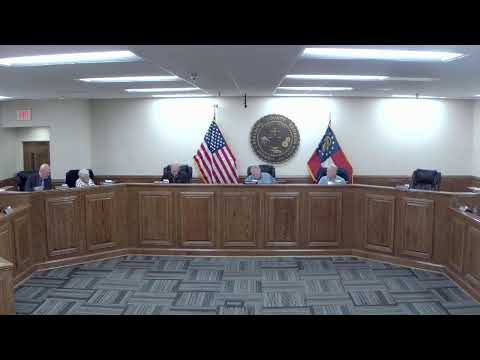
The Spalding County Planning Commission voted Jan. 28 to table for 90 days proposed text amendments that would add a new “campground resort” use to the county zoning code, following more than two hours of public comment opposing the change.
The public hearing covered three linked proposals: (1) adding a definition for “campground resort” to Appendix 4, Article 2, Section 202 of the Spalding County Code of Ordinances; (2) adding a supplemental use standard in Article 2, Section 424; and (3) listing the use in AR-1 permitted uses requiring a special exception under Article 5, Section 503b. Dozens of residents from the county’s western, river-adjacent neighborhoods urged commissioners to deny the changes or limit them to commercially zoned, highway-fronting parcels.
The amendments were introduced as old business and carried forward from a December meeting. Commissioners opened a combined public hearing for all three related items before taking testimony. Neighbors said the proposed language would allow high-density RV parks and “resort” amenities in low-density AR‑1 (agricultural/residential) zones.
Residents raised repeated concerns about compatibility with the county’s comprehensive plan (they said the riverfront is designated a priority ecological area), emergency and public-safety capacity, septic and sewer requirements, road wear from heavy RV traffic, floodplain use, and the risk that short-term sites would become long-term or permanent housing. Mark Wallace (5319 West McIntosh Road) told the commission the county’s comprehensive plan designates conservation areas along the Flint River and argued the campground concept “does not follow the stated goal of the comprehensive plan.” Craig French (170 Crabtree Road), a long-time RVer and neighborhood HOA president, said many campers overstay short-term limits and that rural roads and emergency services are not equipped for high-density camping. Several speakers pointed to a live website (wildcatrvresort.com) that they said was already taking reservations for a proposed campsite.
Multiple speakers asked that any campground use be limited to commercially zoned parcels fronting state highways, not on narrow county roads or inside AR‑1 areas. Commenters urged clearer, enforceable standards on maximum sites per usable acreage (excluding floodplain and buffers), limits on length of stay, wastewater handling requirements (connection to public sewer rather than dump stations in sensitive areas), parking and gate-code rules, and insurance and shelter requirements for severe weather.
Planning staff and commissioners reiterated two legal and procedural points: (1) without a definition added to the code, a use not listed as permitted would remain disallowed in a given district; and (2) if added as a permitted condition it would still require either special exception review or Board of Commissioners approval for any site. Commissioner discussion after public comment emphasized that several substantive policy details remained unresolved. Commissioners said they had heard consistent public concerns about enforcement, infrastructure capacity, and compatibility with the comprehensive plan.
After discussion the commission first voted to table the definition (Article 2, Section 202) and then passed a motion setting a 90‑day timeframe for staff and commissioners to revise the proposed text and return with a revised package. The motion carried unanimously among voting commissioners present.
The tabling does not adopt the amendments; it postpones action so staff can redraft standards and consult further with stakeholders. The commission’s recommendation will be forwarded to the Board of Commissioners for any final action if and when the text amendment is reintroduced.
Public testimony and written handouts given to the commission stressed the same themes repeatedly: preservation of rural character and priority ecological areas along the Flint River, current limitations of Spalding County’s EMS and sheriff response times in rural areas, concerns about road geometry and weight limits on narrow county roads, and the potential for a campground to become de facto long-term housing.
Commissioners said they would solicit further drafting support and consider limiting any campground use to commercially zoned highway-fronting parcels if the county moves forward in future drafts. For now, the proposed code change is paused and will be reconsidered in a revised form within 90 days.