Get Full Government Meeting Transcripts, Videos, & Alerts Forever!
Get email alerts on the Land Use Quarry topic
No spam. Unsubscribe anytime.
Lane County board reopens record, asks staff to draft ordinance after contested Hazel Dell quarry hearing
Summary
The Lane County Board of Commissioners on Jan. 28, 2025 voted 3–2 to direct staff to prepare an ordinance and supporting findings for possible approval of a proposed Hazel Dell quarry plan amendment and to reopen the public record for 14 days (plus a further 14 days for applicant rebuttal).
The Lane County Board of Commissioners on Jan. 28, 2025 voted 3–2 to direct staff to prepare an ordinance and supporting findings for possible approval of a proposed Hazel Dell quarry plan amendment and to reopen the public record for 14 days (with a further 14 days for the applicant's final rebuttal). The action follows a continued quasi-judicial hearing on a property-owner initiated application to add roughly 46 acres to the county's inventory of significant mineral and aggregate sites, redesignate forest land to natural resource mineral, rezone forest lands to a Quarry and Mine Operations (QM) zone, and obtain site review under Lane Code 16.2574(A)–(J).
The vote followed hours of staff presentation and commissioner deliberation focused chiefly on conflicts with major big-game habitat and the adequacy of proposed minimization measures. Taylor Carsley, the Land Management Division planner assigned to the application, summarized the process, applicable criteria and evidence, including an applicant-submitted big-game management plan dated October 2024 and multiple rounds of materials dating back to 2016. Carsley said the record contains competing expert materials on groundwater, stormwater, noise, dust and wildlife: “Staff believes evidence in the record supports denial of the application, given that the current record is similar to that of the one in 2021,” he said.
Why it matters: The application would add a proposed quarry site east of Oak Ridge to Lane County's significant mineral and aggregate inventory and authorize rezoning and mining operations on privately owned parcels. Opponents and county staff — and the Oregon Department of Fish and Wildlife (ODFW) in multiple letters — flagged unresolved impacts to major big-game habitat, saying the applicant’s October 2024 big-game management plan lacks clear, measurable, time‑bound mitigation objectives. The planning commission previously recommended denial, and the board's 2021 order also denied a prior, related application over similar habitat concerns.
Key facts and record points
- Proposal: plan amendment to add 46 acres to the county inventory of significant mineral and aggregate resources; redesignation from Forest (F) to Natural Resource Mineral (NR); rezoning from F-1/F-2 forest zones to Quarry & Mine Operations (QM); and a site review per Lane Code 16.2574(A)–(J). (File references read into the record at the hearing.)
- Applicable criteria cited in the staff presentation included OAR 660-023-0180 (Goal 5 rule), Lane Code provisions (16.257, 16.400, 16.252), and state statutes referenced for appeal and procedural requirements (ORS 197.7975, ORS 197.7963).
- Extent of potential effect: staff and the applicant identified a 1,500-foot default impact radius from the proposed mining boundary; the applicant identified 16 dwellings within that 1,500-foot area. Opponents and some expert witnesses argued for an expanded impact area for noise, dust and elk habitat concerns; staff reported competing evidence on how, or whether, to expand that area.
- Wildlife concerns: ODFW and county staff said the applicant’s big-game management plan does not contain sufficiently specific, measurable or enforceable mitigation measures for foraging, overwintering, fawning habitat loss and redistribution of elk that could raise private-property damage tags. Staff and ODFW recommended the board treat big-game conflicts as unresolved and to conduct the economic/social/environmental/energy (EC) analysis required by the Goal 5 rule if conflicts are not minimized.
Board action and next steps
- Early procedural vote: The board voted 5–0 to close the continued public hearing and begin deliberations. That vote was moved by the vice chair and seconded by Commissioner Farr (voice vote; no roll-call names recorded).
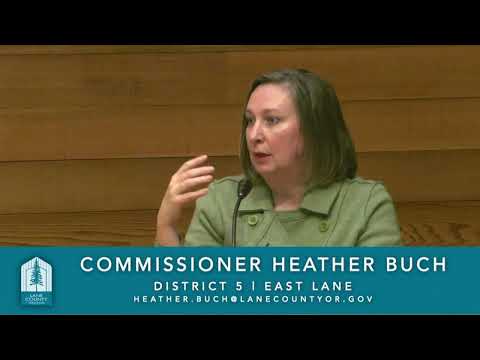
- Final directive: On Jan. 28 the board voted 3–2 to direct staff to prepare an ordinance and supporting findings for approval, and to reopen the record for 14 days for responses addressing procedural objections (including a procedural letter submitted by the applicant’s representative) and EC findings related to possible conflicting uses within the impact area, with an additional 14 days allowed for the applicant’s final rebuttal. The motion passed on a 3–2 voice vote; the record states the motion was moved by Commissioner Farr and seconded by the vice chair.
- Procedural implications: Staff will return with an ordinance and recommended findings for the board’s consideration. If the board tentatively approves, staff said it will prepare an ordinance and findings for a first reading and a subsequent reopened public hearing; if the board tentatively denies, staff will return with an order and findings supporting denial. The board’s decision will be the final local decision subject to appeal to the Land Use Board of Appeals (LUBA).
What remained in dispute in deliberations
Commissioners and staff discussed several disputed issues the record must resolve before a final decision: whether the 1,500-foot impact area should be expanded and by how much; whether noise, dust, air-blast and vibration monitoring and enforcement conditions are adequate to ensure minimization; whether stormwater/runoff and roadway impacts are properly addressed; and whether the ODFW critiques of the October 2024 big-game plan mean that conflicts to major big-game habitat remain significant. Several commissioners asked for more clarity on the geographic context — including the amount of federal forestland nearby — but staff and ODFW materials argued that adjacent public land is not equivalent to privately owned elk habitat downslope of the site.
Quotes from the hearing
“Staff believes evidence in the record supports denial of the application, given that the current record is similar to that of the one in 2021,” Taylor Carsley, Land Management Division staff planner, said during his presentation.
“It’s a lot to take care of and your patience and attention is appreciated,” Chair David Lovell said when opening the continued hearing.
Context and background
The continued hearing stems from an application first addressed by the board on Oct. 15, 2024; the board at that hearing left the record open for additional written evidence and rebuttal. The record before the board includes materials back to July 2023, earlier studies and reports from 2016–2018 referenced by the applicant and the opponents, ODFW comment letters, and a 2024 big-game management plan submitted by the applicant. Staff’s recommendation to the board was denial based primarily on unresolved conflicts to major big-game habitat that the board previously found dispositive in 2021.
Ending
Staff will draft an ordinance and findings consistent with the board’s Jan. 28 direction, reopen the public record for the limited 14‑day response period (plus 14 days for applicant rebuttal), and return to the board for a reopened public hearing. Any final local decision will be subject to appeal to LUBA; the record and the board’s findings will guide the scope and timing of the next hearing.