Get Full Government Meeting Transcripts, Videos, & Alerts Forever!
Get email alerts on the Police Funding topic
No spam. Unsubscribe anytime.
Central committee weighs $8 million police plan, mayor's court as revenue source
Summary
City of Central committee discussed funding options for a proposed full-time Central Police Department, including property millage, sales tax and creating a mayor's court to retain citation revenue; members agreed to seek outside presentations and ask for consultant cost estimates before asking the council for funding.
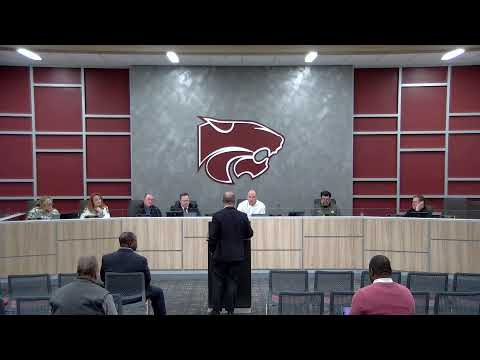
A special committee of City of Central officials spent its meeting focused on how to pay for a proposed full-time Central Police Department (CPD), debating property millage, sales taxes and a mayor's court that could keep some citation revenue in the city.
Committee members centered discussion on an operating estimate of roughly $8 million a year for a full municipal police department, well above the $3.9 million figure CPD initially proposed and the roughly $1.1–$1.3 million the city currently budgets for policing. The group discussed using a property millage, a sales tax, or “self-generating” revenue from fines and a mayor’s court to close the gap, and asked staff to bring more detailed cost figures to future meetings.
Why it matters: the funding choice determines whether Central can deploy a department with detectives, evidence staff and communications, or rely on a more limited, hybrid model. Committee members repeatedly noted that a major new tax or millage would require public buy-in and council action and that some funding options carry political and legal trade-offs.
The committee heard a staff summary of revenue scenarios tied to millage rates. Using assessor calculations discussed in the meeting, speakers estimated that a 40-mill levy could raise about $9.6 million annually and a 50-mill levy about $12 million; presenters gave illustrative homeowner impacts (for example, a roughly $200,000 home could pay about $500 per year at 40 mills and about $625 at 50 mills). Committee members warned those were preliminary, ballpark figures and that startup costs (vehicles, equipment) and ongoing inflation mean any multi-year millage should expect higher needs over time.
Members explored a mayor’s court model that would process civil fines and certain ordinance and misdemeanor adjudications locally rather than through parish courts. Kyle, a staff member who researched other Louisiana municipalities, described the approach and its revenue potential, saying it “could be a very real and viable option to generate revenue that would stay here instead of going to Baton Rouge.” Kyle summarized the Livonia model as an example: a municipality-operated court with third‑party processing that returns a share of collections to the town. The committee discussed operational requirements for a mayor’s court — a magistrate, city prosecutor, indigent defender, court clerk or dedicated administrative time — and noted some collections must be forwarded to state funds (for example, trauma or crime‑related funds), so the city would not retain 100% of receipts.
Members raised enforcement and reputation questions tied to automated or high-volume ticketing. The committee heard that some smaller towns use lidar/automatic plate-reader combinations and high-volume processing to generate ticket revenue; proponents said the approach reduced speeding and saved lives, while critics warned of “speed trap” reputational risks and cited prior local controversies with automated enforcement.
The committee did not vote on funding for a police department or adopt any millage proposal. Instead it agreed on next steps: invite representatives from the sheriff’s office and municipalities that operate mayor’s courts (Walker and Livonia were named) to present at upcoming meetings, and to collect more precise budget estimates from CPD and the sheriff’s office. Members discussed hiring a consultant to fill data gaps and produce apples‑to‑apples cost comparisons; an amount of $50,000 was suggested as a plausible, task‑based engagement figure to request from the council rather than a larger, six‑figure retainer. Committee members also agreed to defer any formal council funding request until they can present firmer cost estimates and consultant pricing.
The committee closed by confirming how the public can submit input (email flecc@central-la.gov) and by scheduling follow-up presentations; no formal millage referendum or budget amendment was approved at the meeting.