Get Full Government Meeting Transcripts, Videos, & Alerts Forever!
Get email alerts on the Public Safety 911 Funding topic
No spam. Unsubscribe anytime.
Spokane County commissioners pause Shrek transition amid dispute over 911 apportionment, mayor sets Feb. 6 deadline
Summary
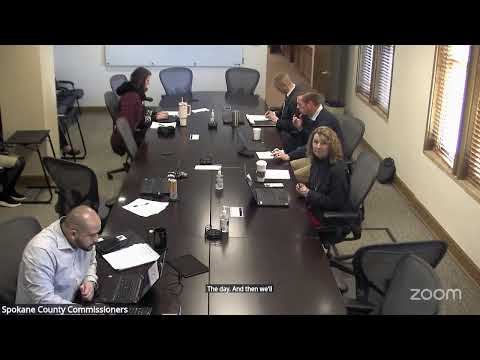
Spokane County commissioners on Jan. 27 spent the bulk of a strategic planning meeting debating how a proposed state bill and a recent letter from the City of Spokane would affect Spokane Regional Emergency Communications (Shrek) funding and governance.
Spokane County commissioners on Jan. 27 spent the bulk of a strategic planning meeting debating how a proposed state bill and a recent letter from the City of Spokane would affect Spokane Regional Emergency Communications (Shrek) funding and governance. County staff told the commissioners the Shrek board paused transitional meetings because it viewed the city’s proposals and House Bill 12 58 as likely to reallocate regional 9‑1‑1 and sales‑tax dollars in ways that would disadvantage the county’s other member agencies.
The discussion centered on how the 9‑1‑1 excise tax and the 1/10 of 1% sales tax are currently pooled and used, and on language in House Bill 12 58 that county staff said appears to apportion revenues based on call volume rather than tax origination. “This bill is not written from that context. The bill is written from what we refer to as the status quo,” Cody, a Shrek representative, told commissioners. He described the bill as applying apportionment on top of the existing body of work performed by Shrek rather than replacing it.
Why this matters: Shrek is the primary call‑receiving and call‑packaging center for the region; changes to how excise and sales taxes are apportioned would affect budgets, staffing and a planned regional facility and computer‑aided dispatch (CAD) implementation. County staff said a new facility RFQ is imminent and that uncertainty about which jurisdictions will use the regional center changes the cost estimates for necessary retrofits and equipment.
County staff walked commissioners through an analysis of system usage and tax generation for 2020–2024. Using the numbers they described, Cody said the comparison between tax generation and services provided produced “a delta” of $3,260,000 that the City of Spokane would effectively owe for services provided on the city’s behalf during that four‑year period. He warned commissioners that an apportionment scheme based on call volume could lead to what he and the Shrek board viewed as inequitable “double dipping”: the city receiving apportionment while still benefitting from services Shrek has been providing.
Commissioners and other officials discussed several related points: the CAD project, which county staff said left Shrek potentially responsible for a roughly $5,000,000 bill after the city reversed an earlier commitment to split costs; the costs to stand up a city‑run primary PSAP (county staff estimated a $15 million to $20 million startup range); and governance questions, including repeated city requests for greater board representation tied to call volume (the city argued for roughly “58%” representation based on its share of call volume, staff said).
Positions and next steps: The Shrek board, county staff said, has resisted changing board composition and retaining finance authority for a separate city oversight body. Some commissioners urged voluntary mediation between the parties; Commissioner Jordan said rejecting mediation “is missing a potential opportunity.” Other commissioners and Shrek representatives opposed mediation as futile if parties would not budge on governance and finance nonnegotiables. The City of Spokane’s letter to the county, county staff said, asked the county to provide approximately $15,000,000 by Feb. 6 or pursue the matter in Superior Court.
No formal vote or change in policy was recorded at the Jan. 27 meeting. Several commissioners instructed staff to keep negotiating and to report back; others said they would be prepared to present the county’s expense side in court if the mayor pursues litigation. County staff said they still support fair apportionment in principle but want it implemented without disadvantaging the 20 other Shrek member agencies and without obligating the county or other agencies to repay services already provided unless a fair billing reconciliation is agreed.
Ending: County officials set a short timetable for additional discussions, noting the Feb. 6 date in the mayor’s letter and the pending state legislative session. Commissioners asked staff and Shrek to continue outreach and to return with options for negotiating governance, CAD cost sharing and an equitable apportionment framework.