Get Full Government Meeting Transcripts, Videos, & Alerts Forever!
Get email alerts on the Department Of Human Services Budget topic
No spam. Unsubscribe anytime.
DHS presents anti‑fraud package, telehealth extension and health‑care savings proposals to committee
Summary
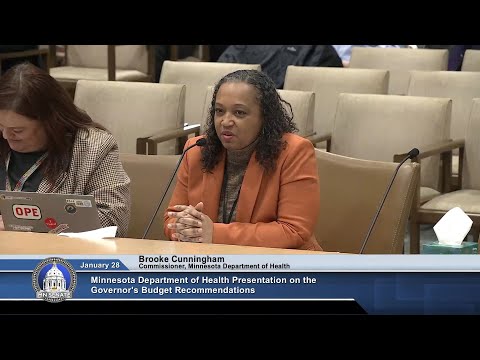
Commissioner Jody Harpstead and DHS officials presented a suite of governor’s proposals to the Senate Health and Human Services Committee on Jan. 28 that emphasize program integrity, telehealth access and several health‑program savings or technical changes.
Commissioner Jody Harpstead and DHS officials presented a suite of proposals to the Senate Health and Human Services Committee on Jan. 28 focused on program integrity, targeted investments and a set of health‑care cost containment and technical changes.
“This budget provides additional tools and statute changes to strengthen our abilities,” Commissioner Jody Harpstead told the committee, introducing the department’s “anti‑fraud” package and related proposals. DHS said the agency’s Office of Inspector General has conducted thousands of investigations and that Medicaid spending growth has outpaced the department’s staffing increases.
Major DHS proposals discussed included:
- Program‑integrity and anti‑fraud measures: DHS proposed increased staffing for oversight, provider eligibility, internal audit and investigations; new data‑sharing authority across state agencies; authority to suspend licenses if a controlling individual is criminally charged in another jurisdiction; expanded ability to withhold payments after criminal fraud convictions in other jurisdictions; and use of advanced analytics, including AI in partnership with MNIT, to detect anomalous billing patterns.
- Background‑study changes: proposals would prohibit individuals under active fraud investigation from holding control positions in programs serving children or vulnerable adults and align certain background checks with the federal Adam Walsh authority and federal childcare rules.
- Telehealth: DHS requested a statutory extension of audio‑only telehealth authorization through June 30, 2027, citing a 2024 study recommending continuation to preserve access for rural and technology‑limited patients.
- Medicaid and health‑program technical items: rate methodology clarification for FQHCs after mergers; removing the sunset for the drug formulary committee to preserve stakeholder review and supplemental rebate access; and a pharmacy carve‑out option to capture additional federal Medicaid drug rebates on certain drugs (DHS said this could yield savings on drugs currently excluded from Medicaid rebate collection).
- Other health‑program proposals: an increase in the HMO surcharge (from 0.6% to 1.25% of premium revenue in the governor’s request), and a proposed benefit reduction to eliminate adult chiropractic services in Minnesota Health Care Programs for beneficiaries aged 21 and older (DHS said child and youth medically necessary services would remain under EPSDT rules).
- Targeted one‑time funding requests: a one‑time investment to bridge an anticipated $9 million federal funding shortfall for HIV services in the first fiscal year of the next biennium; and funding for three additional FTEs to reduce a three‑month inventory/backlog in housing‑stabilization service eligibility determinations.
DHS officials said the anti‑fraud package draws on recent fieldwork — the department said its inspector general has conducted about 4,000 investigations over the past 5½ years, stopped payments to about 750 entities and performed 164 autism‑provider site visits that led to 24 fraud referrals. The department argued that more staff, better data and clearer statutory authority would improve detection and recovery of inappropriate payments.
Senators asked about the fiscal effects of federal grant pauses, how savings proposals would affect counties and long‑term‑care providers, and whether some proposed savings may shift costs to other levels of government or increase downstream spending. DHS said it would provide more detailed fiscal breakdowns and follow up with committee members on specific inquiries.
Ending: Lawmakers thanked DHS for the overview and asked for further follow-up on county impacts, carryforward balances and federal funding risks; no final legislative action occurred during the hearing.