Get Full Government Meeting Transcripts, Videos, & Alerts Forever!
Get email alerts on the School Consolidation topic
No spam. Unsubscribe anytime.
Hour of public testimony urges Fairbanks district to spare neighborhood schools, cite equity and transportation concerns
Summary
At a public hearing on proposed school consolidations, parents, teachers and community members urged the Fairbanks North Star Borough School District to reconsider closures of Hunter, Salcha, Pearl Creek, Barnett and Midnight Sun, citing transportation, Special Education continuity, trauma-informed services and Alaska Native community impact.
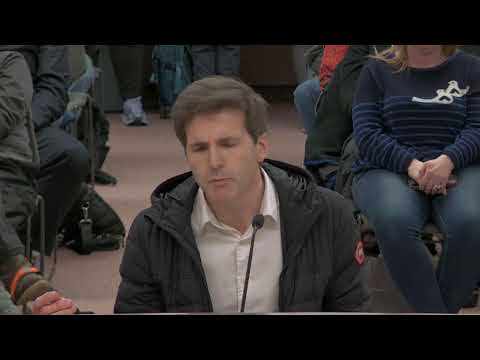
The Fairbanks North Star Borough School District heard one hour of public testimony opposing proposed school consolidations, with speakers urging the board to preserve neighborhood schools and to consider alternatives such as magnet conversions and targeted grants.
Community members said closures would disproportionately affect low-income, Alaska Native and special-education students and would worsen transportation burdens for rural families. Nicholas Hoy, principal of Salcha Elementary School, warned that relocating Salcha students to "Anderson Crawford on Eielson Air Force Base poses significant logistical challenges," including restricted access for nonmilitary families and complications during base lockdowns. He said the district's stated $1,000,000 in projected savings lacks detail and questioned where savings would come from if staff retain positions or buildings remain functional.
Speakers repeatedly highlighted Hunter Elementary's role serving high-need students, including many who are trauma-impacted. Nancy Teeter, the Alaska Native education tutor at Hunter Elementary, said, "Every single student at Hunter Elementary is a survivor." Teacher/staff member Heather Keane told the board, "Hunter Elementary is the only trauma informed elementary school in the district," and explained that the school's practices focus on emotional well-being and resilience as well as academics.
Parents and special-education advocates warned that breaking up established SPED teams would harm students who rely on consistent, bonded teams of teachers and aides. "When SPED teachers, aids, and parents come together to implement an IEP, we become a team," Jessica Wagner, a Hunter parent, told the board, urging continuity for students with disabilities.
Other witnesses urged the board to pursue alternatives to closures. Several speakers proposed converting Pearl Creek to a STEAM/STEAM-magnet school to attract out-of-district students and grant funding; Jennifer Redmond and other Pearl Creek parents cited potential grant opportunities, including federal magnet grants, as revenue sources. Parents and students defending Barnett Magnet School said the school's K–8 model produces higher proficiency and stable enrollment; a student speaker and a parent noted Barnett's high occupancy and magnet demand.
Speakers also questioned the district's data and criteria for selecting schools for closure. Several testified that Hunter's enrollment decline is negligible over the long term and that slides presented by administration omitted socioeconomic data for some affected schools. Josie Hollett, speaking for Midnight Sun Elementary, said the school's facilities and recent maintenance do not match the closure criteria and asked the board to inspect the school and the decision framework before acting.
Other testimony included calls for the borough and state to address long-term funding: Nikki Eisman, a librarian and advocate, urged public testimony on House Bill 69, which she said would raise the state's base student allocation and provide more predictable funding for districts.
The public testimony period, limited to three minutes per person and capped at one hour, closed at the hour mark; the board recessed to set up for its work session.
Why this matters: The board is weighing consolidation plans that would reassign students, alter school capacities and change service delivery for vulnerable populations. Speakers asked for clearer cost breakdowns, transportation impact analyses, and consideration of alternatives such as magnet conversions and targeted grant seeking.