Get Full Government Meeting Transcripts, Videos, & Alerts Forever!
Get email alerts on the Health Policy Subcommittee Docket topic
No spam. Unsubscribe anytime.
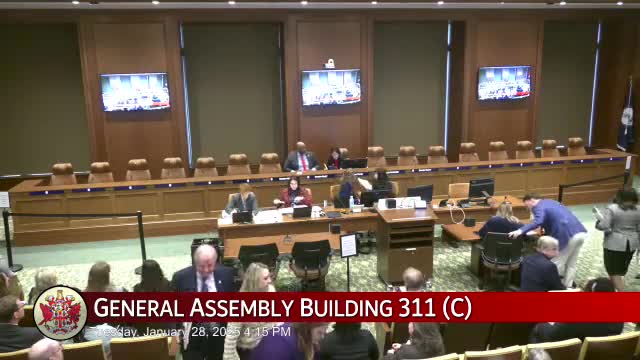
Senate health subcommittee advances wide package of maternal, pediatric and facility bills; panel issues recommendations on 25 measures
Summary
The Senate Health Subcommittee convened to consider a heavy docket of health-related bills, heard testimony from providers and advocates, and recommended most measures — including bills on EMS regional councils, maternal health coordinators, obstetric safety bundles, rapid whole-genome testing for sick infants and nursing home enforcement — for further review.
The Senate Health Subcommittee convened to consider a heavy docket of health-related bills, hear testimony from state and provider witnesses, and move most measures forward with committee recommendations and recorded votes.
The hearing included discussion of bills to set the number and funding formula for regional emergency medical services councils; create a maternal health coordinator program with staff in each health district; adopt statewide clinical safety bundles for obstetric emergencies; require Medicaid coverage for rapid whole-genome sequencing for critically ill children under age 3; expand access to doulas and Medicaid postpartum doula coverage; require hospital reporting of workplace violence incidents; and establish intermediate sanctions and penalties for underperforming nursing homes.
Why it matters: the subcommittee’s actions affect funding formulas, program structures and regulatory authority that shape how emergency medical services, maternal care and long-term care are delivered in the Commonwealth. Several measures also touch Medicaid coverage and program administration, which may require further review by Finance and the full Education and Health Committee.
Major testimony and points
- EMS councils (SB 1294): Senator Diggs presented an amendment that would require the Department of Health to designate between seven and 11 regional Emergency Medical Services (EMS) councils and to direct 50 percent (revised from 55%) of certain funds distributed from motor vehicle registration fees to regional EMS councils for operational support. Ed Rhodes and Steve Simon, representing regional EMS councils, said the councils have operated for decades and that codifying the councils and the funding formula would stabilize support. Steve Simon said, “It is it is very important that that this bill goes through and we hope that you take this under consideration to continue to support the MS system in Virginia.” The subcommittee recommended the bill to the next committee with a recorded recommendation (ayes 4, no 0, abstention 1).
- Maternal health coordinator program (SB 1347): Senator Jordan described a statewide maternal health coordinator program placing a coordinator in each of Virginia’s 35 health districts, plus five regional supervisors, to provide case management, home visiting and education. The sponsor framed the bill as a response to personal experience with a postpartum emergency and said coordinators would connect families to available resources. Supporters included hospital groups, midwives and nursing organizations. The substitute was recommended to the parent committee (4 ayes, 0 no, 1 abstention recorded).
- Perinatal and obstetric safety bundles (SB 1279): Senator Jordan said the bill would direct development of clinical safety bundles for obstetric hemorrhage and preeclampsia/eclampsia and related training and data collection to reduce maternal morbidity and mortality. Several provider groups including the American College of Obstetricians and Gynecologists and the Virginia Hospital & Healthcare Association testified in support. The subcommittee recommended the bill (vote recorded: 5 ayes, 0 no).
- Whole-genome sequencing for critically ill children (SB 1461): Senator Jordan described the bill as requiring the Department of Medical Assistance Services (DMAS) to cover rapid whole-genome sequencing for critically ill children under age 3 in inpatient settings when clinically appropriate. Parents and a pediatric genetic counselor testified about cases where sequencing produced a diagnosis and changed care planning. Testimony cited evidence from other states that coverage can reduce diagnostic time and overall costs. The bill was recommended (vote recorded: 5 ayes, 0 no).
- Doulas and postpartum coverage (SB 1384; SB 1418): Two related bills were heard. One (substitute) would require hospitals to permit doulas to accompany birthing people in portions of labor and delivery where a partner is allowed, including instances such as cesarean sections; the other would align Medicaid doula coverage to extend postpartum doula visits up to 12 months after birth. Provider groups, doula advocates and DMAS staff testified that doulas can improve outcomes; DMAS staff confirmed current Medicaid doula benefits and said the bill would align coverage timeframes. The subcommittee recommended both bills (recorded votes in favor).
- Workplace violence reporting (SB 1260): The substitute would require hospitals to establish workplace-violence reporting systems, track incidents and submit anonymized annual reports to the Department of Health so the state can better understand the scope of violence against health workers. Nursing groups, physician groups and hospital associations testified in support; many witnesses described personal experience with patient- or visitor-originated violence. The subcommittee recommended the bill (vote recorded: 5 ayes, 0 no).
- Nursing home enforcement and intermediate sanctions (SB 1383): The substitute would add intermediate sanctions and penalties (including daily monetary penalties up to specified caps) that the Department of Health’s Office of Licensure and Certification could impose in addition to existing tools, and would specify a regulatory and implementation schedule. The commissioner of the Virginia Department of Health and the long-term care ombudsman supported additional enforcement tools; the Virginia Hospital & Healthcare Association worked with the sponsor to reach compromise language. The subcommittee recommended the substitute (vote recorded: 4 ayes, 0 no, 1 abstention reported).
- SUDEP investigations (bill filed as 1213 in the transcript): The sponsor said the bill would direct the Office of the Chief Medical Examiner to investigate deaths suspected to be sudden unexpected death in epilepsy (SUDEP) to improve understanding and prevention. Advocates and the Epilepsy Foundation urged the change; the chief medical examiner testified that the office’s current position raises resource and jurisdictional questions because many SUDEP-designated deaths have been treated as natural deaths and because expanded autopsy requirements could add costs. The subcommittee recommended the bill to the parent committee (recorded tally: ayes 3, no 1, abstentions recorded).
- Pregnancy app partnership (SB 1393): The bill directs the Department of Health to contract for a pregnancy mobile application or to partner with an existing vendor to deliver pregnancy and maternal health resources and referrals to existing state programs, using an approach similar to other states’ partnerships. Vendors and advocates testified about reach and prior state partnerships. The subcommittee recommended the substitute to the parent committee (vote recorded: 5 ayes, 0 no).
- Menu labeling and food-allergy notices (SB 1133 and SB 1350): The subcommittee considered a request from the Town of Herndon asking restaurants to mark menu items that contain pork products and a separate bill requiring food-allergy awareness notices and employee-posting requirements in multiple languages. The town representatives and faith-community witnesses supported labeling for religious and safety reasons; the restaurant industry expressed implementation concerns about upstream ingredients and compliance burdens. The committee recommended moving the pork-labeling measure with an expectation the sponsor will work with industry on implementing language; the food-allergy notice bill was recommended with direction to coordinate with other patrons and agencies.
Votes at a glance (selected bills and committee actions)
- SB 1294 (regional EMS councils, funding distribution): recommended to next committee (Ayes 4, No 0, Abstain 1) - SB 1347 (maternal health coordinator program): recommended (4 ayes, 0 no, 1 abstention) - SB 1279 (obstetric safety bundles / perinatal protocols): recommended (5 ayes, 0 no) - SB 1461 (DMAS coverage of rapid whole-genome sequencing for critically ill children under 3): recommended (5 ayes, 0 no) - SB 1384 (doulas access to accompany birthing people; substitute): recommended (ayes recorded) - SB 1418 (Medicaid postpartum doula coverage up to 12 months): recommended (ayes recorded) - SB 1260 (hospital workplace violence reporting): recommended (ayes recorded) - SB 1383 (nursing home intermediate sanctions, penalties): substitute recommended (4 ayes, 0 no, 1 abstention) - SB 1213 (SUDEP death investigations): recommended to full committee (ayes 3, no 1, abstentions recorded) - SB 1393 (pregnancy app partnership): recommended (5 ayes, 0 no) - SB 1133 (restaurant pork labeling — Town of Herndon request): recommended to full committee (aye recorded; sponsor agreed to further work with industry) - SB 1350 (food allergy awareness notices for restaurants): committee recommended further coordination and incorporation with related bills
What the subcommittee did not decide
Several bills included potential fiscal impacts that will need review by the Virginia Department of Planning and Budget and by Senate Finance and Appropriations (for example state outreach campaigns, application contracts and some program expansions tied to Medicaid). Where the transcript shows a pending or nontrivial fiscal note, the subcommittee moved the policy recommendation forward while noting that Finance and the parent committee will examine costs and implementation details.
Quotable
Steve Simon, representing the Western Virginia Emergency Medical Service Council: “It is it is very important that that this bill goes through and we hope that you take this under consideration to continue to support the MS system in Virginia.”
Ben King, testifying about a child diagnosed via rapid sequencing: “We spent 6 weeks in agonizing unknown, forced to be Olivia’s advocate and make impossible decisions without information.”
What’s next
Most of the recommended bills advance to the full Education and Health Committee or to committee-of-origin steps. Bills that implicate state budgets or Medicaid coverage will be reviewed by Senate Finance and Appropriations and may require budget actions or amendments before final floor consideration.
Reporting note: the committee convened a multi-hour session and recorded votes and proxy votes for many measures; the subcommittee recommended reporting most bills and agreed to sponsor follow-up drafting with stakeholders where the committee signaled concerns about implementation or industry impact.