Get Full Government Meeting Transcripts, Videos, & Alerts Forever!
Get email alerts on the Criminal Justice topic
No spam. Unsubscribe anytime.
Representative Koppelman proposes narrowing citizen‑arrest entry rule to exigent life‑safety situations
Summary
House Bill 1299 would limit a private person’s authority to break into a building to make an arrest to circumstances where the private person reasonably believes someone inside faces imminent risk of death or serious bodily injury; sponsor said the change balances citizen rescue and castle‑doctrine concerns.
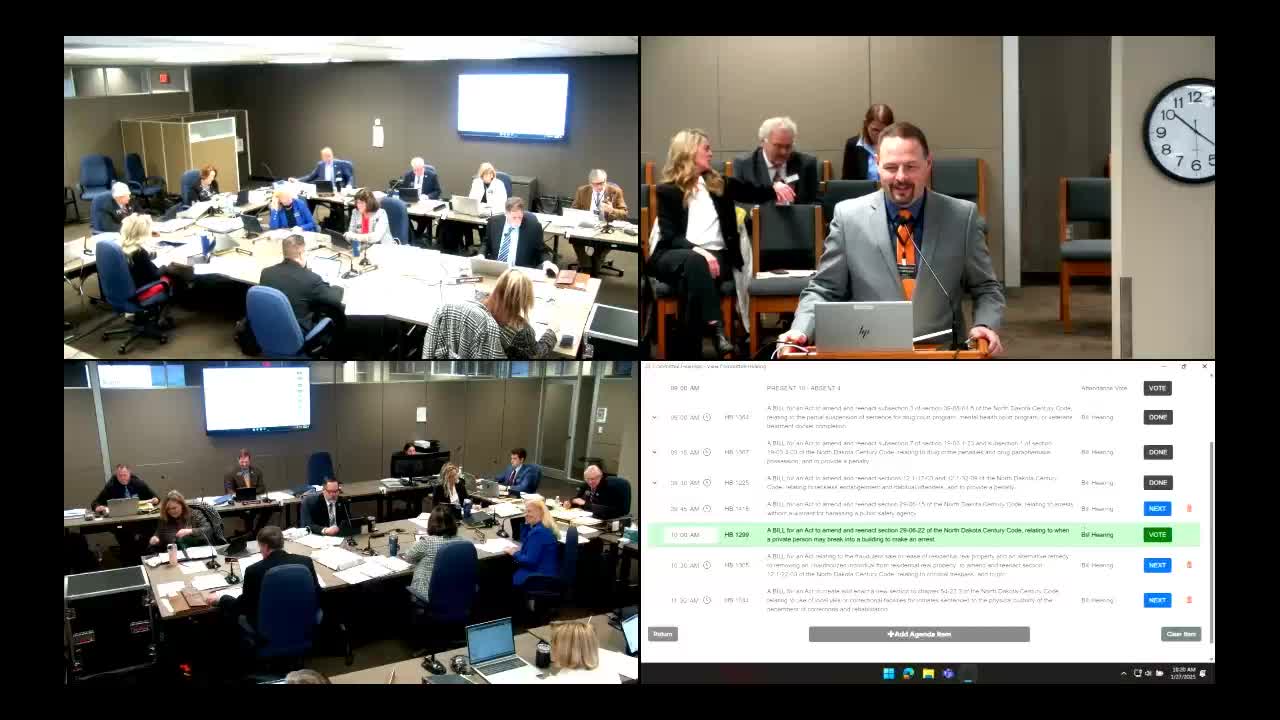
Representative Ben Koppelman introduced House Bill 1299, which would restrict when a private person may break open a door or window to effect an arrest. Under current statute a private person who reasonably believes a felony has been committed may break into a building to arrest the suspect after announcing intent and being refused admittance.
Koppelman said he supports citizen's arrest authority in limited circumstances but is concerned that the existing language could collide with the castle‑doctrine defense when a private rescuer enters a home and is met with force. He proposed narrowing the right to break into a building to situations where the private person reasonably believes someone inside is at imminent risk of serious bodily injury or death — an exigent‑circumstances standard used for police warrant exceptions.
Koppelman said the proposed limitation would balance the risk to a would‑be rescuer and the homeowner’s right to defend a residence. He discussed the bill with committee members about Good Samaritan protections, civil liability and the threshold for “imminent risk.” Representative Hoberson noted Good Samaritan statutes provide civil protection in some rescue situations; Koppelman said the bill would not remove existing protections. No committee action or amendment was taken at the hearing.