Get Full Government Meeting Transcripts, Videos, & Alerts Forever!
Get email alerts on the Indian Child Welfare topic
No spam. Unsubscribe anytime.
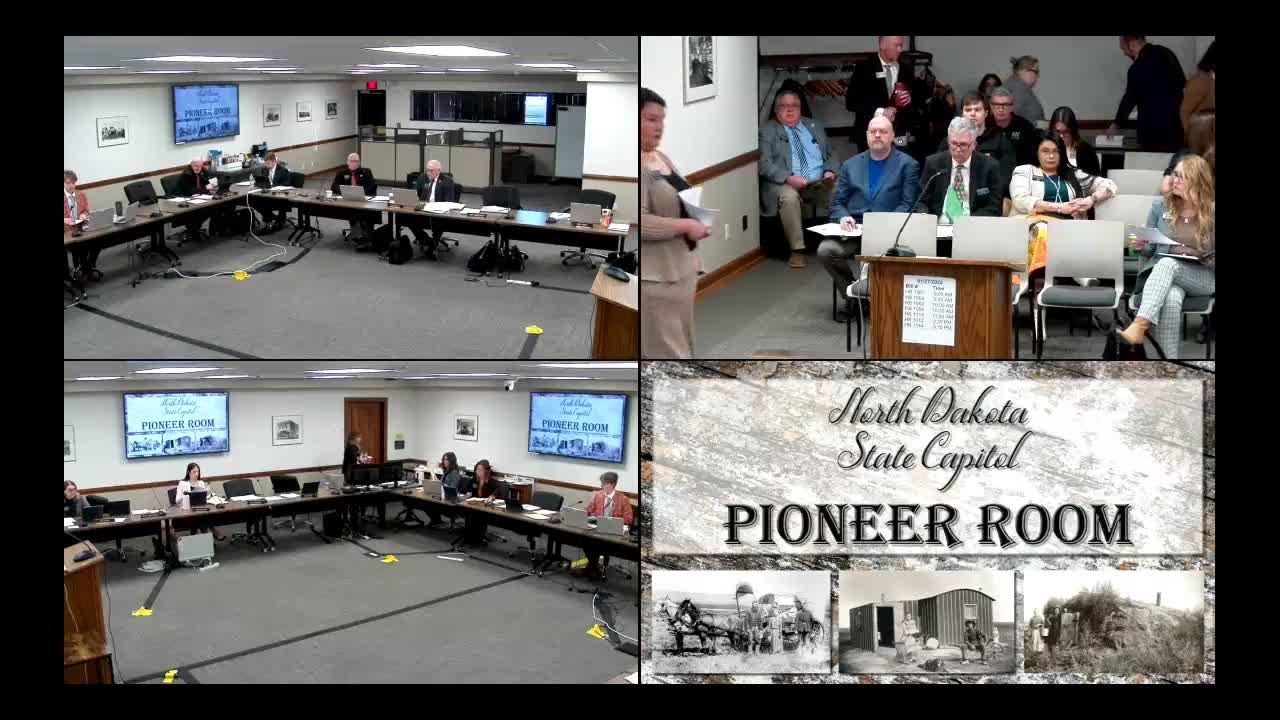
Committee hears bill to refine North Dakota’s Indian Child Welfare Act implementation
Summary
Rep. Jamie Davis told the House Human Services Committee that HB 1564 would amend state law to clarify active‑efforts standards, notification and placement preferences to better align state rules with federal ICWA and tribal authority; law professors and tribal advocates supported the changes.
The House Human Services Committee heard testimony Wednesday on House Bill 1564, which would amend North Dakota’s Indian Child Welfare Act provisions to clarify procedures for child‑custody proceedings affecting Indian children and to align certain state language with federal ICWA rules.
Representative Jamie Davis, a member of the Chippewa‑affiliated constituency and the bill sponsor, said the statute would require affirmative "active efforts" to keep Indian families together, refine notification and placement preferences and confirm tribal jurisdictional boundaries where appropriate.
"This bill refines the definition of active efforts to require affirmative tailored actions by agencies to prevent the breakup of Indian families," Representative Jamie Davis said, explaining the legislation would emphasize culturally appropriate services and collaboration with tribes.
Supporters included Dan Leverence, a University of North Dakota law professor who teaches ICWA, and tribal and human‑services officials who said amendments would correct drafting errors in the 2023 state law and clarify terms practitioners found confusing. Leverence told the committee the bill would fix drafting mistakes that inadvertently reached into unintended areas such as custody awards in divorce, and would better clarify which standards apply in emergency versus ordinary foster‑care proceedings.
Burleigh County human‑services officials and human‑service zone directors also testified in support, saying the changes align with current practice and the state's safety framework. Human service zone directors noted the amendments would help zones and tribal entities apply the federal ICWA standards in a way that preserves tribal authority and supports child safety.
The state supreme court’s youth and family court coordinator testified with limited opposition on two narrow drafting points: she requested clarification about whether the emergency‑removal declaration should be prepared by the human service zone and suggested replacing a cross‑reference to the rules of civil procedure with North Dakota’s juvenile procedure rules to match court practice.
Professor Leverence urged the committee to advance the bill, arguing the state statute enacted in 2023 was necessary during recent federal legal challenges to ICWA and that HB 1564 would improve the law’s clarity and operation without altering the fundamental protections of the federal act.
The committee received no formal vote during the hearing; Representative Davis asked members for a favorable recommendation so the clarified state law could continue to support coordination between state courts and tribal governments.