Get Full Government Meeting Transcripts, Videos, & Alerts Forever!
Get email alerts on the Secretary Of State Budget topic
No spam. Unsubscribe anytime.
Committee reviews Secretary of State budget, hears requests for IT, poll-pad replacements and HAVA authority
Summary
The Education and Environment Appropriations Division on Tuesday reviewed House Bill 1002, the Secretary of State's budget, focusing on two vacant FTEs the agency wants to eliminate, rising IT and hosting costs totaling about $1.3 million, a poll-pad replacement, an upgrade to the state's UCC indexing system, and requests for federal HAVA authority.
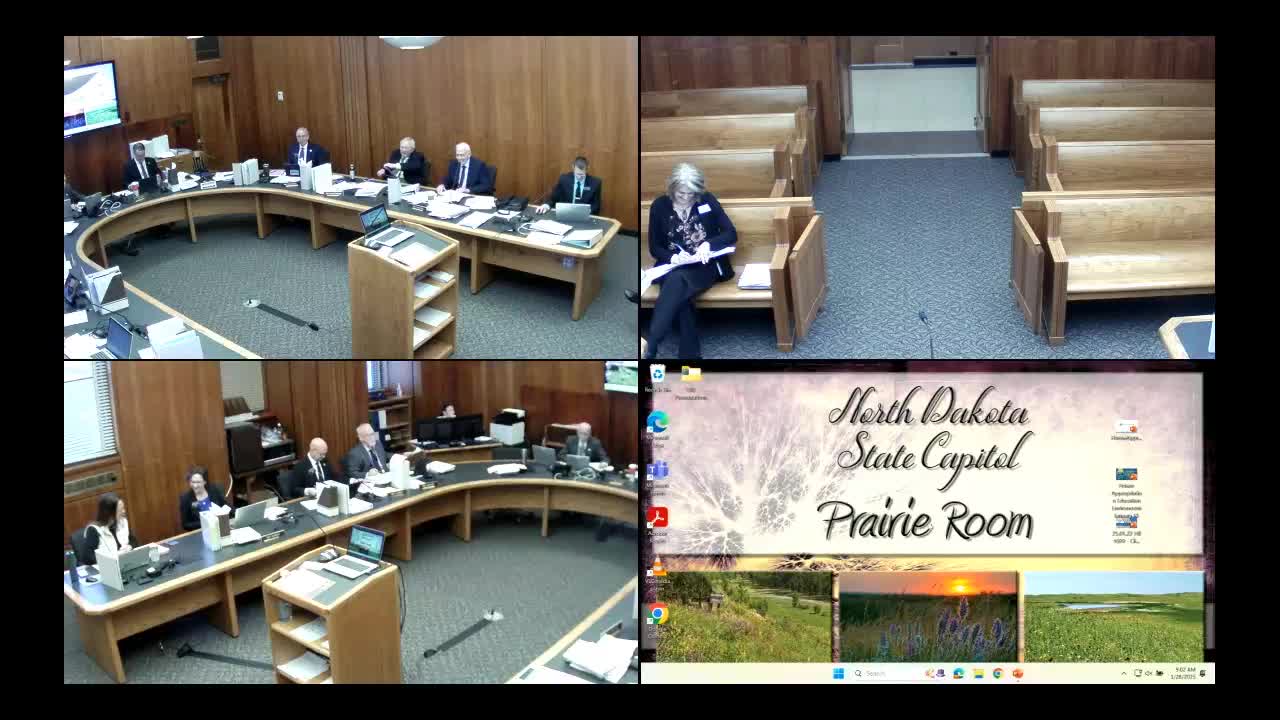
The Education and Environment Appropriations Division on Tuesday reviewed House Bill 1002, the Secretary of State's budget, hearing agency staff summarize staffing changes, routine IT cost increases and several one-time technology asks.
Sandy McMurdie, deputy secretary of state, told the committee the agency seeks to remove two vacant full-time equivalent positions that were included in the prior administration's budget because the office repurposed staff and found efficiencies. "We don't feel those 2 FTEs are needed by the agency to do the work that we really need to do," McMurdie said.
The hearing focused on several lines of the budget that reflect rising technology and hosting costs. McMurdie said an IT rate increase request of about $1,300,000 is a consolidated set of increases for server and telecom hosting, vendor hosting for the agency's election management and campaign-finance systems, licensing and other maintenance.
McMurdie gave a detailed breakout: roughly $170,000 for server and telecom increases; about $650,000 described as the multi-year hosting fee for the agency's OneStop election management and campaign finance systems; roughly $300,000 for upgrades and licensing; $110,000 for maintenance of the central indexing (UCC) system; and about $80,000 for network services and related fees. "It's increases across all of those sectors," she said.
Committee members asked whether the increases were one-time or recurring. McMurdie said most are recurring incremental increases tied to vendor contracts and hosting cycles and typically reappear on a biennial cycle: "There'll be incremental increases. So most of them aren't stair stepping more than 10 or 12,000 a year over time." She also said NDIT has increased hosting costs that feed into the total.
One-time asks include replacement of voter poll pads and cellular gateway hardware (Cradlepoint). McMurdie explained the agency's current poll-pad iPads have reached the end of their operating-life cycle; with Apple's operating system updates the devices will no longer receive necessary security updates. The agency described the poll-pad replacement as a multi-county rollout and said it also needs secure disposal services for existing devices so voter data is not exposed.
"We will not be able to upgrade in that system, which then, doesn't allow us to do the security updates that we need to really protect that system well," McMurdie said of the current devices. She estimated poll-pad replacement cycles at roughly six to eight years.
On the agency's central indexing system, McMurdie said the UCC repository will move from the current version to a new platform; the agency asked for about $500,000 to replace the system and another $200,000 to cover AS/400 server support while migrating off legacy infrastructure. McMurdie said the agency expects to be off the AS/400 server in spring 2026.
McMurdie also flagged several federal-authority and grant issues. She said a federal position reduction shown in the budget (a $200,006 reduction) is an error and that authority needs to be moved back into the federal line. Separately, the agency expects a likely additional Help America Vote Act (HAVA) award of about $1,000,000 this spring and is requesting authority to accept and spend the funds; the agency said that award would require a roughly $200,000 match from the general fund. McMurdie said the agency also needs authority to spend a Homeland Security grant administered through the Division of Emergency Services totaling $100,359 for election awareness and security outreach.
Committee members pressed the agency on how fee revenue and special funds are used. McMurdie said the Secretary of State's office administers roughly 496 separate fees that generate about $17 million in revenue under current statutes; about $2.5 million of that is retained by the agency and an estimated $14.5 million returns to the general fund. She said the retained portion historically supported technology but that the mix and statutory descriptions of fees are complex and would require significant statutory cleanup to change.
The agency also asked the committee to consider a general fund request of about $581,000 intended to convert three special-funded FTEs to general-fund positions; that change would free special fund dollars for their original purposes and make certain positions usable for a broader set of agency tasks.
McMurdie listed four pending bills the office believes will carry fiscal impacts if they advance: House Bill 1507 (creates a Cooperative Financial Institution entity; estimated IT cost about $47,000), Senate Bill 2069 (would make the Secretary of State the official point of record for public notices; agency estimate for system replacement about $150,000), House Bill 1287 (a voter-registration implementation proposal; agency said it could require roughly $500,000 for public awareness if implemented) and Senate Bill 2230 (a ballot-measure mailing requirement with an agency estimate of about $600,000 for voter mailings).
Committee members asked staff to refine long sheets and carryover language and to resolve a noted federal-authority transfer the agency said was omitted from last year's bill. The hearing concluded with committee leadership asking staff and Legislative Council to supply final long sheets showing a clean base, the governors' proposals and the House version so members can finalize decisions.
No formal committee motions or roll-call votes were recorded during the hearing.
Why it matters: the Secretary of State's request covers core election systems and operations whose maintenance, hosting and replacement cycles affect security and administration of federal and state elections. Federal grant authority (HAVA and Homeland Security funding) will affect the agency's ability to spend awarded dollars and to maintain outreach and security programs.
Looking ahead: the committee asked for language to fix a missing transfer and for inclusion of potential HAVA authority and match language if the federal award is announced during the session.