Get Full Government Meeting Transcripts, Videos, & Alerts Forever!
Get email alerts on the Dental Access topic
No spam. Unsubscribe anytime.
House panel hears bipartisan calls for legislative study on dental access for Medicaid recipients
Summary
Lawmakers heard testimony urging a legislative management study and a $97,000 appropriation to expand dental student rotations and study dental access barriers for low-income children, Native American children and people with disabilities.
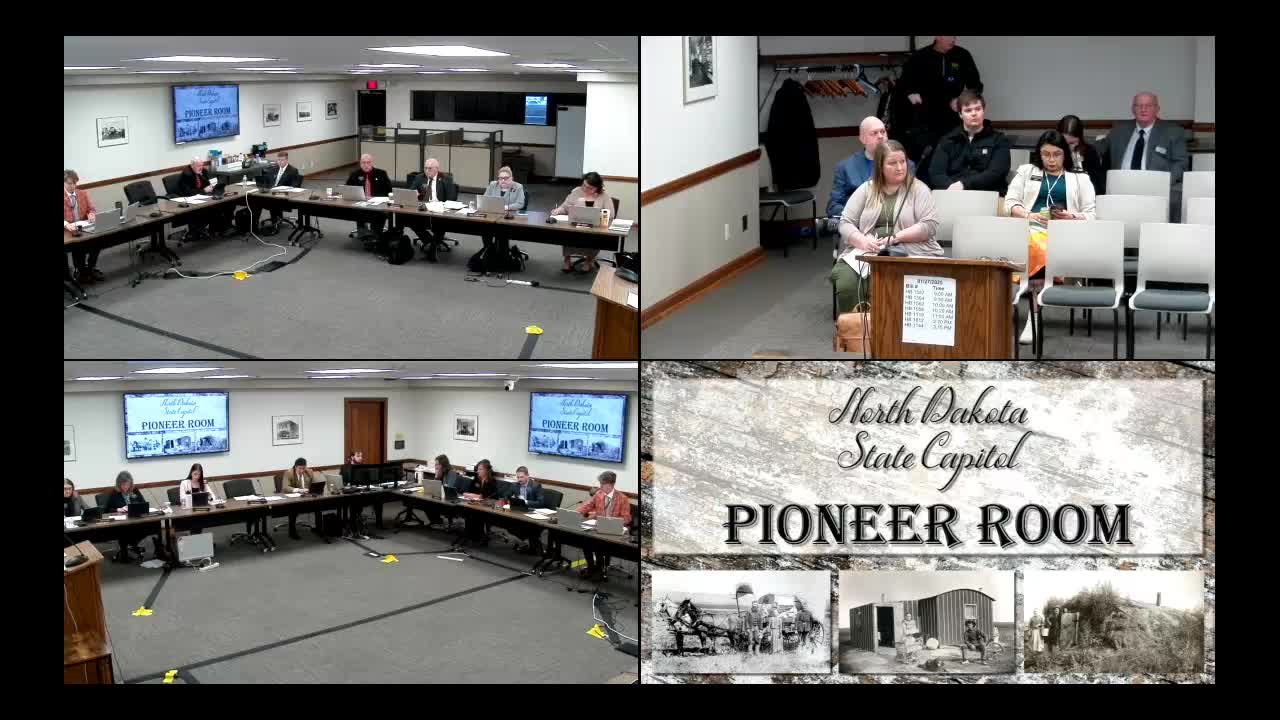
House Human Services Committee members heard more than an hour of testimony Wednesday on House Bill 1567, which would direct a legislative management study of dental and oral health care status for low-income children, Native American children and people with disabilities and include a $97,000 appropriation to support dental student rotations.
Representative Mary Schneider, R‑District 21, told the committee the study is meant to update and expand prior work on dental access and to produce an action plan with goals, costs and recommended legislation.
The bill’s study would review the current oral health status of the three target groups, examine reimbursement and enrollment barriers for dentists in Medicaid, and consider partnerships between state programs and tribal health providers. It also asks for a review of reimbursement rates, availability of facilities for complex dental procedures, and workforce recruitment and retention strategies, including loan forgiveness and student rotations.
"House Bill 1567 is a request for an interim study on the unmet dental and oral health needs of low income children, Native American children, and individuals with disabilities," Representative Mary Schneider said. Schneider summarized statewide data in her testimony, saying, "the number of children in Head Start, kindergarten, and 3rd grade who need dental treatment … would fill 115 school buses." She also cited state shortage-area counts and county-level gaps in provider coverage.
Speakers from dental and public-health organizations supported the study. William Sherwin, executive director of the North Dakota Dental Association, and Tammy King, executive director of Bridging the Dental Gap, described service shortages, workforce gaps and the role of dental student rotations. Kim Coleman of the Community Health Association of the Dakotas said community health centers provided dental care at seven clinic locations and urged the study to examine on‑the‑job training and apprenticeship pathways for dental assistants.
Witnesses and Representative Schneider identified several figures the study should examine: the Department of Health and Human Services reports that only about 44% of statewide provider need is being met; testimony noted 69 designated dental health professional shortage areas covering about 153,291 people and that 19 of 53 counties have no dentists. Bridging the Dental Gap said 50.55% of its patients are on North Dakota Medicaid and that the clinic now receives calls daily from people unable to find Medicaid‑accepting dentists.
Those testifying described immediate workforce strategies already underway: new dental programs at Dakota College at Bottineau and Bismarck State College, expanded on‑the‑job training options for dental assistants, and student rotations coordinated with out‑of‑state dental schools. Schneider said the $97,000 appropriation in the bill is calculated to help fund three dental student rotations; she explained the department and providers could use more funding if capacity allowed.
Committee members asked for details about the appropriation and whether the study would include private‑pay cost pressures. Representative Rohrer and others raised cost and insurance questions; William Sherwin agreed that cost is the most frequently cited reason patients defer care and said insurance design and low annual dental maximums deserve review.
The hearing drew testimony from human service zone directors and disability advocates who said foster children and people with disabilities face long travel times, uncovered costs and limited local options. Morris Hardy, director of Dakota Central Human Service Zone, said zones sometimes must use local general funds to obtain emergency dental care when no Medicaid provider is available.
The committee closed the hearing with no recorded action; Representative Schneider presented the bill with a "due pass" request. Testimony supporters asked the committee to recommend advancing the bill so the legislative management study could build a detailed action plan to address access gaps.
Looking ahead, backers of the study said it could recommend concrete recruitment incentives, expanded student rotations and regulatory changes to ease Medicaid enrollment for dental providers. Committee staff did not take a recorded vote during the hearing.