Get Full Government Meeting Transcripts, Videos, & Alerts Forever!
Get email alerts on the Property Tax Caps topic
No spam. Unsubscribe anytime.
Committee hears debate on HB 1353, a proposed 3% or CPI property tax cap
Summary
Lawmakers and stakeholders debated House Bill 1353, which would cap local taxing districts' levy increases at 3% or the consumer price index (CPI), whichever is lower; supporters said it curbs tax growth, school representatives warned CPI could hurt districts, and local officials raised concerns about local control and budget impacts.
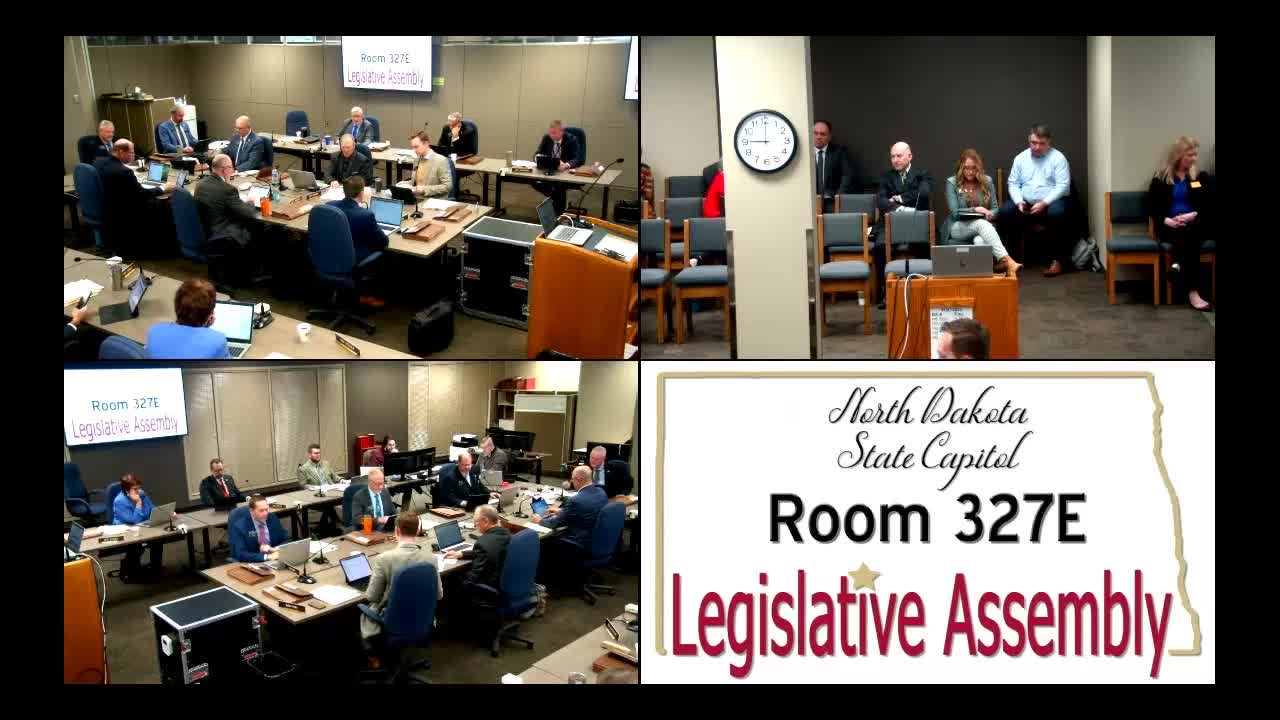
The House Finance and Taxation Committee opened and heard testimony on House Bill 1353, a proposal that would limit property tax levy increases by taxing districts to 3% or the consumer price index (CPI), whichever is lower.
Sponsor Representative Ben Koppelman, District 16, told the committee the bill would cap annual levy increases at “3% or CPI, whichever is lower” and limit how far taxing districts could draw down previously unused mill levy authority by applying a three‑year lookback and a rule that excess authority may not push a district above double the annual cap.
The measure’s nut graf is the tradeoff lawmakers heard repeatedly: proponents said a predictable cap protects taxpayers from sudden levy spikes, while school and education leaders warned an overly strict CPI link could reduce mill rates and force the state to backfill school funding. Paul Stremek of the North Dakota School Study Council said schools “support a 3% overall cap” but opposed using CPI when CPI could be zero or negative, which he said “would be devastating to school districts.”
Supporters included North Dakota Farm Bureau testimony from Pete Hanover, who urged property‑tax reform and relief. Minot City Council member Mike Blessum, testifying as a private citizen, described local steps Minot took to lower levies and said caps are a local‑control question: “If you pass caps, we will certainly live by those laws,” he told the committee, while urging lawmakers to consider structural budget reforms rather than only state mandates.
Opponents and worried stakeholders emphasized implementation risks. Amy Kopas, executive director of the North Dakota Council of Educational Leaders, asked the committee to preserve the 60‑mill school baseline in exemptions, saying that without protections the state risks undoing seven years of work to return districts to the formula and that a CPI floor could “unravel all the work that you’ve done.”
Committee members asked detailed questions about the bill’s mechanics: Koppelman explained the three‑year lookback for unused mills and that when districts draw on banked authority they must use the oldest year first. He also reiterated the bill would not change treatment of growth or newly taxable property.
The hearing included multiple public and organization witnesses but produced no committee action or vote. The committee closed the hearing on HB 1353 after testimony and questions and moved on to other bills.
Ending: The committee will carry the record of substantive concerns about CPI indexing and school funding into subsequent work on any levy cap proposals; no amendments or votes were taken in the hearing recorded in this transcript.