Get Full Government Meeting Transcripts, Videos, & Alerts Forever!
Get email alerts on the Prescription Drug Copay Accumulators topic
No spam. Unsubscribe anytime.
North Dakota hearing on HB 1216 spotlights patient hardship, insurer concerns over copay accumulator rules
Summary
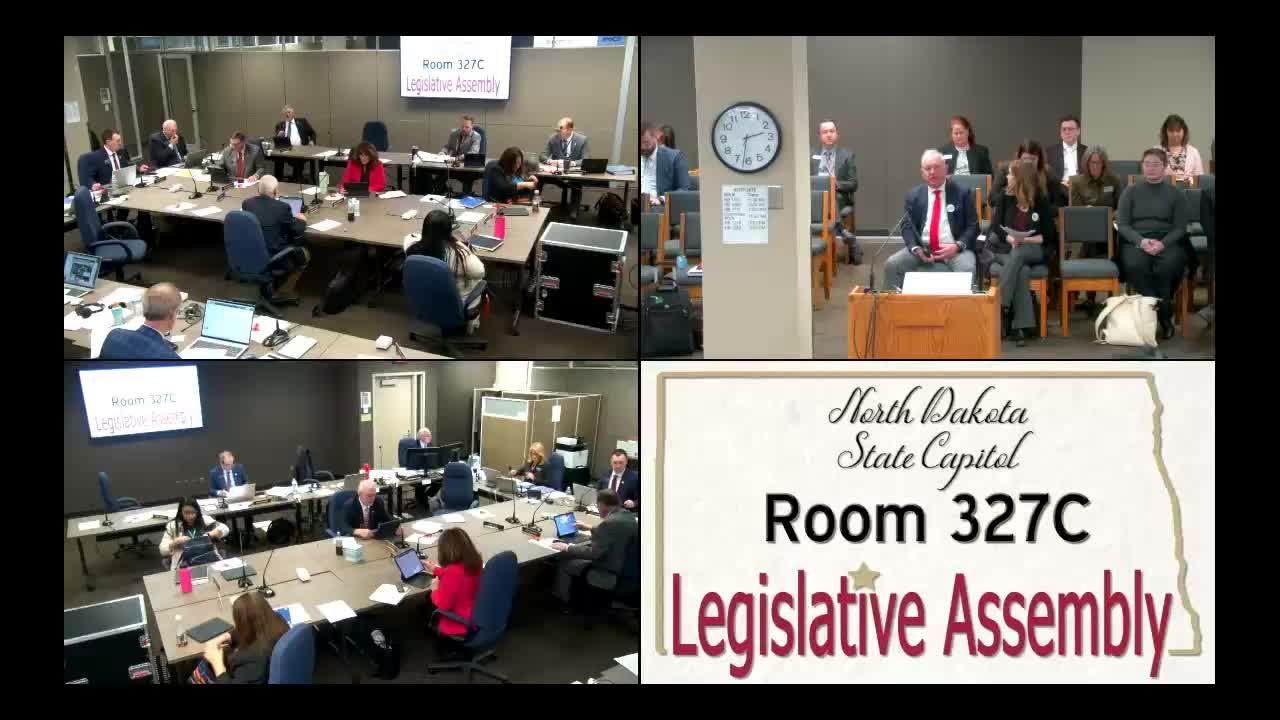
Representative Karen Carls opened the House Industry, Business and Labor Committee hearing on House Bill 1216 to prohibit insurance “accumulator” policies that prevent manufacturer or other third‑party copay assistance from counting toward patients’ deductibles and out‑of‑pocket limits.
Representative Karen Carls opened the House Industry, Business and Labor Committee hearing on House Bill 1216, saying the bill would bar insurers from using “accumulator” policies that keep manufacturer or other third‑party copay assistance from counting toward a patient’s deductible or out‑of‑pocket maximum.
The measure matters to patients who take extremely costly specialty drugs and who say insurer accumulator programs are producing large, unexpected pharmacy bills. Rep. Karen Carls, sponsor of HB 1216, described patients who rely on manufacturer and charitable assistance to afford drugs such as Trikafta and called the bill a way to ensure that assistance “is accessible to them.”
Why it matters: Supporters said accumulators can force patients to make impossible choices — skip needed medication or pay thousands up front — and that counting assistance toward cost‑sharing restores the intent of many manufacturer and nonprofit programs. Opponents said coupons and manufacturer assistance distort market incentives, drive higher drug prices and are difficult for plans to track, which could raise premiums for other enrollees.
Representative Karen Carls, sponsor Representative Karen Carls, sponsor of HB 1216, said many people taking high‑cost therapies face deductibles that exceed $5,000 and that the manufacturers or charities often provide copay assistance or grants. She told the committee: insurers are adopting “accumulator adjustment programs, also known as co pay accumulators, that block manufacturers' coupons from pharmacy.”
Patient testimony: Karen Cassette, who identified herself as born with cystic fibrosis, described how newer therapies transformed her care and how insurance treatment of manufacturer assistance changed over time. “Trikafta is simply a miracle,” Cassette said, and she recounted that a Vertex co‑pay card initially covered roughly $5,000 but later the insurer would not count that assistance toward her deductible and required additional out‑of‑pocket payment.
Advocates and clinicians: Emily Ouellette, executive director of the Bleeding Disorders Alliance of North Dakota, told the committee that prescription costs for hemophilia patients can run “anywhere from $350,000 to $1,000,000 per year” and said many patients reach their deductible in January. “With these programs, hardworking families struggle to access their medication,” she said, adding that roughly “1 out of 3” health plans in North Dakota used accumulator programs as of last year. Several national advocacy groups and state disease organizations offered similar testimony about access, adherence and the health consequences when patients can’t afford timely medication.
Industry and insurer opposition: Alex Kelsch, a registered lobbyist for America's Health Insurance Plans (AHIP), told the committee AHIP “respectfully opposes house bill 1216, as it restricts health plans ability to hold down drug costs.” Kelsch and other opponents argued manufacturers use coupons to shield high list prices and that requiring plans to count third‑party payments would remove an incentive for manufacturers to lower prices. Blue Cross Blue Shield of North Dakota representative Megan Ruby likewise said coupons are a “targeted marketing effort meant to increase profits for drug manufacturers,” pointed to academic work estimating price effects from coupon use, and warned the change would not apply to self‑funded ERISA plans.
Tracking and transparency questions: Committee members sought specifics about where coupon funds go and how plans track them. Witnesses gave differing answers: several advocates described manufacturer or foundation grants paid directly to pharmacies or specialty pharmacies, while insurer witnesses said coupon transactions are often not reported back to plans in a way that can be easily tracked. That disagreement underpinned much of the debate about whether accumulators are a transparency problem that legislation could address or an essential tool to control premiums.
Plan and fiscal considerations: Rebecca Fricke, executive director of the North Dakota Public Employees Retirement System (PERS), described a consultant estimate tied to PERS that the bill could produce a fiscal impact; she said a consultant estimated a 1.1 percent premium increase or approximately $8,697,000 for the upcoming biennium if the proposal were applied to the PERS plan as drafted.
Committee action and next steps: The committee heard roughly equal blocks of testimony in favor of and opposed to HB 1216, including written submissions the sponsor noted were available online. The hearing closed without a vote; committee members asked follow‑up questions about tracking, federal interactions (Medicare rules), and the possibility of narrower amendments such as targeted transparency requirements.
Ending: Supporters emphasized patient stories and medication adherence; opponents urged caution and proposed alternatives focused on market transparency and restricting coupons where a lower‑cost therapeutic alternative exists. The committee recessed after closing the hearing on HB 1216.