Get Full Government Meeting Transcripts, Videos, & Alerts Forever!
Get email alerts on the Workforce Health Benefits topic
No spam. Unsubscribe anytime.
Bill would create health-benefit program for nursing home workers; sponsors say it will aid recruitment and retention
Summary
Senate Bill 5344 would establish an Essential Worker Health Care Program within DSHS to help nursing facilities provide affordable, high-quality health benefits to employees; program implementation is contingent on federal approvals and state plan actions, and DSHS would certify and potentially recoup supplemental payments for noncompliance.
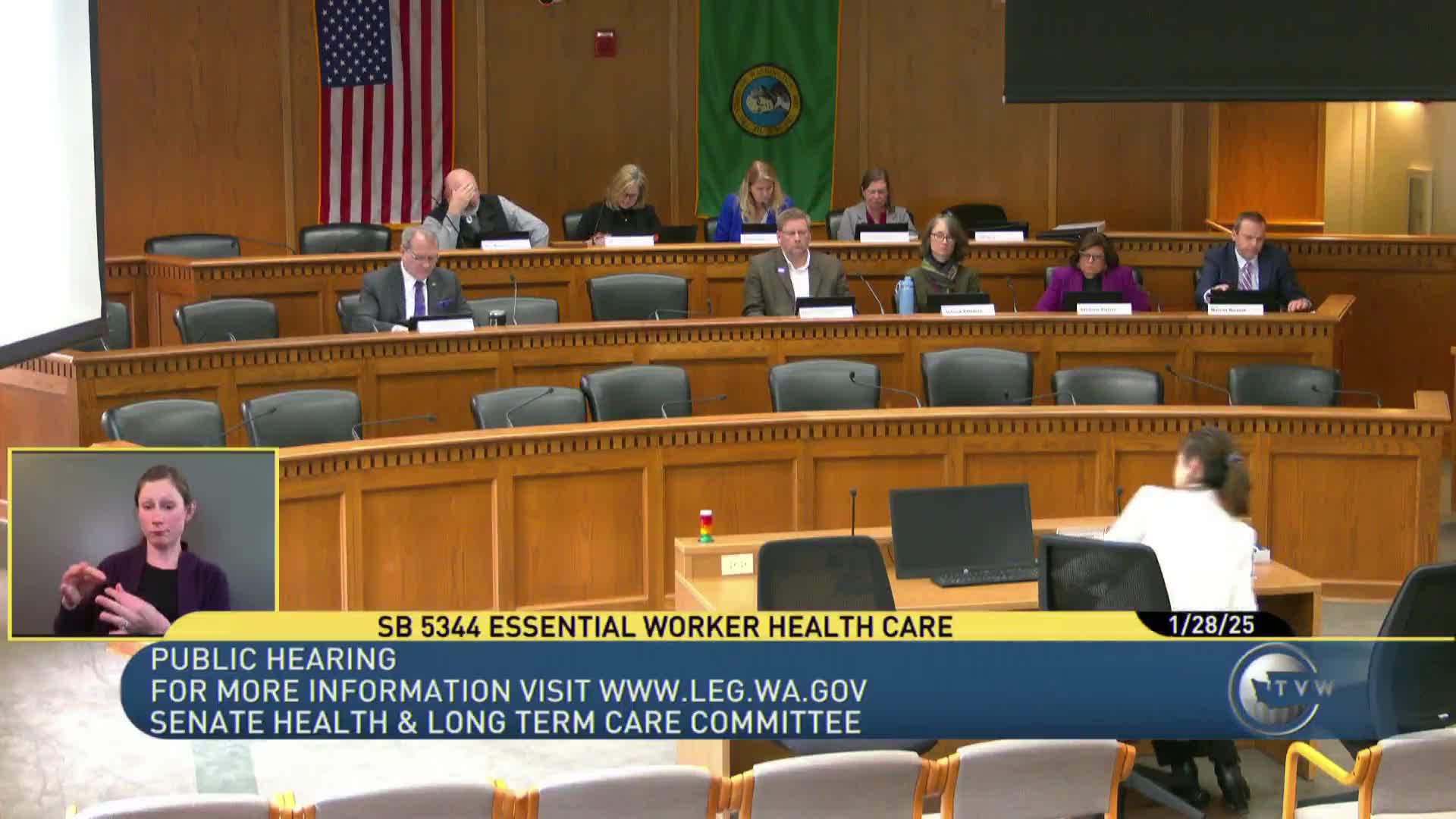
The Senate Health and Long Term Care Committee heard testimony Jan. 28 on Senate Bill 5344, sponsored by Sen. Rachele Richelli, to establish an Essential Worker Health Care Program within the Department of Social and Health Services to help nursing facility employers provide affordable, quality health coverage for employees.
Committee staff summarized a December 2024 DSHS report that identified three implementation options: (1) use the existing home-care trust, (2) create a self-funded multiemployer welfare arrangement (similar to Oregon's model), or (3) create a fully insured association health plan with a long-term care association. The bill directs DSHS to establish the program by July 1, 2026, and to seek federal approval via a Medicaid state plan amendment or waiver by July 1, 2025. The program's implementation is conditioned on federal Centers for Medicare & Medicaid Services approval; failure to receive federal approvals by July 1, 2026, would delay implementation.
Supporters, including SEIU 775 and provider groups, urged passage as a workforce-stabilization measure. Sterling Harders, president of SEIU 775, said nursing home workers often lack affordable insurance and that better benefits would help recruitment and retention. Several operators, including Avamere and CalderaCare executives, said current reimbursement and market pressures make it difficult for nursing facilities to offer competitive benefits, and they cited Oregon's model as a precedent where pooled trusts improved affordability and access.
DSHS Deputy Director Peter Graham testified about a DSHS fiscal note covering DSHS staff costs to administer the trust and recommended clarifying that state and federal appropriations are required for implementation. Providers said the program would complement recent Medicaid rate increases and could stabilize staffing.
Supporters stressed the program is voluntary for facilities that meet certification and reporting requirements; DSHS would be able to recoup supplemental payments if an employer lost qualified status. Testimony closed after wide public support: the record at the hearing included more than 120 pro sign-ins. The committee did not vote on the bill at the hearing.