Get Full Government Meeting Transcripts, Videos, & Alerts Forever!
Get email alerts on the Chronic Absenteeism topic
No spam. Unsubscribe anytime.
Bill to expand attendance supports and reengagement programs wins broad support from districts and advocates
Summary
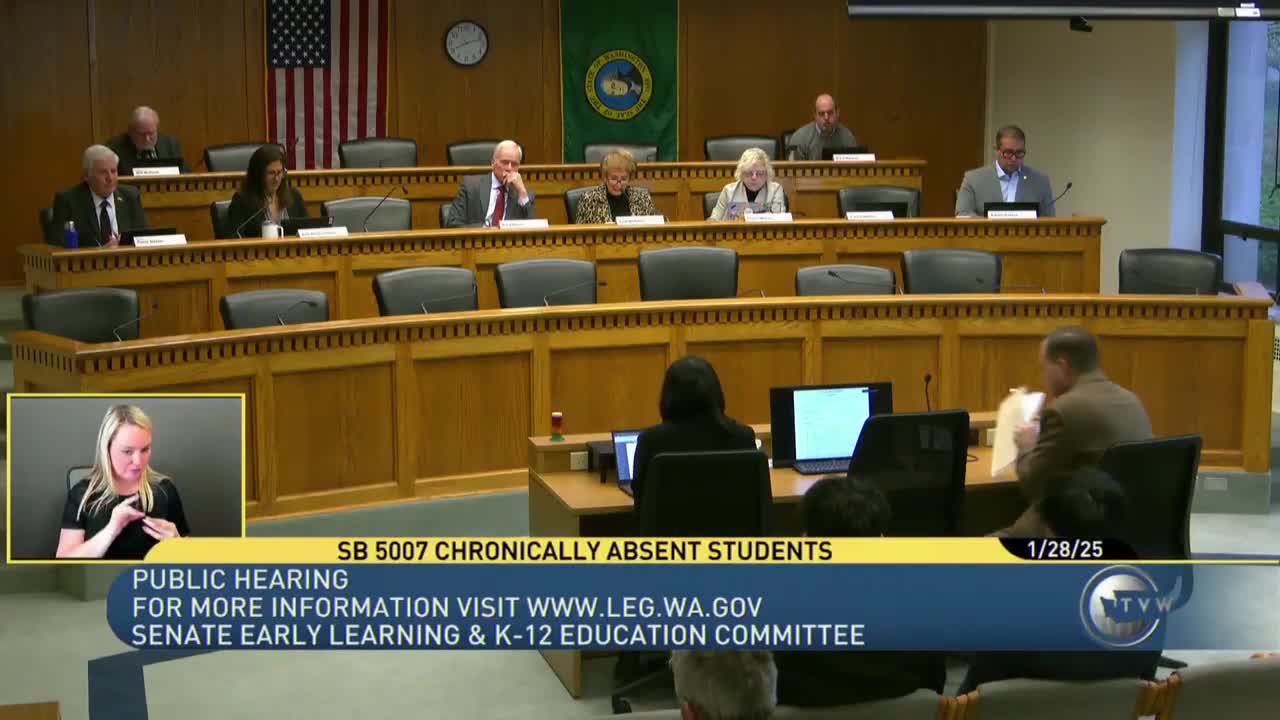
Senate Bill 5007, designed to strengthen early warning systems and supports for chronically absent students, was discussed before the Early Learning & K-12 Education Committee.
Senate Bill 5007, designed to strengthen early warning systems and supports for chronically absent students, was discussed before the Early Learning & K-12 Education Committee.
Committee staff described the bill’s scope: it would require each Educational Service District (ESD) to maintain training and coaching capacity for robust early warning systems; expand the Building Bridges grant program to include chronically absent students and allow community-based organizations, tribes and community and technical colleges to receive grants; and broaden the Open Doors dropout reengagement system’s allowable supports for students (including test fees, calculators, clothing, food, transportation, and connections to behavioral and physical health supports).
Definition and rationale: The bill uses the commonly applied definition of chronic absenteeism — students who miss 10% or more of their school days for any reason, including excused and unexcused absences and suspensions. Dixie Grunefelder of OSPI told the committee chronic absenteeism is an “early warning indicator” and that earlier intervention can increase a student’s likelihood of graduating.
Support from districts and providers: ESD superintendents, local superintendents and Open Doors teachers testified in support. Shane Bachlund, ESD 105 superintendent, said ESDs are “a natural role…to coordinate support, training and coaching” and described an attendance and re-engagement network in his region. Pete Peterson, superintendent in a Benton County district, reported double-digit attendance gains in a local elementary school after coordinated ESD support. Open Doors teacher Mason Bryant described the circumstances of the students served and urged funding to reduce barriers and cover basic needs.
Community partners and adult-education systems including Communities In Schools, Big Brothers Big Sisters, and the State Board for Community and Technical Colleges supported the bill, citing data and program outcomes that link attendance with academic and social-emotional gains. Will Durden of the State Board for Community and Technical Colleges noted college partners already contract with some districts to provide reengagement services under Open Doors.
Opposition and concerns: Some witnesses, primarily from grassroots opposition groups, voiced privacy and parental-notification concerns about home visits and behavioral health services in the bill. Julie Barrett of Conservative Ladies of Washington said the bill’s 10% threshold could be met by brief illnesses or family travel and opposed home visits and expanded behavioral health connections.
Next steps: The bill requests a fiscal note; testimony emphasized that sustaining attendance networks and Open Doors enhancements would require dedicated resources for ESDs, districts and community providers. The committee concluded public testimony and will consider budget and policy language in future committee work.