Get Full Government Meeting Transcripts, Videos, & Alerts Forever!
Get email alerts on the Healthcare Workforce Wellbeing topic
No spam. Unsubscribe anytime.
Bill would create anonymous online screening and counseling portal for credentialed health workers
Summary
Senate Bill 5242 would require the Department of Health to contract with the American Foundation for Suicide Prevention to provide an anonymous interactive screening program for credentialed health workers, paid by a uniform surcharge on professional credential fees.
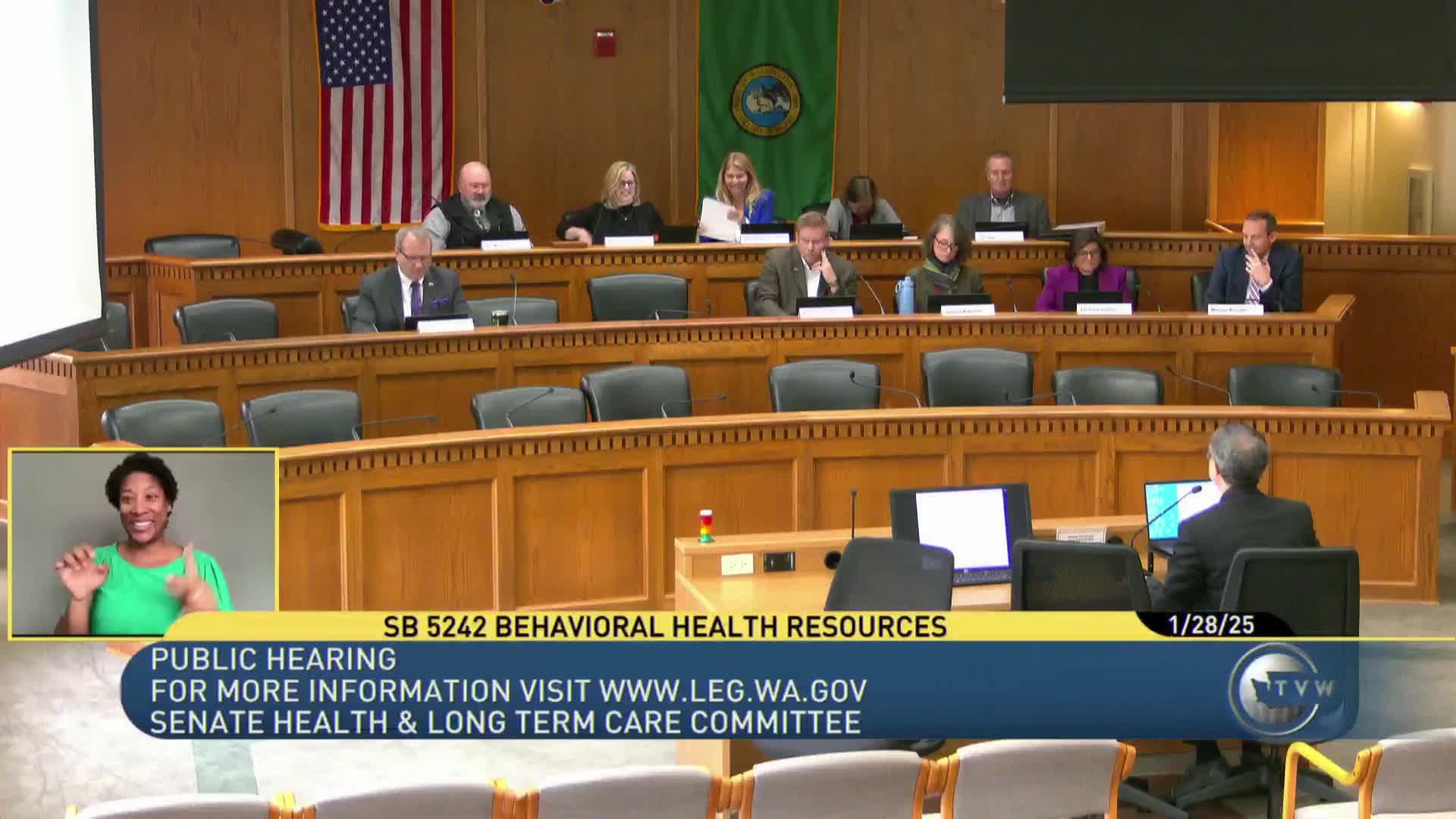
Senate Health and Long Term Care Committee members heard testimony Jan. 28 on substitute Senate Bill 5242, sponsored by Sen. Orwell, which would direct the Department of Health to contract with the American Foundation for Suicide Prevention (AFSP) to implement an anonymous interactive screening program for licensed health professionals.
Committee staff explained the model: an AFSP platform would allow credential holders to complete a confidential screening questionnaire, receive a personalized response from a program counselor, get referrals to treatment or brief services, and interact via email while remaining anonymous. The program would be confidential and available to any individual holding a professional health-care credential; DOH would fund it through an annual surcharge applied uniformly across professions regulated under Title 18, and the contract would be exempt from competitive procurement requirements.
Vice Chair Orwell framed the bill as a worker-retention and suicide-prevention measure, citing higher rates of suicide and secondary traumatic stress among health professionals. "Often people are reluctant to reach out for help ... confidentiality has really been a barrier," she said, arguing a confidential portal could reduce barriers to help-seeking.
Testimony showed mixed views. Some providers and associations welcomed the intent but raised concerns about cost to credential holders, the size of the covered population (roughly 463,000 credential holders was cited in testimony), and whether the digital interface could create an additional barrier to care. Sarah Stewart of the Washington State Society for Clinical Social Workers and the Washington Mental Health Counselors Association cautioned that suicide prevention is relational and asked how users of the portal would be linked to available providers in a marketplace with limited in-network capacity.
K. Funk, a retired physician, testified strongly opposed, citing concerns about existing physician health programs and what she called "captured regulation" that she said could harm physicians. Other witnesses, including physicians and behavioral-health advocates, asked for data-driven approaches and registries to better track suicide deaths among professionals.
No fiscal note was in the record at the hearing; the committee heard questions about the surcharge mechanism and the uniform fee across Title 18 professions. The hearing closed after testimony and no committee vote was taken.