Get Full Government Meeting Transcripts, Videos, & Alerts Forever!
Get email alerts on the Local News Funding topic
No spam. Unsubscribe anytime.
Committee considers $20 million annual grant program to support local journalism; opponents question funding source
Summary
Senate Bill 5400 would establish a Commerce Department grant program to fund local journalists in underserved communities and dedicate $20 million per fiscal year from the Workforce Education Investment Account to the effort; witnesses praised the goal but opponents urged a different funding source.
Senate Bill 5400 would create the Washington Local News Journalism Core Program at the Department of Commerce to make grants that support reporters covering civic affairs in underserved communities. The bill would direct $20 million per fiscal year from the Workforce Education Investment Account (WEIA) to fund grants and raise the cap on the advanced-computing surcharge from $9 million to $15 million to cover the increase.
Supporters framed the bill as a democracy and civic-engagement measure. Deanne Finken, president of the League of Women Voters of Washington, said local-news decline is a "democracy problem." Theresa Whipple, president and CEO of My Neighborhood News Network, said the program would be "a financial lifeline for small organizations" that now struggle to hire and retain reporters. Publishers and newsroom leaders, including Ben Campbell of The Columbian, Frank Wheaton and Alan Fisco of The Seattle Times Company, described steep revenue declines, newsroom staffing losses and the risk of closures.
Small and hyperlocal publishers urged program design that covers freelance- and part-time-based models as well as traditional full-time newsrooms. Several witnesses recommended eligibility mechanisms beyond strict FTE thresholds so community-owned or startup publications that rely on 1099 contractors can qualify.
Opposition and concerns centered on the proposed funding source. The Workforce Education Investment Account (WEIA) was created to support higher-education programs; representatives of the Association of Washington Business, TechNet and the WEA oversight board urged the committee not to divert WEIA funds from student aid and workforce education. Emily Whitman (Association of Washington Business) and Rose Feliciano (TechNet) said the WEIA statute restricts use to higher education programs, operations, compensation and state-funded student aid and that the account has near-term needs. United Faculty and higher-ed board members said WEIA is already under pressure and should not be reduced.
Sponsors and proponents acknowledged the funding tension. Senator Lias said the surcharge targets large platforms that have benefitted from online advertising shifts and that the bill seeks to add an incremental revenue stream. Multiple stakeholders said alternative funding sources are worth exploring and requested more flexible eligibility rules for small and freelance-led newsrooms.
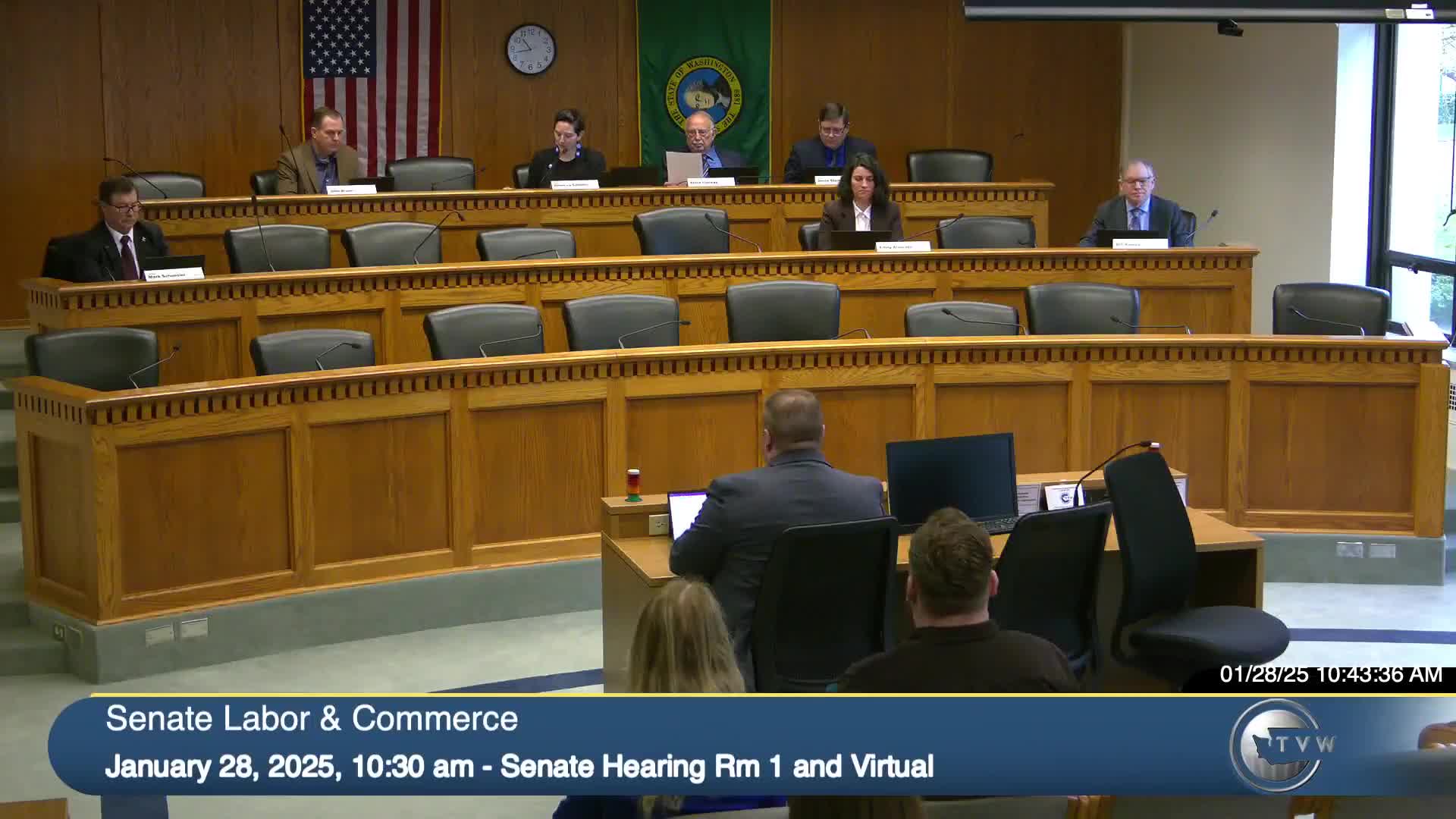
The committee took public testimony from more than 100 witnesses for and against the bill; no vote was taken during this hearing. Several witnesses and the sponsor asked the committee to amend eligibility language and continue discussions about the funding mechanism.
Ending: The committee left SB 5400 under consideration and signaled interest in amendments to broaden eligibility for small/freelance newsrooms and to revisit the proposed WEIA funding source.