Get Full Government Meeting Transcripts, Videos, & Alerts Forever!
Get email alerts on the Aviation Health Leave topic
No spam. Unsubscribe anytime.
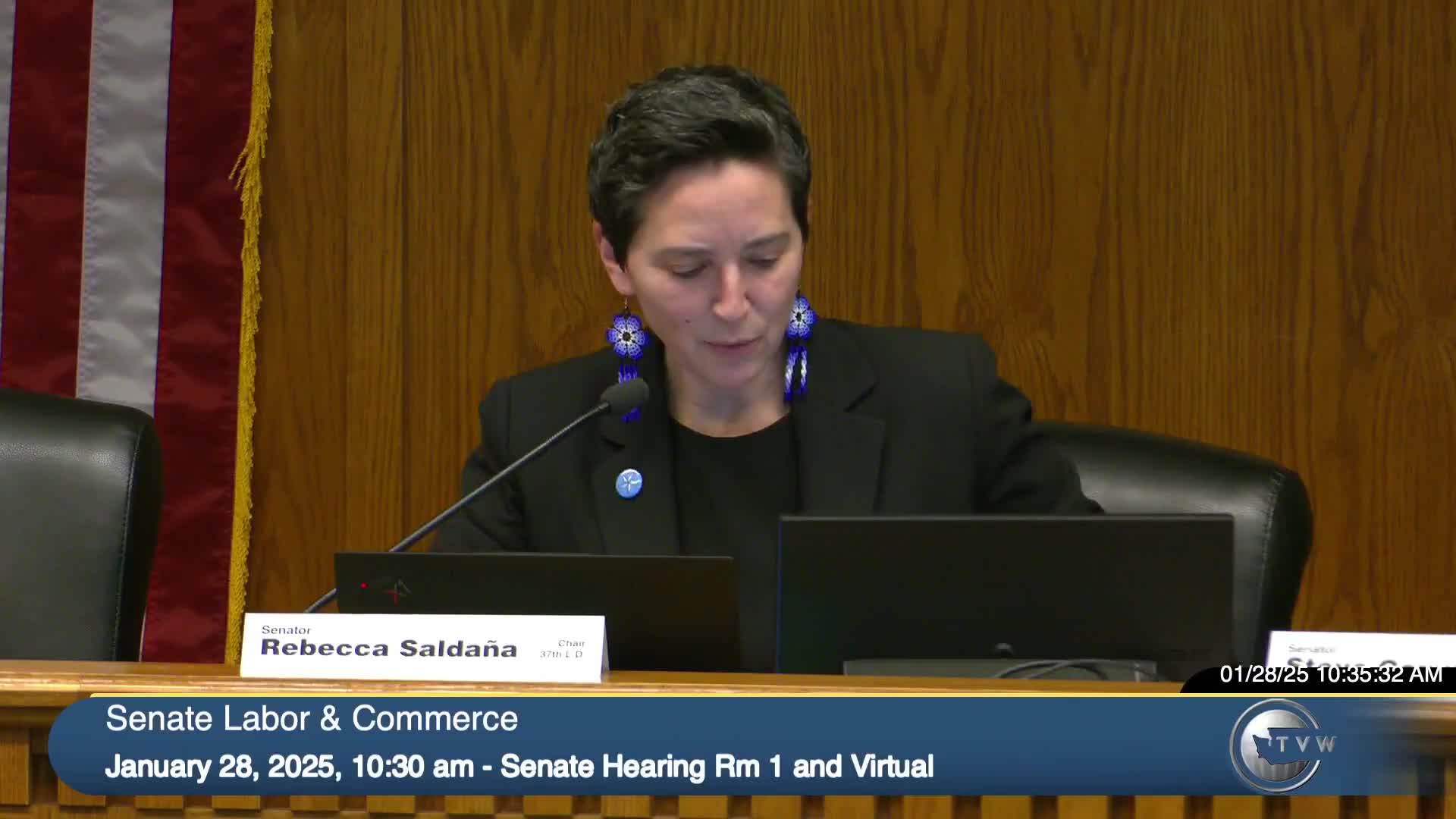
Senate committee hears bill to let pilots use state paid leave while awaiting FAA medical determinations
Summary
Lawmakers heard testimony on Senate Bill 5396, which would allow pilots applying for or appealing Federal Aviation Administration (FAA) medical-certificate decisions to use Washington's Paid Family and Medical Leave (PFML) and require employers to pay regular wages after PFML is exhausted while the FAA review is pending.
Senate Bill 5396 would let pilots take Washington Paid Family and Medical Leave while they pursue or appeal an FAA medical-certificate decision, and would require employers to continue paying pilots their normal compensation after PFML exhaustion for scheduled hours until a final FAA determination is reached.
The bill's sponsor, State Senator Marco Leah, said the proposal grew from safety and workforce concerns after a 2023 incident originating at Paine Field and from surveys showing pilots delay or avoid care because of financial risk. "We want to make sure that our pilots are also eligible for it," Leah said, adding that most pilots who disclose mental-health care do eventually return to flying.
Supporters described long FAA review timelines and the financial harm to aviators. Brian Baumhof, founder of the Pilot Mental Health Campaign, said the FAA process can leave pilots "uncompensated or undercompensated" and deters people from seeking treatment. Airline captains and medical examiners said the review pathway can take months to years: Dr. Keith Lemon, an aviation medical examiner, outlined a process that can include six months of medication stabilization, multiple follow-up evaluations and an FAA review that may add six to eight months. Captain Brad Moss said his own special-issuance process took 592 days.
Airlines and some state agencies urged changes to section 3 of the bill that would obligate employers to pay pilots their normal scheduled compensation after PFML ends. Scott Kennedy, senior manager of state and local government affairs for Alaska Airlines, and Delta's representative Dana Debel said carriers already provide extensive mental-health and pay-protection benefits, including company-funded short- and long-term disability, 24/7 employee assistance programs and other leave programs. Alaska described a long-term disability benefit that can pay 50% of wages plus health and retirement benefits until an FAA decision; Delta described an employer-paid long-term disability program and optional supplemental pay protections for pilots.
Employment Security Department staff said pilots may be eligible for unemployment insurance on a case-by-case basis if they meet standard eligibility (able and available for work, actively seeking work). The department's Leave and Care division said implementing the bill as written would require substantial technical work to adapt paid-leave systems and could affect WA Cares planning.
Testimony emphasized the bill's safety goal: advocates said removing financial barriers to treatment would encourage pilots to seek care and improve public safety. Airline representatives warned a single-state employer-pay mandate could produce large, sustained financial exposure and urged the committee to seek federal change at the FAA or a more targeted approach.
The committee took public testimony and did not hold a vote during the hearing. Sponsors and stakeholders indicated they will continue negotiations on the bill language and on employer-pay details.
Ending: The committee left SB 5396 under consideration pending further fiscal and implementation details and discussions with carriers and state agencies.