Get Full Government Meeting Transcripts, Videos, & Alerts Forever!
Get email alerts on the Foster Care Benefits topic
No spam. Unsubscribe anytime.
Bill to stop DCYF garnishing of children’s Social Security benefits draws broad support; sponsors say change will return money to youth
Summary
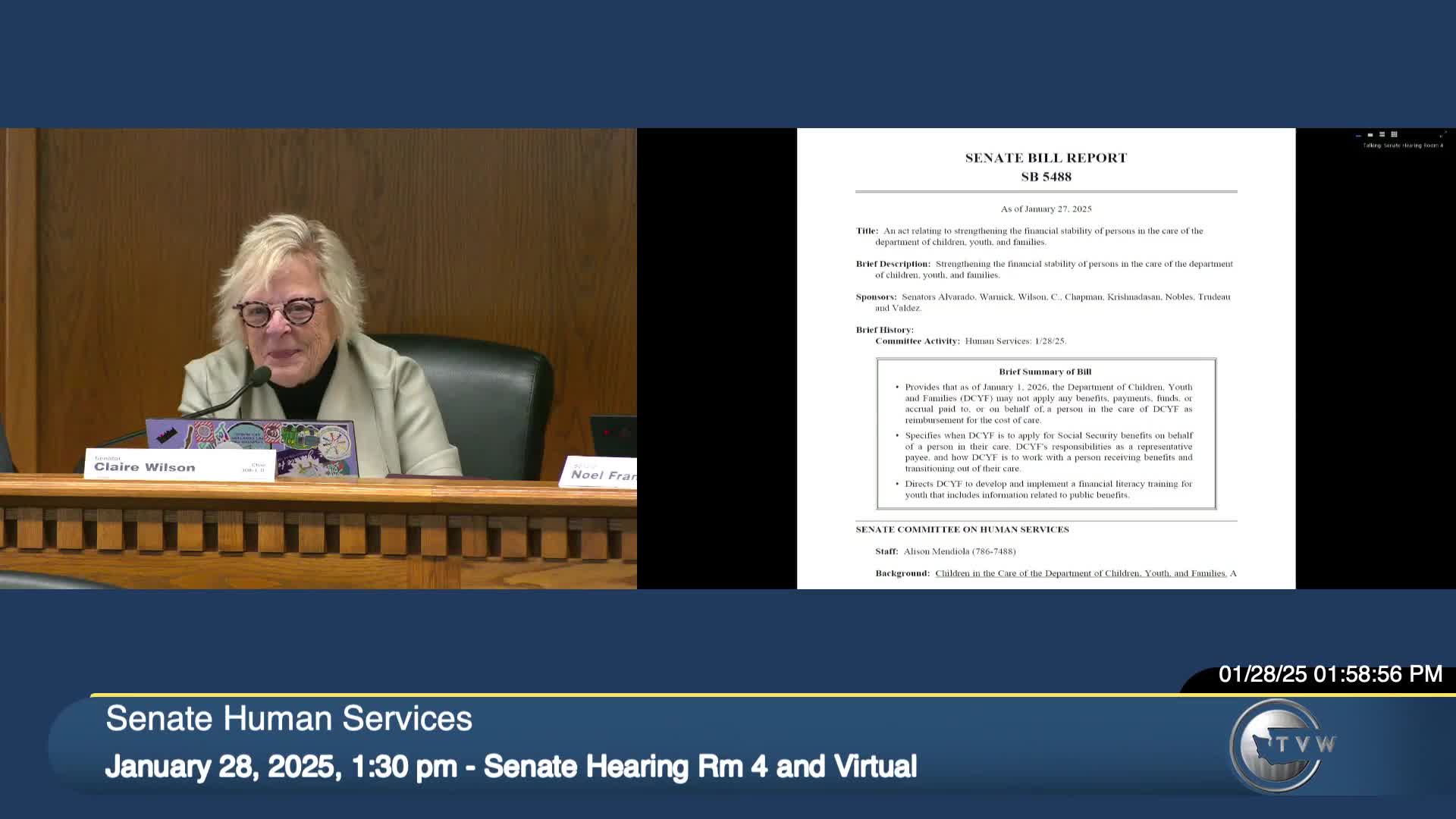
Senate Bill 5488, which would stop DCYF from using federally provided benefits as reimbursement for a child's care and require preservation of those funds for the child, was heard Jan. 28 by the Senate Human Services Committee.
Senate Bill 5488, heard by the Senate Human Services Committee on Jan. 28, would prohibit the Department of Children, Youth and Families (DCYF) from applying Supplemental Security Income (SSI) or Survivor, Retirement and Disability Insurance benefits to reimburse the state for the cost of a child’s care and would require DCYF to help eligible youth apply for benefits and preserve their funds for the child’s use.
Alison Mendiola, committee staff, summarized the bill and its key provisions: effective Jan. 1, 2026 DCYF would not be allowed to apply benefits paid to or on behalf of a child as reimbursement for care; DCYF must assess eligibility for SSI and related federal benefits and apply on the child’s behalf, with youth over 12 asked to consent to release of information. When DCYF serves as representative payee, the agency would place funds into an account for the child to meet unmet personal needs and avoid supplanting other funding sources. DCYF also would be required to develop financial-literacy training for youth exiting care (to be provided when a person is over age 14 and likely to receive benefits).
Senator Emily Alvarado, sponsor of the bill, said it is wrong for the state to “garnish” benefits that belong to children. “About 10 to 12 percent of youth in our foster care system receive some kind of federal benefit…These federal benefits belong to the child,” Alvarado said. “This practice…happens without a young person's knowledge or consent. It's a legal practice, but it's not right and we should stop it.”
Witnesses representing youth advocacy organizations, foster-care advocates and legal services testified largely in support. Samuel Martin of the Mockingbird Society and the Washington Coalition for Homeless Youth Advocacy said investigations showed roughly $6.8 million in withheld SSI benefits in Washington, and called the practice “taking from young people.” Kim Justice of Partners for Our Children, Jim Theophilus of North Star Advocates and Annie Chung of Legal Counsel for Youth and Children (LCYC) urged passage and noted the policy’s disproportionate harm to disabled children and youth aging out of care.
Dominique, a caregiver who testified remotely, described out-of-pocket payments and long waits for services for two children who receive SSI and told the committee funds in a DCYF-held account would allow timely access to needed services, tutoring and therapy. Daniel Lugo of YouthCare noted DCYF accounts could meet unmet needs and the bill’s training requirement would help youth manage benefits going forward.
Senators on the panel expressed support: Senator Warnek thanked the sponsor and noted the bill includes financial-literacy training that could help youth manage one-time benefit sums; Chair Wilson praised cross-committee connections, noting financial literacy is an active topic in education hearings.
Alvarado acknowledged the bill will cost money to implement and said that those costs largely represent funds the state has been taking from children. “Passing this bill would return resources to children and families who need it,” she said.
The committee received no fiscal note at the time of briefing; staff said a fiscal note had been requested. No committee vote was taken during the hearing; testimony will be used for the committee’s consideration of the bill.