Get Full Government Meeting Transcripts, Videos, & Alerts Forever!
Get email alerts on the Transportation Rail topic
No spam. Unsubscribe anytime.
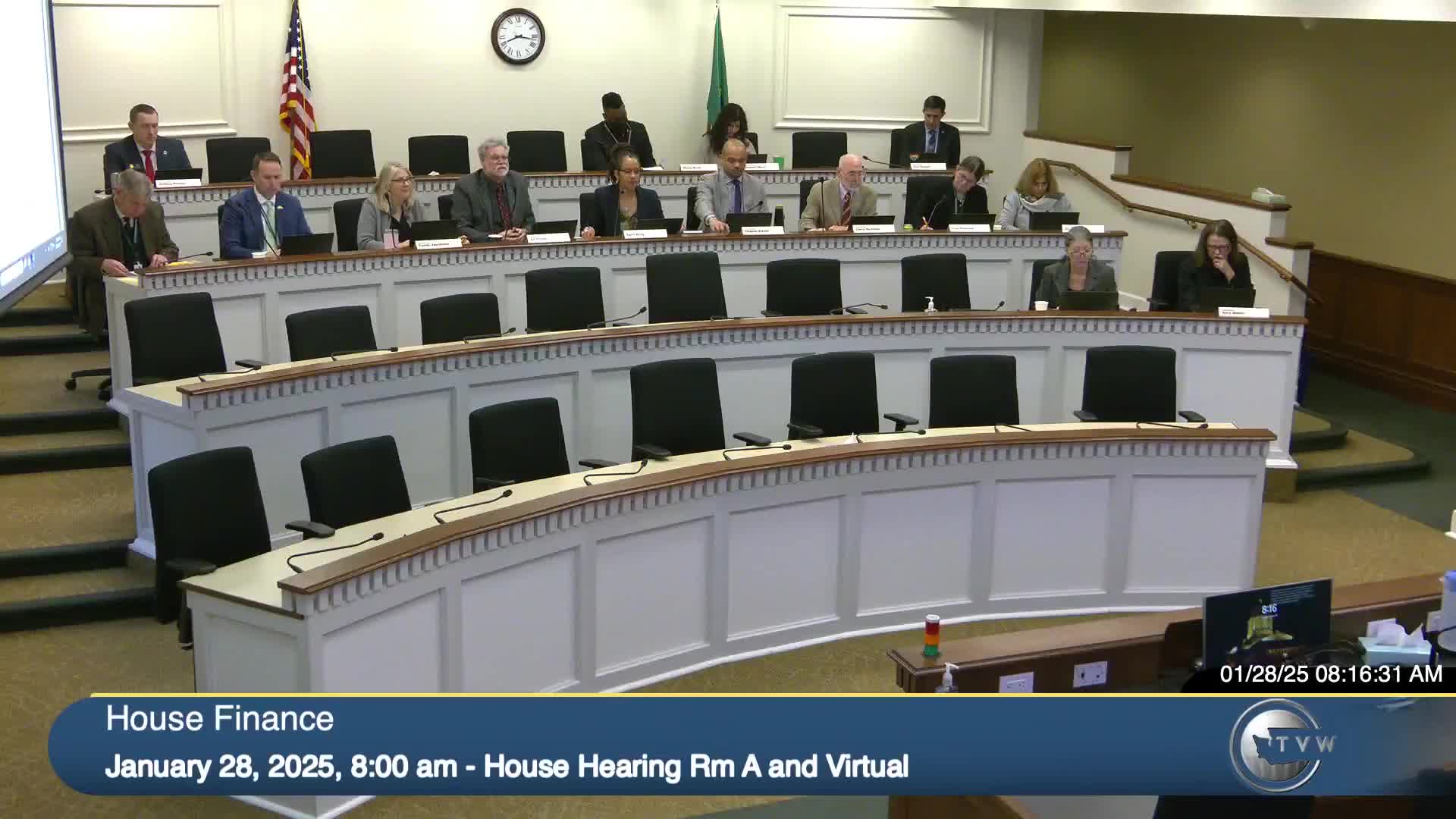
Committee hears bill to create tax credits and exemptions for short‑line railroad maintenance and upgrades
Summary
House Bill 1058 would create business‑and‑occupation (B&O) and public‑utility tax credits and a sales‑and‑use tax exemption to incentivize maintenance, modernization and new construction on short‑line (Class 2 and Class 3) railroad tracks. Transportation and port representatives, short‑line operators and environmental advocates
House Bill 1058 creates a package of tax credits and a sales‑and‑use tax exemption aimed at class 2 and class 3 (short‑line) railroads and eligible taxpayers doing maintenance, rehabilitation, modernization or new rail development in Washington.
Committee staff explained the proposal would allow credits equal to 50% of qualified costs for short‑line track maintenance (subject to a per‑mile cap), 50% of qualified costs for new rail development and 50% for modernization and rehabilitation (with per‑taxpayer and statewide caps). The bill also contains a sales‑and‑use tax exemption for materials purchased for track maintenance by eligible rail owners and operators, a donated‑materials credit for recycled railroad materials, a null‑and‑void clause if funding is not provided in the Omnibus Appropriations Act, and requirements for tax‑preference review.
Speakers at the hearing included short‑line operators, port representatives and the League of Women Voters. Ross Lane testified for three Class‑3 operators, saying short‑line railroads are capital‑intensive, often run on infrastructure more than a century old, and play a critical role in first‑ and last‑mile freight movement. Logan Barr of Tacoma Rail described fuel‑efficiency and congestion‑reduction benefits and urged support. Cassie Hammond of the Port of Benton and Chris Herman of the Washington Public Ports Association described specific projects and job and economic development benefits; the Port of Benton said a recent federal RAISE grant award was at risk and the state's incentives would help leverage investment.
The Department of Revenue staff provided a fiscal estimate: DOR expects the proposal to affect roughly 25 taxpayers with a current‑biennium general‑fund reduction estimate of about $8.37 million and an ongoing larger reduction in later biennia; DOR also estimated initial technology and administration costs. Sponsors and industry witnesses said actual subscription to the credits would be lower than the DOR estimate and emphasized return on investment—increased freight capacity, reduced highway congestion and greenhouse‑gas benefits.
The committee did not vote. Witnesses urged the committee to advance the bill with funding or an appropriation condition to avoid an open general‑fund exposure and to preserve the freight‑rail assistance and investment programs as complementary tools.
Ending: Proponents urged passage to accelerate critical infrastructure investment for freight movement and to support clean‑transport and economic development goals; DOR raised fiscal cost estimates and noted the bill’s null‑and‑void funding contingency.