Get Full Government Meeting Transcripts, Videos, & Alerts Forever!
Get email alerts on the Habitat Permitting topic
No spam. Unsubscribe anytime.
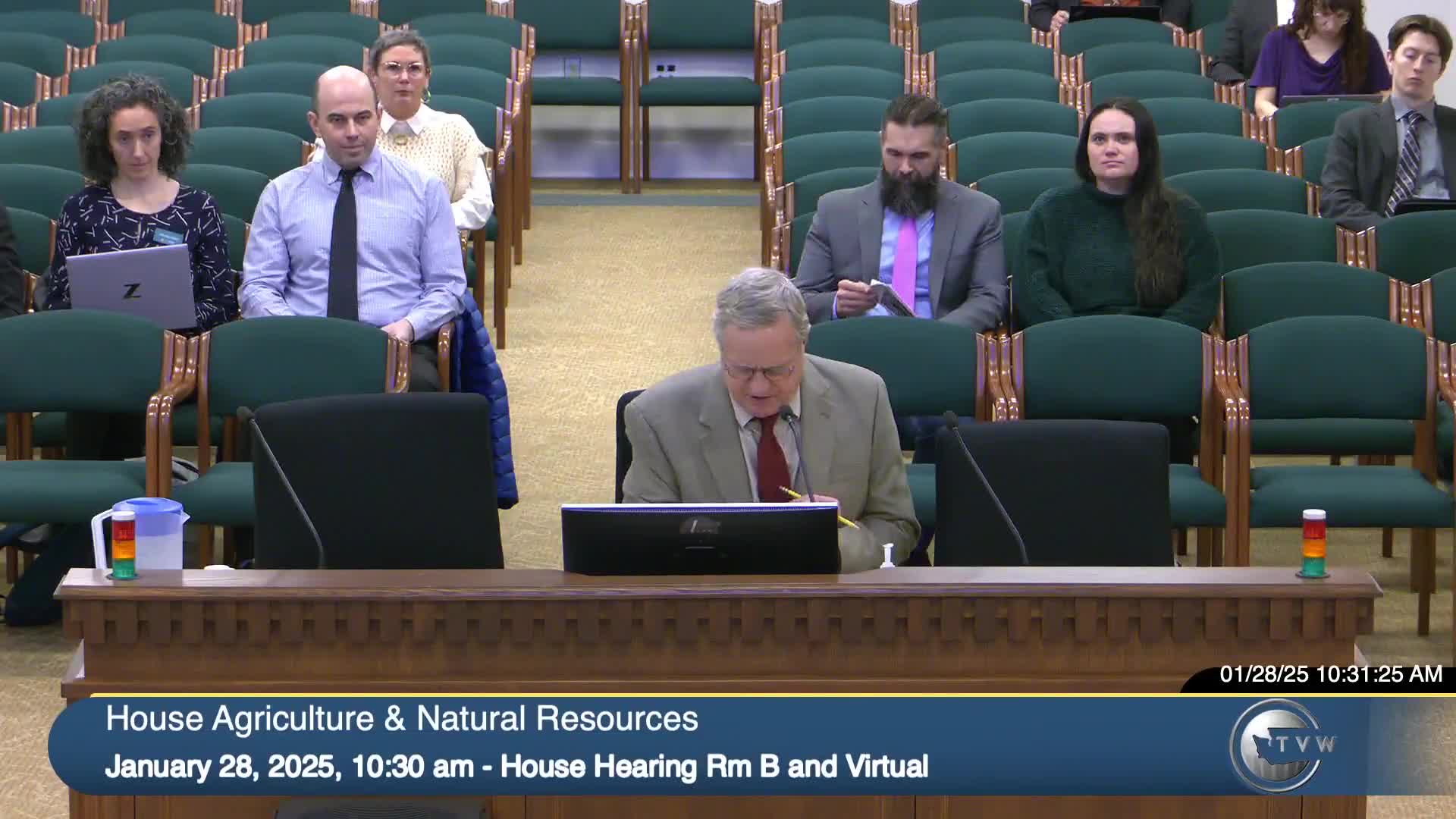
House Bill 1208 hearing examines permanent habitat recovery permitting pilot
Summary
The Agriculture and Natural Resources Committee opened a public hearing on House Bill 1208 on Jan. 28 to receive the prime sponsor's testimony and hear staff and public comment.
The Agriculture and Natural Resources Committee opened a public hearing on House Bill 1208 on Jan. 28 to receive the prime sponsor's testimony and hear staff and public comment. Representative Steve Tharinger, prime sponsor and chair of the House Capital Budget Committee, told the committee the bill would “put[] into statute a program … to streamline permitting projects, particularly on fish restoration projects.”
Rebecca Lewis, staff to the committee, summarized the bill and the existing pilot. She said the Habitat Recovery Pilot Program (HRPP) was created in 2021 and expires June 30, 2025; HB 1208 would rename the pilot and make it permanent while adding two additional eligible funding programs. Lewis said projects approved under the program are not required to provide an environmental impact statement under the State Environmental Policy Act and that the bill adjusts the cultural-resource review and the aquatic-lands (DNR) timing and submittal steps.
Agency witnesses told the committee the pilot produced measurable time and cost savings. Matt Curtis, Production Division manager in the Washington Department of Fish and Wildlife’s (WDFW) habitat program, said the program “should be made permanent.” WDFW reported more than 45 projects processed under the pilot, 26 projects completed to date, projects spanning 16 counties, and that participating projects reported between three and 12 months of permitting time savings and cost savings ranging from $1,000 to $80,000 per project.
Representatives of Ecology and the Puget Sound Partnership described how the HRPP’s multi-agency permitting team reduces redundant reviews and coordinates across state, local and federal authorities. Samantha Weinstein of the Department of Ecology said the program “streamlined all of those reviews,” citing the Snow Creek project as an example that saved six to 12 months and $20,000–$80,000. Don Gourley of the Puget Sound Partnership said the pilot reduces barriers that otherwise delay construction and can prevent projects from using grant funding.
Supporters from conservation groups and restoration backbones said the program speeds pre-disaster mitigation and floodplain projects and produces multi-benefit results for salmon, flood risk and agriculture. Caskey Jose of the Bonneville Environmental Foundation noted that each dollar spent on pre-disaster mitigation can save an estimated $7 in disaster response and recovery.
Opponents — largely local governments and drainage/diking districts in the Skagit delta — urged the committee to exclude certain Skagit watersheds (referred to in testimony as WIRA 3 and 4) from the bill. Skagit County Commissioner Peter Browning, county staff and several drainage and diking district representatives said many HRPP projects in the Skagit are multimillion-dollar infrastructure undertakings that require local coordination because they affect dikes, pumps, bridges, drainage and farmland. Ellen Bynum of Friends of Skagit County and Jenna Freyvel of the Skagit Drainage and Irrigation District Consortium said the local permitting process provides needed checks and balances and that prior projects that bypassed local processes caused major costs and repairs.
Port of Tacoma and other port and local government witnesses asked only for small changes to the eligibility list under Section 2 (for example adding watershed councils, conservation districts or flood control districts) so more locally led entities can qualify for the streamlined process.
There was no committee vote recorded during the meeting. Staff noted the bill carries a fiscal note, includes an emergency clause, and would take effect June 30, 2025 if enacted.