Get Full Government Meeting Transcripts, Videos, & Alerts Forever!
Get email alerts on the Railroad Tax Incentives topic
No spam. Unsubscribe anytime.
Senate Ways & Means hears bill creating tax credits and exemptions for short‑line railroad maintenance and recycling
Summary
Senate Bill 5063 would create B&O and public utility tax credits and a sales and use tax exemption to support Class II and III (short‑line) railroads, with per‑taxpayer and statewide caps and sunset dates; port and short‑line representatives testified in strong support.
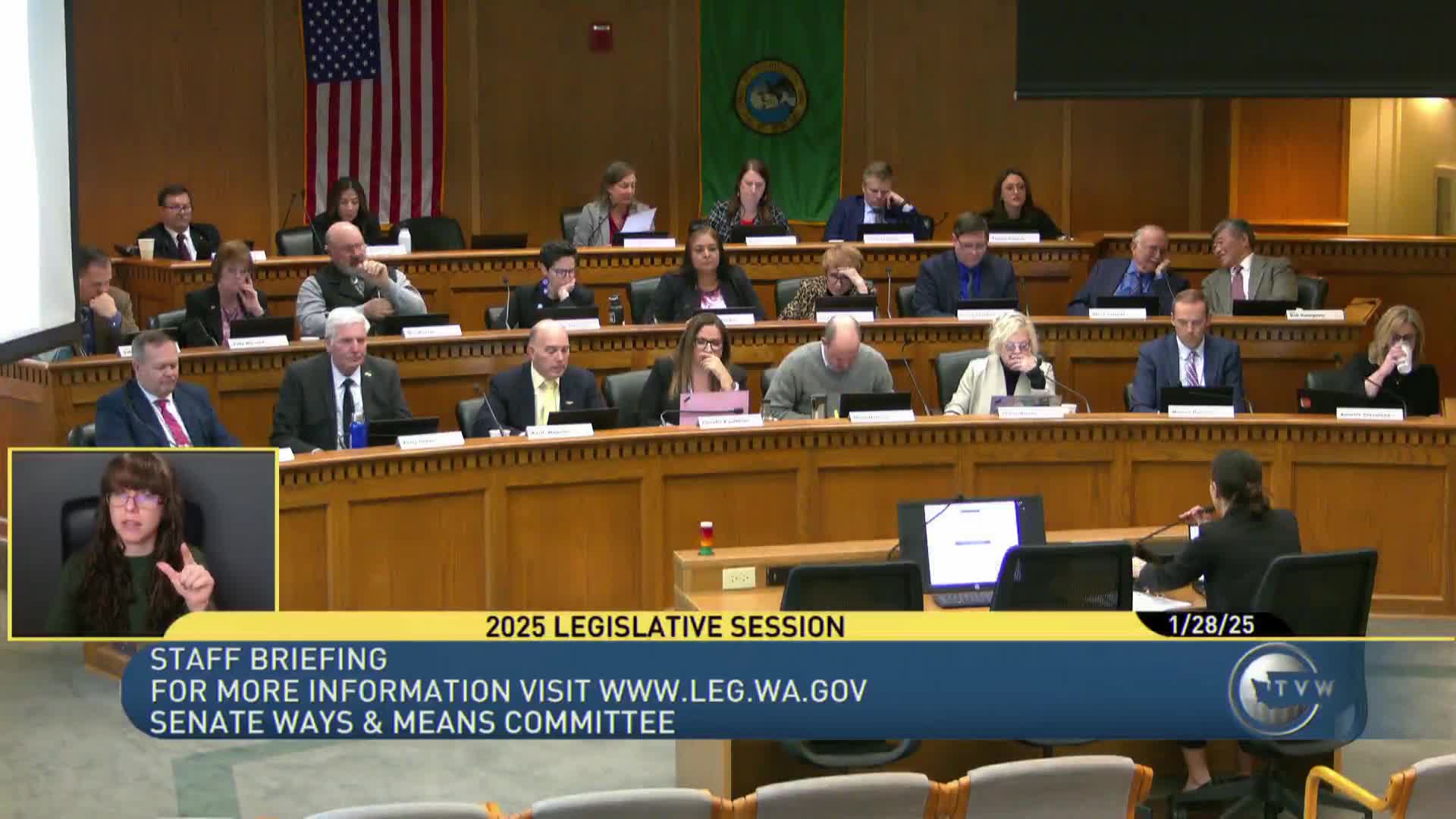
Alia Kennedy, staff to the Senate Ways & Means Committee, briefed the committee Jan. 28 on Senate Bill 5063, which would create tax incentives directed at Class II and Class III railroads and eligible taxpayers, including ports and publicly owned railroads.
Kennedy said the bill creates business and occupation and public utility tax credits equal to 50% of qualified maintenance costs for short‑line railroad maintenance, capped at $2,500 multiplied by the number of miles of track owned or leased in the state at year‑end. A separate credit for railroad modernization or new rail development would be 50% of costs up to $500,000 per taxpayer per year and subject to a statewide annual cap of $8 million. No credits may be earned on or after Jan. 1, 2037, she said.
The bill also would create a credit for taxpayers that donate railroad materials to Class II or Class III railroads equal to the fair market value of the donated materials (transferable once and carryable for five years) and a sales and use tax exemption for track maintenance materials such as ties, tie plates and joint bars; the exemption would expire Jan. 1, 2037. Kennedy noted the fiscal note estimates state revenue reductions of about $8.3 million in the 2025‑27 biennium and $13.5 million in the next biennium, and Department of Revenue administrative costs of approximately $1.2 million in 2025‑27.
Representatives from ports and short‑line railroads urged the committee to pass the bill. Logan Barr, State Relations Manager for Tacoma Public Utilities/Tacoma Rail, said Tacoma Rail supports the proposal and described the fuel‑efficiency advantage of rail freight: "The average train can move 1 ton of freight 47 miles on a single gallon of fuel," he said, contrasting rail to truck movements and adding that short‑line infrastructure investment supports local freight economies.
Cassie Hammond, director of government affairs for Port of Benton, told the committee her 16‑mile rail connects industrial partners in Richland and that the port is pursuing an inland port project with federal grant support; Hammond said the bill is "critical" for attracting investment and creating jobs. Ross Lane, representing three short‑line railroads, and Chris Herman of the Washington Public Ports Association also testified in support, saying short lines are capital‑intensive, many tracks are decades old, and investments preserve first‑ and last‑mile freight access critical to local industries and clean‑transportation goals.
The committee did not vote; the bill proceeds through the committee process and will return for further consideration. Testifiers asked lawmakers to weigh the bill’s fiscal impact against potential economic and environmental benefits tied to rail freight modernization.