Get Full Government Meeting Transcripts, Videos, & Alerts Forever!
Get email alerts on the Tax Preferences topic
No spam. Unsubscribe anytime.
JLARC presents 2024 tax preference performance reviews to Ways & Means; recommends decisions on multiple credits and exemptions
Summary
Pete Van Mooresel of the Joint Legislative Audit and Review Committee summarized six 2024 tax preference performance reviews covering 29 preferences and recommended legislative decisions on whether to continue, modify or terminate those preferences.
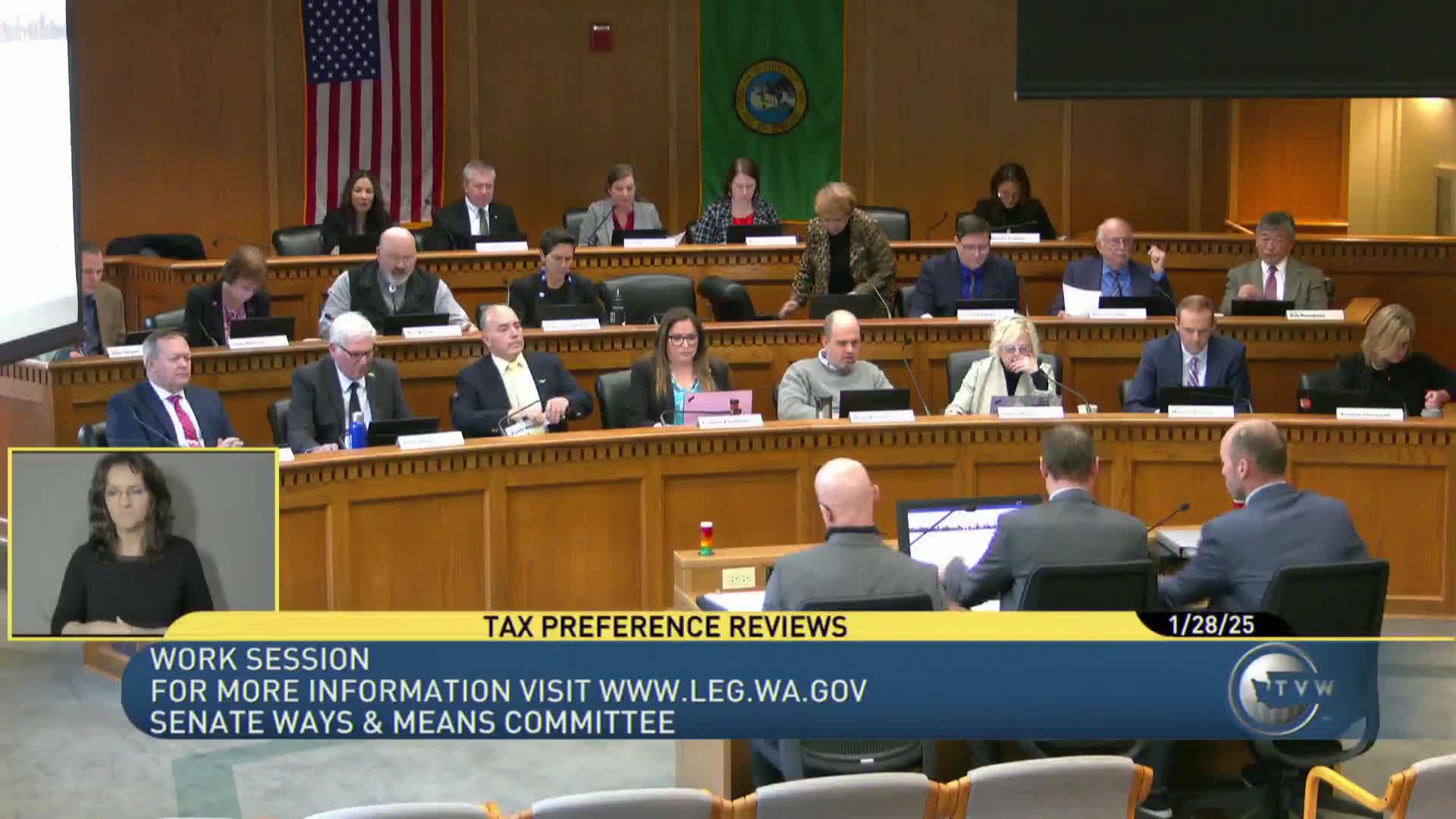
Pete Van Mooresel, staff to the Joint Legislative Audit and Review Committee, presented JLARC’s 2024 tax preference performance reviews to the Senate Ways & Means Committee on Jan. 28, summarizing six reviews covering 29 tax preferences and offering recommendations the legislature may consider.
Van Mooresel said JLARC reviewed preferences directed by the legislature and scheduled by the Citizen Commission for Performance Measurement of Tax Preferences to ensure each preference is evaluated once every 10 years. "For each of these tax preference reviews, the legislative auditor is required to make a recommendation whether to continue, to terminate, modify or otherwise, adjust the tax preference," he told the committee.
Key findings and recommendations included:
- Alternative fuel vehicle preferences: JLARC estimated the package of eight preferences will save about $98 million in the current biennium, with the single largest preference (a partial sales and use tax exemption for qualified alternative fuel vehicles) accounting for approximately $53 million. The legislative auditor found alternative fuel vehicle counts in Washington rose roughly 230% from the start of the preference through December 2023, and about 40,000 vehicles claimed the exemption, but concluded the preferences’ causal effect is unclear because market changes, federal incentives and expanding charging infrastructure could also explain adoption. JLARC recommended the legislature decide whether to continue the preferences and consult the Electric Vehicle Coordinating Council before changing law, because four preferences have expirations in 2025.
- Public utility tax credit for home energy assistance: The credit reimburses up to 50% of utilities’ energy assistance and is capped at $2.5 million annually. JLARC found utility‑funded assistance increased 42% from 2018 to 2023—$53 million to $76 million—while the credit’s relative share declined and many utilities that receive LIHEAP grants do not claim the credit. JLARC recommended the Legislature clarify objectives and performance metrics; the Department of Commerce recommended repealing the preference and pursuing a comprehensive statewide approach.
- Precious metals and monetized bullion preferences: JLARC estimated beneficiary savings of about $55 million in the 2027‑29 biennium and observed reported savings grew from $5 million in FY2017 to $28 million in FY2023. The auditor said the original legislative intent was unclear and recommended the Legislature decide whether to continue preferences; if continued, define objectives and metrics because the effects differ between in‑person and online sales, especially after South Dakota v. Wayfair.
- Aerospace preferences: Nine preferences (eight currently in effect) are estimated to save $205 million in 2028‑29; JLARC concluded that the preferences continue to lower industry taxes and support the industry presence and wages, but employment trends were unclear relative to legislative expectations because no objective metric was stated. The auditor recommended clarifying employment expectations and reconsidering a five‑year review requirement that currently keeps aerospace preferences on a faster cycle than other preferences.
- Customized workforce training B&O credit: The credit covers 50% of employer costs for training provided through the State Board for Community and Technical Colleges’ customized training program. Use of the credit and the training program has declined significantly since 2018 (86% drop in credit use). JLARC concluded the preference met the statutory threshold for continuation but recommended extending the expiration date (July 1, 2026) and directing the State Board to broaden program participation statewide and across industries.
- Aluminum industry preferences: JLARC found all Washington aluminum smelters have closed and none of the eight preferences have been used since 2021. The auditor recommended allowing the four smelter preferences that expire in July 2027 to lapse and terminating the other four preferences.
Committee members asked JLARC staff about control states and racial equity analysis in the alternative fuel review. Van Mooresel said a comparable control state was not available for the EV analysis; JLARC used registration and geographic data and found that vehicles likely eligible for the preference were more commonly registered in higher‑income census tracts. The presentation concluded with JLARC recommendations that the Legislature decide on continuation or modification of multiple preferences and consider clearer performance metrics where objectives are unspecified.