Get Full Government Meeting Transcripts, Videos, & Alerts Forever!
Get email alerts on the Home Cultivation topic
No spam. Unsubscribe anytime.
Heard: Bill to legalize small home cannabis grows for adults draws mixed public testimony
Summary
House Bill 1449 would legalize limited home cultivation for adults 21 and older — allowing up to six plants per person and up to 15 plants per housing unit — and creates civil infractions for odor or public visibility. The bill drew robust public testimony with supporters framing it as fairness and harm-reduction and opponents warning about youth
House Bill 1449 would legalize limited home cultivation of cannabis by adults 21 and older. Under the version presented in committee, an adult could possess and produce up to six cannabis plants on the premises of their housing unit; no single housing unit could have more than 15 plants at any time regardless of the number of residents. The bill creates civil infraction penalties for production or possession that generate odor visible or readily smelled from public or neighboring private property and sets a class 1 civil infraction for knowingly possessing more than six but fewer than 16 plants; possession or production of 16 or more plants would remain a class C felony.
Sponsor testimony and context: Representative Shelly Kloba (1st District), the prime sponsor and long‑time member of the committee that handles regulated substances, framed the measure as a fairness and harm-reduction step to end the disproportionate criminal penalties for small personal grows. Kloba said home cultivation for medical patients has existed since the late 1990s and argued that other states that legalized adult use also allow modest home grows. She described privacy concerns for medically eligible patients who avoid the DOH registry and said legalizing home grows for adults would not alter prohibitions on under‑21 use, unlicensed commercial production or unlicensed sales.
Supporters’ testimony: More than a dozen public witnesses supported the bill, including licensed producers, medical patients, trade associations and community organizers. Supporters framed the bill as common‑sense, citing fairness toward adults, harm reduction by decriminalizing activity already occurring, consumer education (home growers learn more about the plant and may become better retail customers), and access to fresh, minimally processed plant material used by some patients. Several witnesses compared home cultivation to home brewing or winemaking and said other states have allowed home grows without clear increases in youth use.
Opposition and public-safety concerns: The Washington State Public Health Association testified in respectful opposition, citing Healthy Youth Survey data showing that 10th graders commonly obtain cannabis from social sources and expressing concern that in-home cultivation could increase access for youth. The Association of Sheriffs and Police Chiefs and the Washington Association for Substance Misuse and Violence Prevention (WOSAP) also opposed the bill, voicing public‑safety concerns about thefts, enforcement ambiguity, fire risk and diversion of homegrown product. Law-enforcement representatives and WOSAP witnesses asked for clearer security measures and questioned enforcement logistics in multifamily housing and rental units.
Technical points and clarifications: Staff described ancillary provisions: summary destruction of plants above allowed counts by investigating officers, restrictions on LCB enforcement authority, and modifications to property-seizure and forfeiture laws as applied to cannabis possession. Committee members asked about enforcement thresholds, how the bill interfaces with local moratoria or rental agreements, and whether the LCB would retain authority to pursue large-scale fraudulent operations. Witnesses suggested the bill leave clear lines between small personal cultivation and criminal commercial grows.
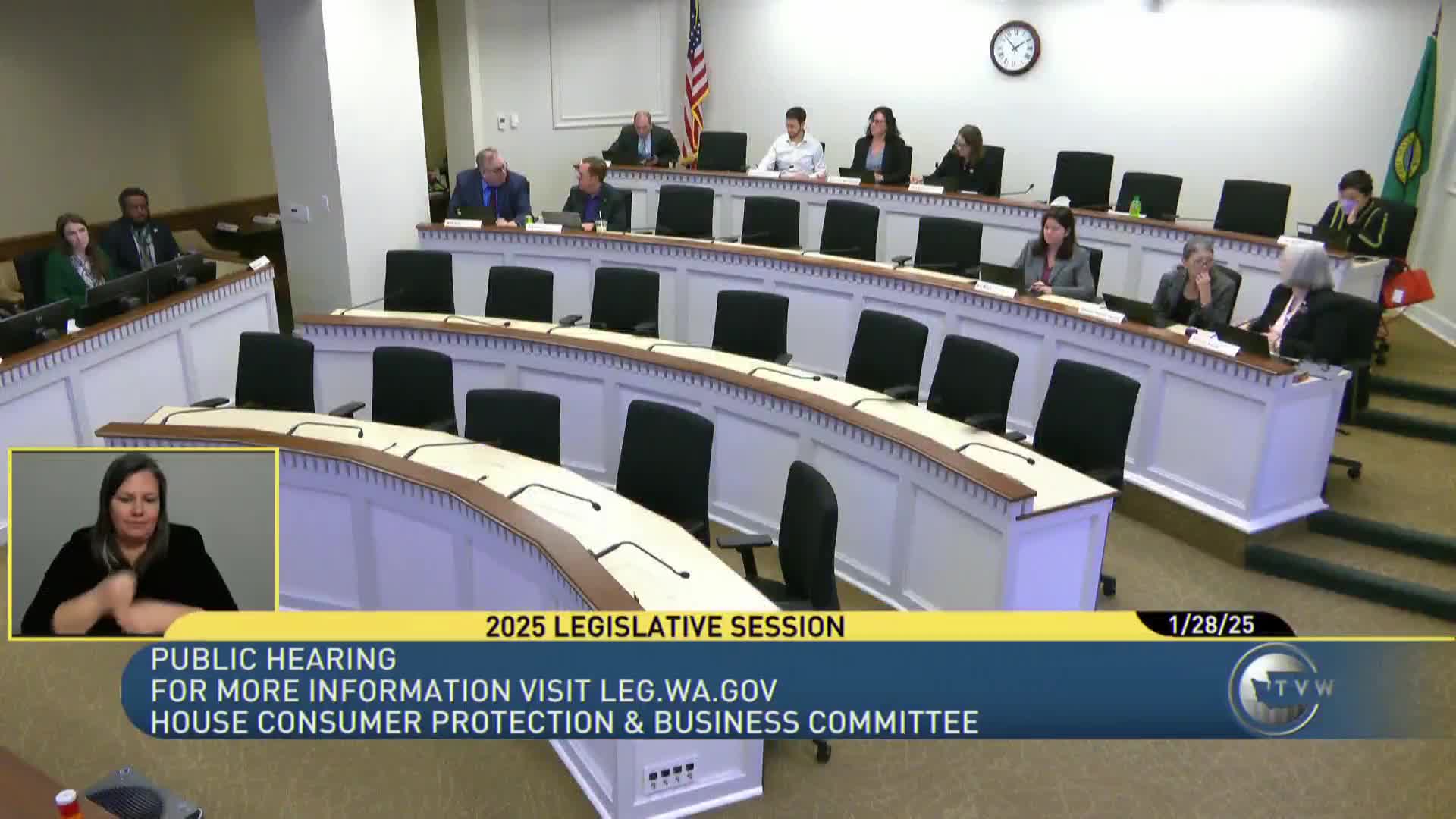
Committee action: The committee held extensive public testimony and did not take a recorded vote during the hearing. Members asked staff and witnesses clarifying questions and requested written materials from witnesses.