Get Full Government Meeting Transcripts, Videos, & Alerts Forever!
Get email alerts on the Design Review topic
No spam. Unsubscribe anytime.
Bill would limit public design review for housing; planners and builders urge technical fixes
Summary
House Bill 1160 would require administrative-only design review for most housing development and limit required architectural submissions. Supporters say the change would speed permitting; planners and development groups want retained clear-and-objective standards and other technical edits.
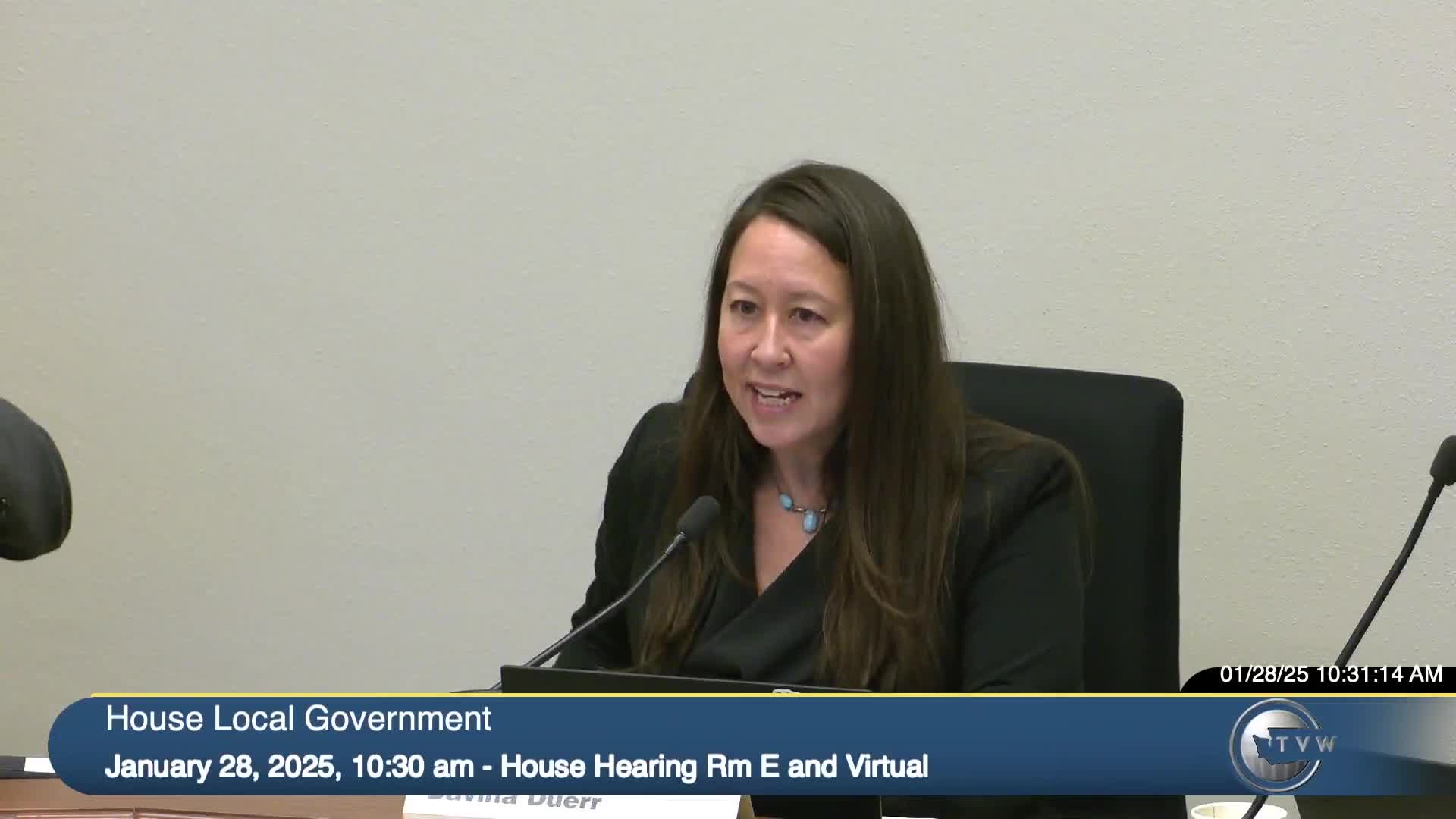
House Local Government Committee members heard testimony on House Bill 1160 on matters of local design review and how cities and counties treat housing permit applications. The bill would restrict most housing-related design review to an administrative process and limit the number of architectural drawings jurisdictions may require.
The bill matters because design-review rules affect how quickly housing can be permitted and built, how much input neighbors have, and whether local governments can apply “clear-and-objective” standards that both guide architects and constrain discretionary reductions in density or scale.
Kellen Wright, staff to the committee, summarized the bill’s changes and legal background, saying the proposal would remove the statutory requirement that counties and cities planning under the Growth Management Act adopt clear-and-objective development regulations for design review and prohibitions on regulations that reduce permitted density, height, bulk or scale. Wright said the bill would, instead, require administrative design review for housing permit applications except where federal or state law or landmark/historic-district status requires additional review, and would limit submittal requirements to a single architectural drawing. Wright also noted a compliance timeline in the draft that asks jurisdictions to conform within six months of their next comprehensive plan update or implementation progress report.
Representative Amy Wallen, sponsor of HB 1160, told the committee she introduced the bill to reduce permitting timelines in a housing emergency. “Permit processing timelines for housing projects in my community take two to three years to process,” Wallen said. She said the measure would not eliminate design review but would move the adoption of objective standards to elected legislative bodies and have those standards applied by professional staff, which she said would reduce uncertainty and cost for housing developers.
Several industry and planning witnesses urged technical revisions rather than wholesale repeal of the current statutory standard. Alex Hurd of the Master Builders Association of King and Snohomish Counties said his organization “support[s] the sponsor’s intent” but flagged that the bill’s current draft appears to strike the 2023 language requiring objective design review standards and recommended restoring or preserving that definition. Andrea Smiley of the Building Industry Association of Washington offered similar support for the bill’s goals but asked the sponsor to retain the clear-and-objective language.
Mackenzie Darr, testifying for NAIOP Washington (the Commercial Real Estate Development Association), said the association supports moving housing design review to an administrative process only if jurisdictions retain ascertainable, clear-and-objective standards that allow applicants and staff to know whether a design meets the rules. “Our preference would also be to leave the existing language as is and then add in the additional requirements related to a single rendering,” Darr said, urging clarity on whether the bill’s “one architectural drawing” requirement means one facade elevation or a limited set of drawings relevant to exterior design review.
The American Planning Association—Washington Chapter supported HB 1160’s goal of predictable, timely permitting, but recommended specific clarifications. Joe Tovar of the association said (1) a single-sheet limitation is “problematic” because important information about form, scale, access and site orientation is often conveyed across several focused drawings; (2) the committee should retain the 2023 statutory language defining “clear and objective” standards and delete the word “guideline,” because guidelines are inherently subjective; and (3) the term “variance” in the bill should be replaced with the more precise planning term “design departure” to allow superior design alternatives without invoking the legal hardship standard that attaches to variances.
Opponents and supporters differed on the effect the bill would have on local participation. Rick Kay, a private commenter, argued that broader design review produces better outcomes and accused statewide standardization of risking local disenfranchisement; industry witnesses countered that objective standards and administrative review can reduce cost and scheduling uncertainty without eliminating design quality.
Committee members and witnesses also raised multiple technical points for amendment: whether the bill unintentionally removes the 2023 definition of “clear and objective” standards; whether the single architectural drawing requirement should be limited to drawings germane to exterior design (rather than structural, mechanical or electrical documents); and whether the statutory remedy for alternative design solutions should use the term design departure rather than variance.
The committee suspended the HB 1160 hearing after public comment to allow further drafting work. Several industry witnesses said they would work with the sponsor to preserve objective standards while achieving the bill’s intent to speed housing permits.