Get Full Government Meeting Transcripts, Videos, & Alerts Forever!
Get email alerts on the Youth Extended Foster Housing topic
No spam. Unsubscribe anytime.
Bill would create rental-assistance program for youth in extended foster care and require transition planning
Summary
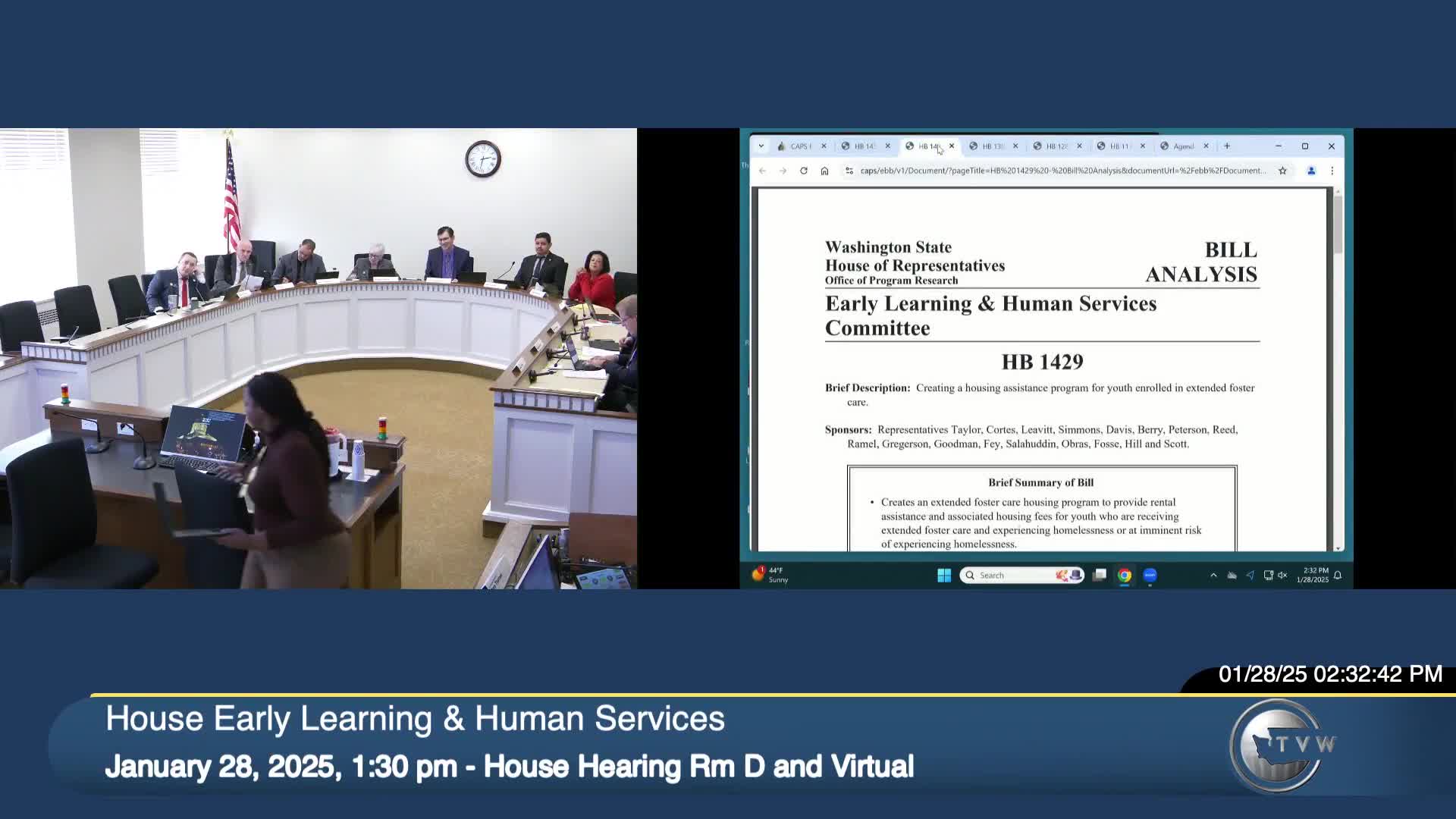
House Bill 1429 would create a rental-assistance program for youth in extended foster care who are homeless or at imminent risk of homelessness, provide assistance for up to 36 months based on local fair market rent, and require transition planning at least three months before youth turn 21.
House Bill 1429 would establish an extended foster care housing program to provide rental assistance and related housing services to youth receiving extended foster care who are experiencing homelessness or are at imminent risk of homelessness. The Department of Children, Youth and Families (DCYF) would be required to ensure eligible youth receive access to rental assistance and to collect data on program outcomes.
Staff told the committee that youth in extended foster care may already receive supervised independent living payments (a flat amount staff referenced near $860 in testimony) or foster family maintenance payments when placed in foster homes; HB 1429 would add rental assistance for eligible youth for up to 36 months based on fair market rent in the youth’s location. The bill would require that eligible youth not pay more than 30% of their adjusted gross income toward rent; where rent and utilities exceed fair market rent, youth contributions may not exceed 40% of adjusted gross income. The measure also requires DCYF to conduct transition planning at least three months before youth turn 21, including housing and financial stability assessments and assistance applying for federal housing voucher programs.
Representative Taylor, the sponsor, urged the committee to consider the bill as a step to reduce homelessness among young people aging out of care and said the bill carried a $0 fiscal note at introduction; sponsors acknowledged further fiscal work could follow.
Legal aid organizations, youth advocates and young people with lived experience testified in support. Roxanna Gomez of Legal Counsel for Youth & Children said young people in extended foster care often forgo a federal housing voucher in order to remain eligible for extended foster care services; the bill would allow youth to access both. Multiple young people and youth-advocacy groups described repeated placement instability and homelessness and urged passage. Testimony included personal accounts of frequent moves, homelessness, threats to safety and progress made once housing stability was obtained.
The committee did not take final action; witnesses and the sponsor said the measure would require coordination with housing authorities and DCYF to implement rental assistance and transition supports.